Jump to Table of Contents
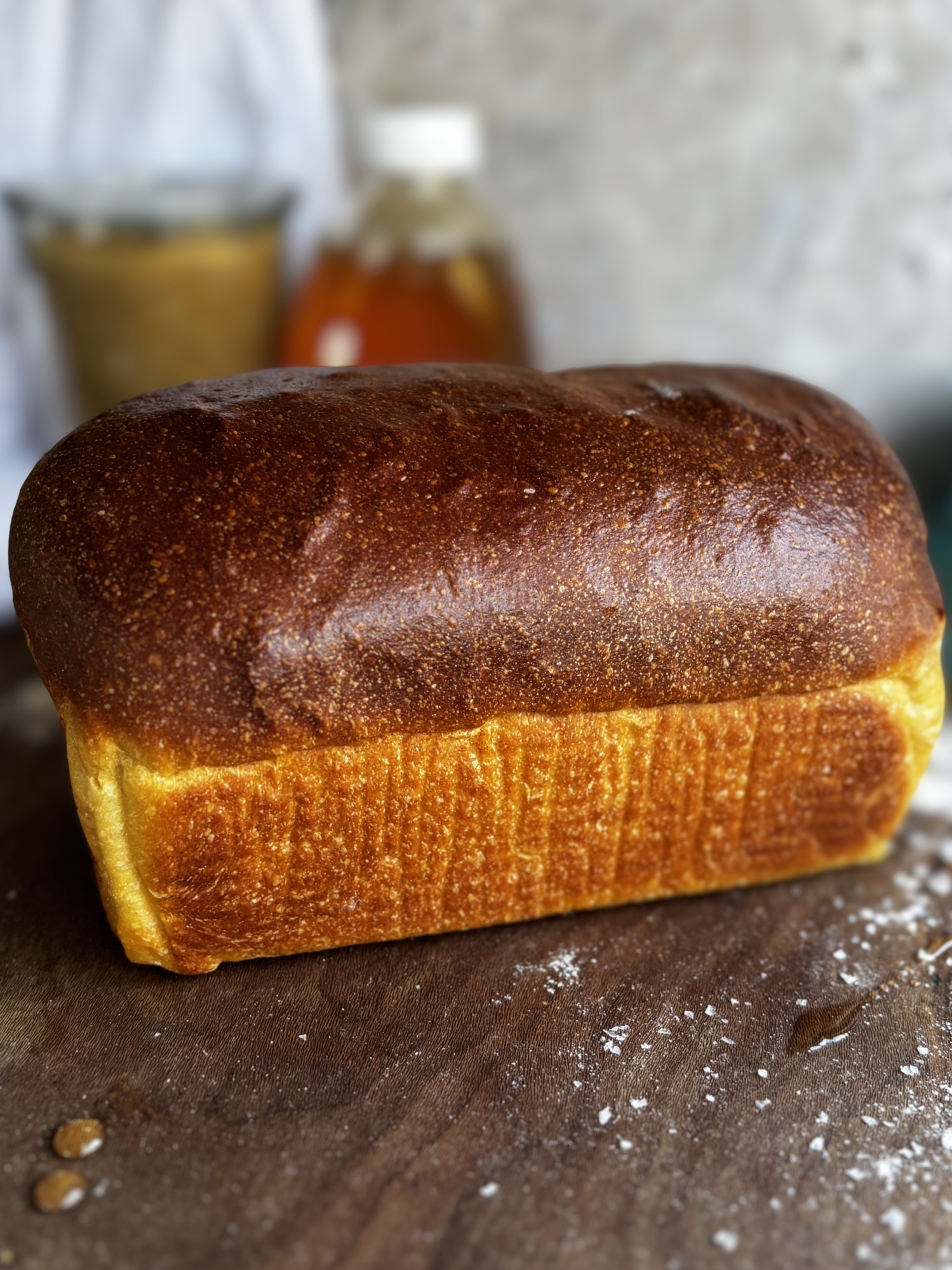
After a bunch of requests from my readers and followers, this one is finally here. You have been asking for a honey whole wheat version of my High Protein Sourdough Sandwich Bread ever since that recipe went viral, and I completely understand why. There is something deeply satisfying about a honey wheat loaf, the way the sweetness of real honey balances the hearty nuttiness of whole wheat flour and makes every single slice taste like something worth slowing down for.
I tested this recipe multiple times with different flour ratios, different yogurt fat percentages, and different baking techniques before landing on the version I am sharing today. What I ended up with is a soft, golden, deeply flavorful sandwich loaf that delivers 7 grams of protein per slice, rises beautifully above the pan, and stays fresh longer than any store bought honey wheat bread you have ever had.
This is the one you have been waiting for.
Table of Contents
- Why You Will Love This Recipe
- What Makes This High Protein
- Ingredients and Why They Matter
- White Whole Wheat vs Red Whole Wheat: What Is the Difference
- How Much Whole Wheat Can You Use
- How to Make This Bread
- Shaping Your Loaf
- Baking Tips
- Recipe
- Can I Make This Without a Sourdough Starter
- Substitutions
- Storage and Freezing
- FAQ
- Shop This Recipe
- More High Protein Sourdough Recipes
Why You Will Love This Recipe

This is not your average honey wheat loaf. Here is what sets it apart from everything else out there:
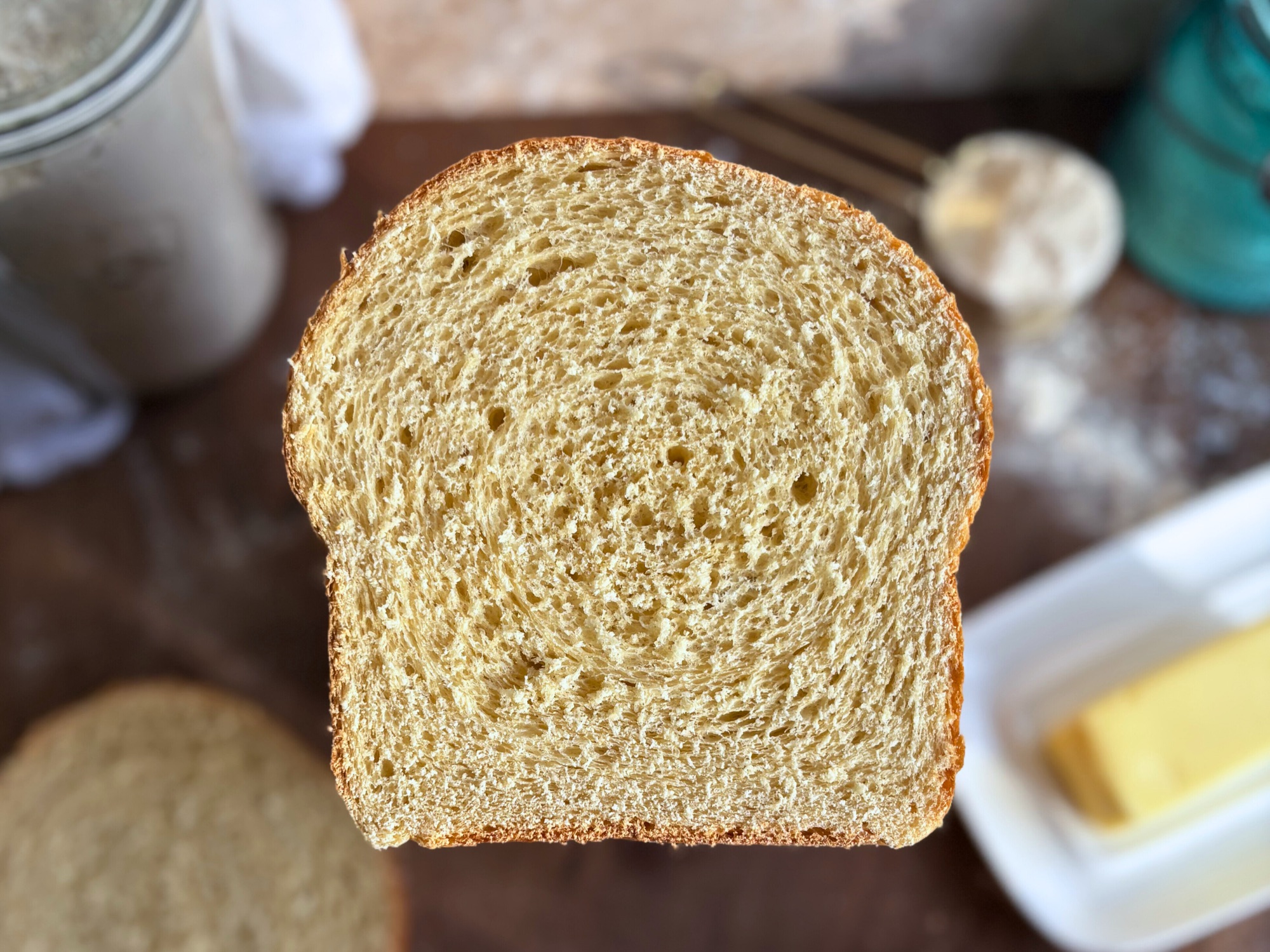
- Soft, pillowy crumb that holds up to fully loaded sandwiches without falling apart
- Real honey sweetness that balances the hearty whole wheat flavor in a way granulated sugar simply cannot replicate
- 7 grams of protein per slice from white whole wheat flour and nonfat Greek yogurt working together
- Tested at multiple flour ratios so you can customize based on how much whole wheat flavor and nutrition you want
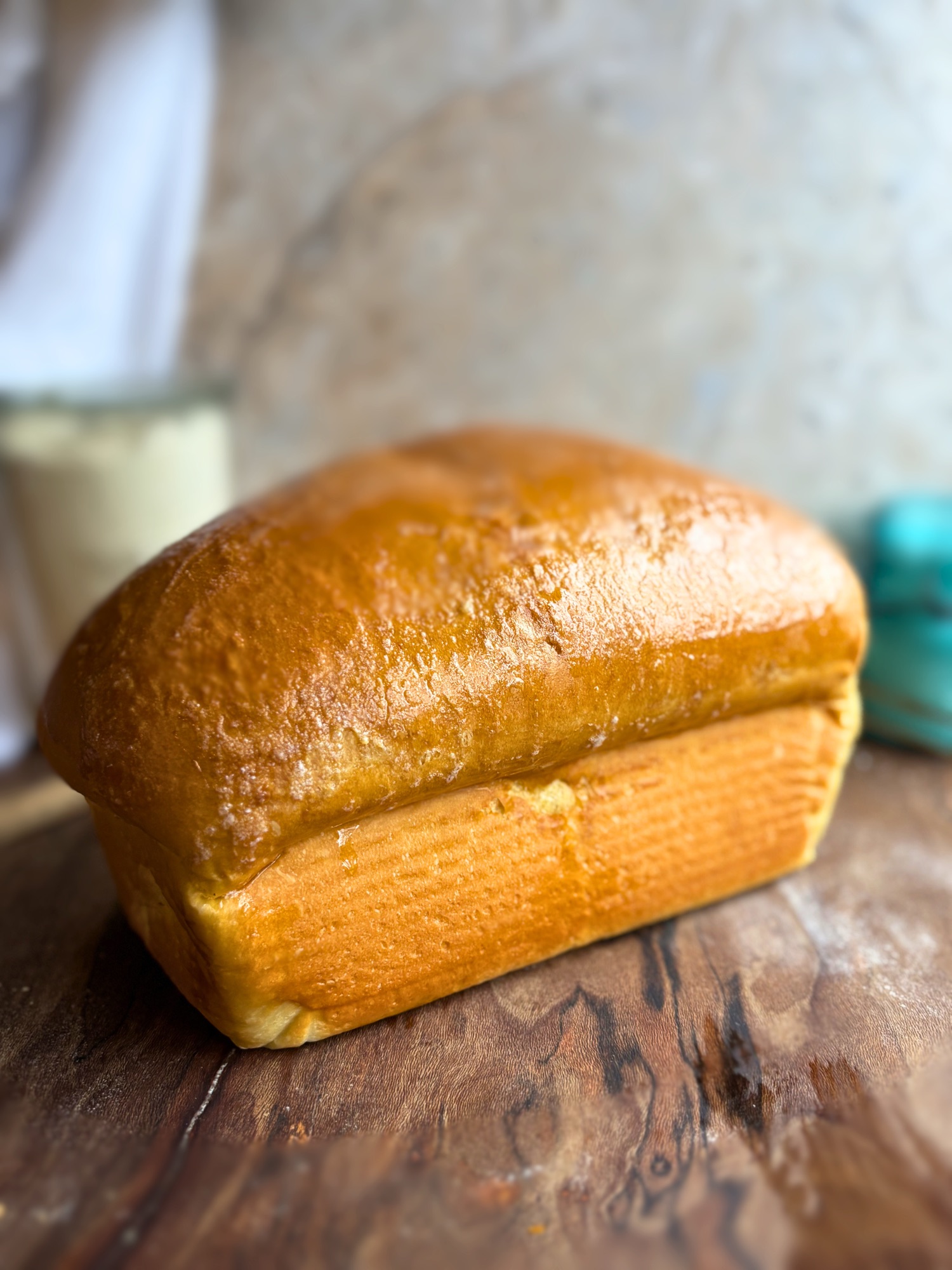
- Deep golden crust that comes from real honey caramelizing in the oven
- Stays fresh longer than a standard sourdough loaf because honey is a natural humectant that slows staling
- Active sourdough starter gives you a depth of flavor that a same day yeasted loaf simply cannot match
What Makes This High Protein

Most honey whole wheat sourdough recipes are built on a foundation of water and oil. That produces a perfectly fine loaf. This one is different because of two ingredients that most recipes are not using together: white whole wheat flour and nonfat Greek yogurt.
The white whole wheat flour I use comes in at 14.5% protein, which is higher than many bread flours on the market. Pair that with nonfat Greek yogurt, which contributes roughly 26 grams of protein to the full recipe, and you have a loaf that delivers significantly more protein per slice than anything store bought in this category.
For context, most commercial honey wheat sandwich breads land around 4 to 5 grams of protein per slice. This loaf comes in at 7 grams per slice at 13 slices per loaf. That is about 50% more protein than what you are getting from the grocery store shelf, in a loaf that also tastes infinitely better.
Ingredients and Why They Matter

White Whole Wheat Flour
The hero ingredient in this recipe. White whole wheat flour is milled from hard white wheat rather than the red wheat used in conventional whole wheat flour. The result is a milder, slightly sweeter flavor without the bitter bran notes that can make whole wheat bread taste heavy. It also carries a higher protein content than all purpose flour, which contributes directly to both the nutritional profile and the gluten structure of the dough. I use Prairie Gold by Wheat Montana, which I source from my local dry goods store, but King Arthur White Whole Wheat is widely available in most grocery stores and works beautifully in this recipe.
Bread Flour
At a 50/50 ratio with the whole wheat, bread flour provides the strong gluten network needed to contain the oven spring and give you that beautiful tall dome above the pan rim. The bran in whole wheat flour does cut through gluten development, which is why the ratio matters, but this recipe was tested at up to 75% whole wheat and still produced a soft, pillowy loaf with a slightly tighter crumb. The bread flour gives you structure and lift no matter which ratio you choose.
Nonfat Greek Yogurt
Do not swap this for regular yogurt without adjusting your liquid. Nonfat Greek yogurt is thick, high in protein, and slightly acidic. The acidity works with the baking powder, the protein adds to the overall nutrition count, and the thickness gives the dough a structure that water based recipes cannot achieve. Use nonfat specifically for the most consistent results and the highest protein content per slice. Full fat Greek yogurt will work in this recipe, however the dough will be significantly wetter and you will need to add additional bread flour during kneading. During testing with full fat Greek Gods yogurt an additional 50 grams of bread flour was needed. Thicker full fat brands may require less. Start adding flour after the initial 30 minute rest, 10 grams at a time, mixing fully between each addition before deciding if more is needed.
Honey
Honey is not interchangeable with sugar in this recipe. It feeds the starter during fermentation, contributes moisture, helps the crust develop that deep amber color, slows staling so the loaf stays fresh longer, and balances the whole wheat flavor in a way granulated sugar cannot replicate. Do not skip it and do not swap it without understanding what you are changing.
Active Sourdough Starter
Use an active peaked starter for best results. The baking powder acts as a backup leavener but your starter is doing the primary work of both leavening and flavor development. A sluggish or underfed starter will produce a denser loaf with less complex flavor.
Baking Powder
Two grams of baking powder in a sourdough recipe might raise eyebrows but it is completely intentional. The combination of Greek yogurt, butter, egg, and whole wheat flour creates a heavier enriched dough than a standard lean sourdough. The baking powder fires at the moment the loaf hits oven heat and gives the structure a boost right when it needs it most. It assists the starter, it does not replace it.
Butter and Egg
Both contribute to the soft enriched crumb and extend shelf life. Butter coats the gluten strands and creates that pillowy texture that makes this loaf so irresistible warm out of the oven. The egg adds richness, structure, and a small amount of additional protein.
White Whole Wheat vs Red Whole Wheat: What Is the Difference

This is a question worth answering properly because it directly affects how your loaf turns out and which flour you should reach for.
Both white whole wheat and red whole wheat are 100% whole grain flours. Nothing is removed. The bran, germ, and endosperm are all present in both. The nutritional profiles are nearly identical. The difference comes down entirely to the variety of wheat berry used to mill the flour.
Red whole wheat is milled from hard red wheat. It has a stronger, earthier, more assertive bran flavor with slightly bitter notes. The bran is darker and more pronounced. This is what most people picture when they think of whole wheat bread, that dense hearty loaf with a robust flavor. It works in this recipe but the honey has to work harder to balance it and the crumb will be slightly denser.
White whole wheat is milled from hard white wheat. The bran is thinner, lighter in color, and less bitter because hard white wheat contains fewer tannins than red wheat. The flavor is milder and slightly sweeter while still delivering all the fiber and nutrition of a whole grain flour. It is the better choice for this recipe because it lets the honey and sourdough flavors come forward without the bran overpowering everything.
For this recipe I use Prairie Gold by Wheat Montana, which I source from my local dry goods store. If you cannot find it, King Arthur White Whole Wheat is the most widely available substitute and performs nearly identically in this recipe. It is carried at most major grocery stores in the baking aisle. If you only have access to standard red whole wheat, it will work, just expect a more pronounced whole wheat flavor and a slightly denser crumb.
How Much Whole Wheat Can You Use

I tested this recipe at multiple flour ratios so you can make an informed choice based on what you are looking for in your finished loaf.
50/50 Whole Wheat to Bread Flour (Hero Recipe)
This is the version I am publishing as the primary recipe and the one I recommend for most bakers. The 50/50 ratio gives you a genuinely hearty whole wheat flavor and a beautiful open crumb that is still soft enough for everyday sandwiches. The loaf rises dramatically above the pan rim and slices cleanly. This is the sweet spot between nutrition and approachability.
75/25 Whole Wheat to Bread Flour
I tested this variation and it performed beautifully. The crumb is slightly more compact and the whole wheat flavor is more prominent. The honey works harder to balance it but it absolutely does. If you want a heartier more nutritious loaf and do not mind a slightly denser texture, 75/25 is a great option. Use 300 grams of Prairie Gold and 100 grams of bread flour with all other ingredients unchanged. Bake at 350 degrees F rather than 375 degrees F and extend the bake time to 42 to 48 minutes to allow the denser loaf to bake through evenly.
100% Whole Wheat
I did not test this specific combination at 100% whole wheat, but based on the results at 75/25 and the enriched nature of the dough, meaning the yogurt, butter, egg, and baking powder all working together, I believe it would produce a workable loaf. Expect a denser texture, a more assertive whole wheat flavor, and a need for a small amount of additional liquid during kneading. If you try it I would love to hear how it goes in the comments below.
How to Make This Bread

Mixing and the 30 Minute Rest
This dough comes together differently than a standard all bread flour sourdough. The Greek yogurt hydrates the flour more slowly than water does, which means the dough will feel stickier in the first few minutes of mixing than you might expect. Do not add flour yet. Once everything is combined, cover the bowl and let the dough rest for 30 minutes. That rest period is where the magic happens. The flour fully absorbs the yogurt, the gluten begins to develop on its own, and the dough becomes significantly more cohesive and workable without adding a single gram of extra flour.
Kneading
After the rest, knead in a stand mixer on speed 2 for 5 to 6 minutes or by hand for 8 to 10 minutes. You are looking for a partial windowpane where the dough stretches without immediately tearing. If it is still unworkably wet after the rest, add bread flour 10 grams at a time and note how much you add for reference on future bakes.
Bulk Fermentation
Perform one set of stretch and folds at the 30 to 45 minute mark, then leave the dough alone. This enriched dough will often fully double during bulk fermentation and that is completely normal and expected. Look for a full dome, a jiggly airy texture when you gently shake the bowl, and visible bubbles on the surface. Do not rely on the clock, go by what the dough is telling you. Whole wheat ferments faster than white flour so start checking earlier than you would with a standard white sourdough. Expect 5 to 8 hours at room temperature depending on your kitchen temperature.
Final Proof
After shaping, cover the loaf tightly and proof at room temperature for 1.5 to 2.5 hours until the dough crowns about 1 inch above the rim of the pan. See the shaping section below for detailed instructions on getting that perfect dome.
Baking
Brush the proofed loaf with egg wash made from one whole egg whisked with a splash of whole milk. Place an inverted baking sheet loosely over the top of the loaf pan before it goes into the oven. This controls the oven spring during the first 10 minutes and prevents side splitting. Remove the inverted pan after 10 minutes and continue baking until deep golden brown. The internal temperature should read 190 to 195 degrees F. Brush immediately with melted butter the moment it comes out of the oven.
Shaping Your Loaf
Shaping is one of the most important steps for a beautiful even dome. There are two methods that work well for this recipe.
Method One: The Rectangle Fold

Pat the dough into a rectangle roughly 10 inches wide and 8 inches long. Fold the left side into the center, then the right side into the center overlapping slightly like folding a letter. Starting from the top roll the dough down toward you pressing lightly at each revolution to build surface tension. Pinch the seam firmly and place seam side down in the pan.
Method Two: The Sleeping Bag Roll

Pat the dough into a 5 inch by 12 inch rectangle. Starting from the short end farthest from you, roll the dough slowly toward your body. With each roll tuck the dough slightly under itself pulling gently toward you to create tension on the outer surface. Every few rolls bring the sides in toward the center to keep the edges even. By the end the dough should feel like a taut package. Pinch the seam and place seam side down.
Regardless of method the goal is the same: tight even surface tension across the entire top of the loaf. A slack or uneven surface leads to an uncontrolled split during oven spring. The tighter you shape the more controlled and beautiful your dome will be.
Baking Tips

- Always use nonfat Greek yogurt. The fat content of the yogurt directly affects how wet your dough is. Full fat yogurt requires significantly more flour to compensate and lowers the protein content per slice.
- The inverted pan technique makes a real difference in this recipe. Place a second loaf pan of the same size inverted loosely over the top of your loaf pan for the first 10 minutes of baking. This traps just enough heat around the loaf to control the oven spring and prevent side splitting without steaming the crust. Remove it after 10 minutes to let the color develop.
- Honey browns faster than sugar. Keep foil nearby and tent loosely after the first 25 minutes if the crust is getting too dark before the interior hits temperature.
- Pull the loaf at 190 to 195 degrees F internal temperature every time. Do not guess on a loaf this size.
- Brush with melted butter the moment it comes out of the oven for a soft pliable crust.
- Cool for at least 2 hours before slicing. This loaf is enriched and dense enough that cutting too early will absolutely give you a gummy crumb regardless of how perfectly it baked. Give it the full time.
Recipe

High Protein Honey Whole Wheat Sourdough Sandwich Bread
Equipment
- Stand mixer with dough hook attachment or large mixing bowl
- kitchen scale
- 9×5 USA Pan loaf pan
- Parchment paper or pan liner
- Instant read thermometer
- Wire cooling rack
- – Pastry brush
Ingredients
For the Dough
- 200 grams white whole wheat flour 1 1/2 cups plus 1 tablespoon
- 200 grams bread flour 1 1/2 cups plus 1 tablespoon
- 120 grams active peaked sourdough starter 1/2 cup
- 240 grams nonfat Greek yogurt slightly warmed (1 cup)
- 50 grams unsalted butter softened (3 1/2 tablespoons)
- 40 grams whole milk room temperature (3 tablespoons)
- 40 grams honey 2 tablespoons
- 7 grams fine sea salt 1 1/4 teaspoons
- 2 grams baking powder 1/2 teaspoon
- 1 large egg room temperature
For Finishing
- 1 large egg
- 1 splash whole milk for egg wash
- 2 tablespoons unsalted butter melted, for brushing after baking
Instructions
- Warm the Greek yogurt in the microwave for about 30 seconds, just enough to take the chill off. You want it slightly warm but not hot. Yogurt that is too hot can damage your starter when they come into contact.
- In a large bowl whisk together the white whole wheat flour, bread flour, baking powder, and salt. In a separate bowl whisk together the starter, warmed yogurt, whole milk, honey, and egg until smooth, then mix in the softened butter until fully incorporated. Pour the wet mixture into the dry ingredients and mix until a soft slightly tacky dough forms.
- Cover the bowl and let the dough rest for 30 minutes. This rest period is important because the Greek yogurt hydrates the flour more slowly than water does. The dough will feel stickier at first but smooths out considerably after the rest without any added flour.
- After the rest, knead the dough in a stand mixer on speed 2 for 5 to 6 minutes or by hand for 8 to 10 minutes until it smooths out and becomes elastic. You are looking for a partial windowpane where the dough stretches without immediately tearing. If the dough is still unworkably wet after the rest, add bread flour 10 grams at a time, mixing fully between each addition before deciding if more is needed.
- Place the dough in a lightly oiled bowl, cover tightly, and let it bulk ferment at room temperature. Perform one set of stretch and folds at the 30 to 45 minute mark, then leave it alone. This enriched dough will often fully double during bulk fermentation. Look for a full dome, a jiggly airy texture when you gently shake the bowl, and visible bubbles on the surface. Expect 5 to 8 hours depending on your kitchen temperature. Whole wheat ferments faster than white flour so start checking early.
- Turn the dough out onto a lightly floured surface. To shape using the rectangle fold method, pat the dough into a rectangle roughly 14 inches wide and 10 inches long. Fold the left side into the center, then the right side into the center so the touch. Roll the dough gently just to work out any air. Starting from the bottom roll the dough up, gently tugging and pressing lightly at each revolution to build surface tension. Pinch the side and bottom seams firmly and place seam side down in a parchment lined or lightly greased 9×5 loaf pan.
- Cover the shaped loaf and let it proof at room temperature for 2 to 3 hours until the dough crowns about 1 inch above the rim of the pan. Use the poke test to confirm readiness: lightly oil your finger and press about half an inch into the dough. If it springs back slowly and leaves a slight indent it is ready. If it springs back immediately it needs more time. If the indent stays completely it is approaching over proof and should go in the oven right away.
- Preheat the oven to 375 degrees F.
- Whisk together the egg and splash of whole milk for the egg wash and brush the top of the loaf gently with one thin even coat. Optionally, Place a second loaf pan of the same size inverted loosely over the top of your loaf pan before placing it in the oven. This controls the oven spring during the first 10 minutes and can prevent side splitting.
- Bake time is about 38-42 minutes. If using the lids, bake for 10 minutes with the inverted pan on top, then carefully remove it and continue baking for 28 to 32 more minutes until deep golden brown. Honey deepens the crust color faster than sugar so keep an eye on it and tent loosely with foil if the top is browning too fast before the interior is done. Pull the loaf when an instant read thermometer inserted in the center reads 190 to 195 degrees F.
- Remove from the oven and brush immediately with melted butter. Let the loaf cool in the pan for 10 minutes, then transfer to a wire rack. Cool for at least 2 hours before slicing. Cutting too early will give you a gummy crumb regardless of how well it baked.
Notes
Can I Make This Without a Sourdough Starter

Yes, and I tested it same as the sourdough version. A full yeasted version of this recipe is available here: YEASTED HONEY WHOLE WHEAT SANDWICH BREAD. The flavor profile is different since you lose the depth that comes from long fermentation, but the texture and softness are comparable and the process comes together in about 3 hours from start to finish.
The yeasted version uses Red Star active dry yeast bloomed in warm milk, with additional warm water to replace the liquid contribution of the sourdough starter. The flour amounts are also adjusted to account for the flour the starter would have contributed. If you do not have an active starter or want a same day loaf, it is a great option.
Substitutions

Flour
White whole wheat flour is the recommended choice for this recipe. King Arthur White Whole Wheat is the most widely available option and works beautifully. Standard red whole wheat will also work but produces a denser loaf with a more pronounced bran flavor. See the flour difference section above for a full breakdown, and the flour ratio section for information on adjusting the percentage of whole wheat in your loaf.
Honey
Honey plays several functional roles beyond sweetness in this recipe. Pure maple syrup is the closest substitute and will work with a subtle flavor difference. If you want to use granulated sugar instead, use 25 grams of sugar in place of the 40 grams of honey. Sugar is more concentrated in sweetness and does not contain the water that honey does, so the gram amounts are not a straight swap.
Dairy
For a dairy free version substitute the Greek yogurt with a thick unsweetened coconut yogurt or cashew yogurt at the same weight. Replace the whole milk with any unsweetened plant milk. Replace the butter with vegan butter or coconut oil at the same weight. The protein content per slice will be lower with plant based yogurt substitutes. While I have not personally tested these swaps, based on my research and the way this dough comes together, they should work well.
Egg
A flax egg made from 1 tablespoon of ground flaxseed mixed with 3 tablespoons of water and rested for 5 minutes is the most structurally similar substitute. Aquafaba at 3 tablespoons is another option that works as a functional binder in enriched doughs. While I have not personally tested either of these in this specific recipe, based on how they perform in similar enriched doughs they should work as functional replacements.
Storage and Freezing
Store at room temperature in a bread bag or airtight container for up to 3 days. The honey slows staling so this loaf stays noticeably fresher longer than a standard sourdough sandwich loaf.
This bread freezes beautifully. Cool completely before slicing, wrap individual slices in plastic wrap, and place in a freezer safe bag. Freeze for up to 3 months. Pull individual slices as needed and toast directly from frozen or thaw at room temperature for about 30 minutes.
FAQ
Why is my honey whole wheat sourdough bread dense?
The most common causes are an underactive starter, under fermentation during bulk, or too much flour added during kneading. Make sure your starter is peaked and active before mixing, look for 50 to 75% growth during bulk fermentation rather than waiting for a full double, and resist adding flour unless the dough is genuinely unworkable after the 30 minute rest.
Why is my bread sour?
A sour loaf almost always comes down to a few things things: an overly acidic starter, over proofing or deviating from the recipe. If your starter is very mature or has gone a long time between feedings it will contribute more acidity to the dough. Feed it and let it reach peak activity before using. The second and more common reason is ingredient substitutions. This recipe was developed and tested with specific ingredients for a reason. Substituting rye flour, oat flour, or other high fiber additions will change the pH of the dough, accelerate fermentation, and contribute to a more pronounced flavor. If you choose to modify the recipe, understand that changes to the ingredients will change the outcome.
Can I use full fat Greek yogurt?
You can but expect to add additional flour during kneading. Full fat Greek yogurt, especially looser brands, contains more fat and behaves differently than nonfat in this dough. In testing with full fat Greek Gods yogurt an additional 50 grams of bread flour was needed to bring the dough to a workable consistency. Thicker full fat brands may require less adjustment. Do not add flour during the initial mix. Let the dough rest for 30 minutes first, then after the rest begin adding bread flour 10 grams at a time, mixing fully between each addition before deciding whether more is needed. Nonfat Greek yogurt is strongly recommended for the most consistent results and the highest protein content per slice.
Can I use sourdough discard?
Active peaked starter is what makes this recipe work. Discard does not have the same leavening power and will result in a loaf that relies entirely on the baking powder for lift. If you want to use discard you would need to add commercial yeast to compensate, at which point you are essentially making the yeasted version of this recipe linked above.
How do I know when bulk fermentation is done?
This enriched dough will often fully double during bulk fermentation, which is completely normal and expected. Look for a full dome, a jiggly airy texture when you gently shake the bowl, and visible bubbles on the surface. Those visual cues matter more than hitting an exact size target. Once you have shaped the loaf and it is in the pan, use the poke test during final proof: lightly oil your finger and press about half an inch into the dough. If it springs back slowly and leaves a slight indent it is ready to bake. If it springs back immediately it needs more time. If the indent stays without springing back at all, get it in the oven immediately. Whole wheat ferments faster than white flour so start checking earlier than you would with a standard white sourdough. In a warm kitchen around 75 degrees F expect 5 to 6 hours for bulk. In a cooler kitchen around 65 degrees F expect 8 to 10 hours.
What size loaf pan do I need?
This recipe is written for a 9×5 USA Pan loaf pan. A 10×5 will also work and gives the loaf a little more room to spread as it rises.
Shop This Recipe
These are the tools and ingredients I use and recommend for this recipe. Having the right equipment makes a real difference in the outcome.
- Prairie Gold White Whole Wheat Flour
- Kitchen Scale – Accuracy matters in bread baking. Weight measurements are always more reliable than volume.
- USA Pan 9×5 Loaf Pan
- Instant Read Thermometer – The most reliable way to know your loaf is fully baked.
- Parchment Paper Pan Liners – Pre cut liners make cleanup and removal effortless.
- Wire Cooling Rack – Essential for proper airflow while the loaf cools.
This post contains Amazon affiliate links. Clicking my links costs you nothing extra, but I do earn a small commission that helps support the blog and future recipe development. Thank you so much for your support, it means everything.
More High Protein Sourdough Recipes
If this recipe is your kind of thing, here are more high protein sourdough recipes from H3art of the Home:
- High Protein Sourdough Sandwich Bread – The original that started it all
- High Protein Cottage Cheese Sourdough Scones – Fluffy, tender, and packed with protein
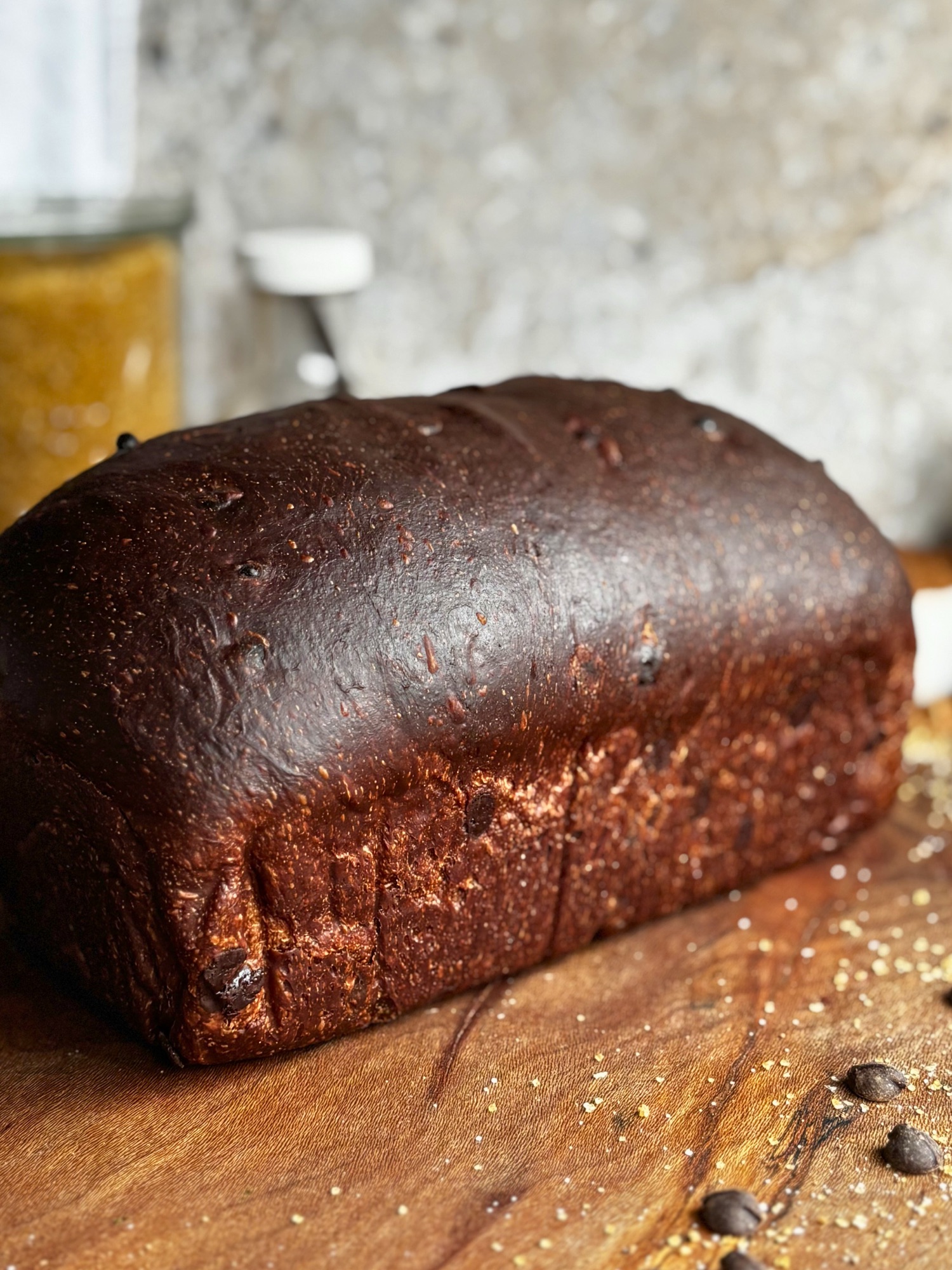
- High Protein Chocolate Chip Sourdough Scones – Yes, high protein scones can absolutely be this good
- Sourdough Dinner Rolls – Soft pull apart rolls that belong on every table
- Honey Whole Wheat Sandwich Bread Yeasted Version – Same great flavor, no starter required
Did you make this recipe? Leave a comment below and let me know how it turned out. Tag me on Instagram at @h3artofthehome so I can see your beautiful loaves. And if you want new recipes sent directly to your inbox, sign up for the H3art of the Home newsletter below.



Leave a Reply