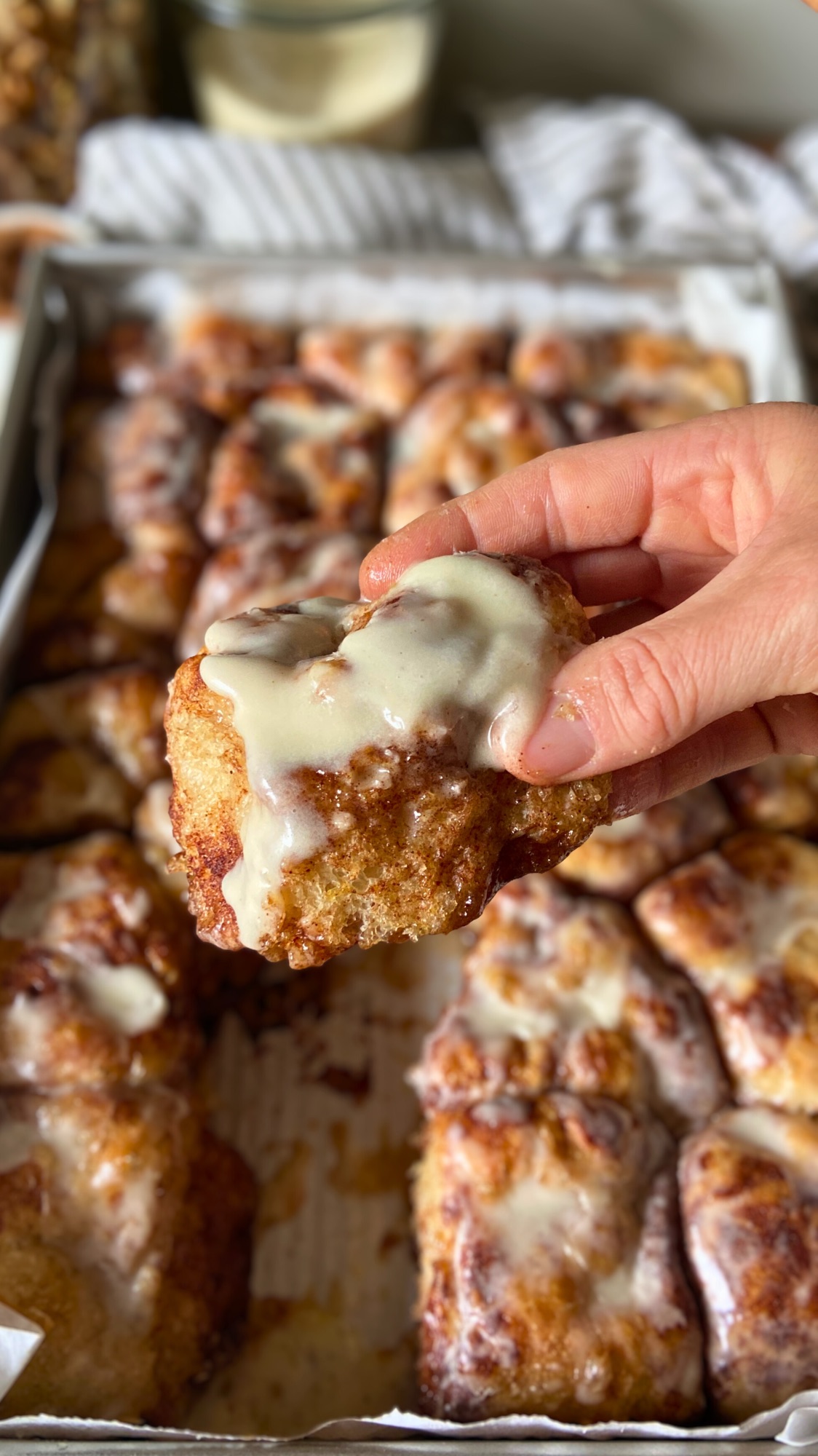
Transform my viral pull apart sourdough focaccia into an irresistible sweet treat! This pull-apart cinnamon roll focaccia combines the soft, airy texture of sourdough bread with classic cinnamon roll flavors, vanilla butter, brown sugar cinnamon coating, and a sweet glaze. Perfect for brunch, holidays, or whenever you want to impress and enjoy!
- Why You’ll Love This Recipe
- Tips for Perfect Cinnamon Roll Focaccia
- FAQs
- I want to use yeast instead of sourdough
- Ingredient Substitutions
- Recipe Notes
- Storage and Make-Ahead Instructions
- Love this recipe? Check out more below!
Why You’ll Love This Recipe
This sweet sourdough focaccia takes the beloved pull-apart format and transforms it into a cinnamon roll experience. Each piece is dipped in vanilla butter, rolled in cinnamon sugar, and baked until golden and caramelized. The result? Soft, fluffy, pull-apart pieces with that perfect cinnamon roll flavor and an easy glaze on top.


Cinnamon Roll Pull-Apart Sourdough Focaccia
Ingredients
For the Sweet Sourdough Dough:
- 500 g bread flour 4 cups
- 400 g water room temperature (1 3/4 cups)
- 75 g active sourdough starter fed and bubbly (1/3 cup)
- 8 g salt 1 1/2 teaspoons
- 30 g sugar 2 tablespoons + 1 teaspoon
- 10 g vanilla extract 2 teaspoons
- 14 g butter melted (1 tablespoon)
- 1-2 g ground cinnamon 1/4 to 1/2 teaspoon
For the Pan:
- 28 g butter melted (2 tablespoons)
For the Vanilla Butter Dip:
- 85 g butter melted (6 tablespoons)
- 5 g vanilla extract 1 teaspoon
For the Cinnamon Sugar Coating:
- 150 g brown sugar packed (3/4 cup)
- 7 g cornstarch 1 Tablespoon
- 12-15 g ground cinnamon 1½ to 2 tablespoons
For the Classic Cinnamon Roll Glaze:
- 180 g powdered sugar 1 1/2 cups
- 45-60 g milk or cream 3 to 4 tablespoons
- 5 g vanilla extract 1 teaspoon
- Pinch of salt
OR For the Buttercream Cheese Frosting (Upgraded Option):
- 113 g unsalted butter softened (1/2 cup / 1 stick)
- 113 g full-fat cream cheese cold (1/2 cup / 4 oz)
- 425 g powdered sugar sifted (3 1/2 cups)
- 15 g buttermilk powder optional (1 tablespoon)
- 2-4 g ground cinnamon (1/2 to 1 teaspoon)
- 5 g vanilla extract or paste 1 teaspoon
- 3 g fine sea salt 1/2 teaspoon
Instructions
Day 1: Make the Sweet Sourdough Dough
- Mix the dough: In a large bowl, combine water, active sourdough starter, sugar, vanilla extract, and melted butter. Mix until combined. Add the flour, salt, and cinnamon, then mix until no dry flour remains. The dough will be sticky and shaggy.
- Rest: Cover the bowl with a damp towel or plastic wrap and let rest for 1 hour at room temperature.
- Stretch and fold: Perform one set of stretch and folds to build strength in the dough. Wet your hands, grab one side of the dough, stretch it up, and fold it over itself. Rotate the bowl 90 degrees and repeat 4-6 times total until you’ve worked around the entire dough ball.
- Bulk fermentation (room temperature proof): Cover the bowl and let the dough proof at room temperature for approximately 8-12 hours, or until at least doubled in size and puffy. The exact time will depend on your kitchen temperature and starter strength.
Day 2: Shape, Rise, and Bake
- Prepare your pan: Line a 9×13 inch baking pan with parchment paper. Pour 28g (2 tablespoons) of melted butter into the bottom of the pan and spread it around evenly. This creates a golden, caramelized bottom.
- Prepare vanilla butter: Melt 85g butter and stir in 5g vanilla extract. Set aside in a bowl for dipping.
- Prepare cinnamon sugar: Mix brown sugar, cornstarch and cinnamon in a shallow bowl or plate. This will coat each dough ball.
- Shape into balls: Turn the dough out onto a lightly floured/sprayed with oil, surface. Divide and shape into approximately 16-20 equal-sized balls (or your preferred size). You can use a bench scraper to divide evenly.
- Dip and coat: Dip each ball into the vanilla butter, allowing excess to drip off, then roll generously in the cinnamon sugar mixture. Make sure each piece is well-coated for maximum flavor!
- Arrange in pan: Place the coated dough balls in the prepared pan, spacing them slightly apart. They should just barely touch, they’ll expand and connect during the second rise.
- Drizzle with butter: Pour any remaining vanilla butter over the arranged dough balls. This creates an incredible caramelized bottom layer.
- Second rise: Cover and let rise for 2 hours at room temperature, or until puffy and the balls have grown together into one cohesive pull-apart bread.
- Bake: Preheat oven to 375°F (190°C).
- Dimple the focaccia balls with your fingers
- Bake for 25-30 minutes, or until golden brown on top. The internal temperature should reach about 190-200°F for perfectly baked bread.
- Cool slightly: Let cool in the pan for 10-15 minutes before glazing.
Make the Cinnamon Roll Glaze
- Prepare glaze: While the focaccia cools slightly, whisk together 180g powdered sugar, milk/cream (starting with 45g), 5g vanilla extract, and a pinch of salt until smooth.
- Add more milk if needed to reach a drizzling consistency, you want it thick but pourable.
OR Make the Buttercream Cheese Frosting (Alternative)
- Prepare buttercream cheese frosting:
- Cream 113g softened butter on medium-high speed for 2 minutes until pale and fluffy.
- Add 113g cold cream cheese and beat just until combined, don’t overmix or it will become too soft.
- Mix in 1 tsp vanilla extract and 1/2 tsp fine sea salt.
- Sift together 425g powdered sugar, 1/2-3/4 tsp ground cinnamon, and 1 tbsp buttermilk powder (if using).
- Add the sifted dry ingredients gradually on low speed until fully incorporated and smooth. About 1/4 cup at a time.
- Taste and adjust: add more cinnamon or salt if desired for your perfect flavor balance.
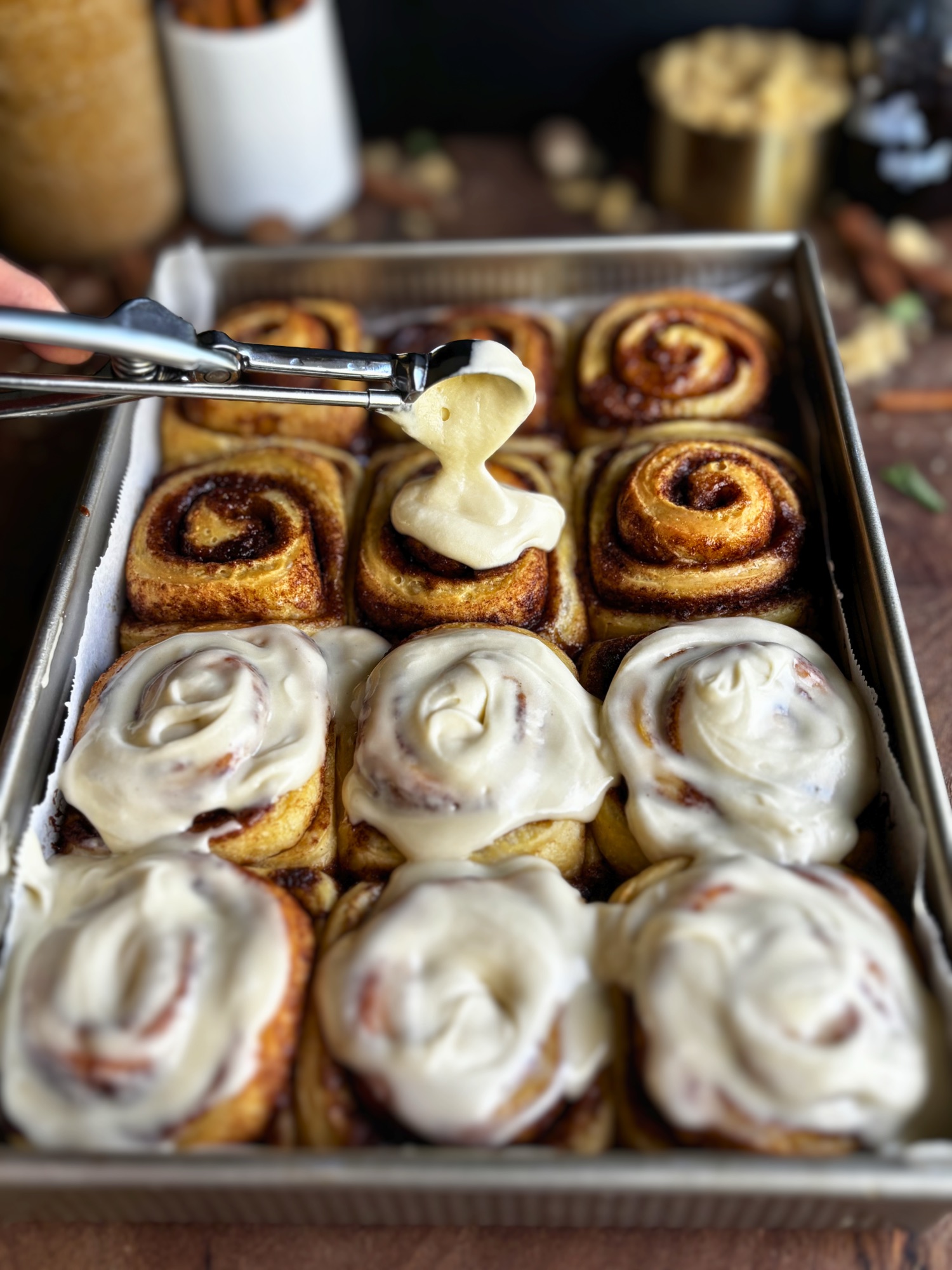
- Frost or glaze: Generously spread the buttercream cheese frosting (or drizzle the glaze) over the warm focaccia. The warmth will help the frosting melt slightly into the layers, creating an irresistible finish.
Serve: Serve warm and pull apart to enjoy! Each piece should separate easily with that signature pull-apart texture.
Notes

Follow the timing AND signs of complete proofing in the recipe The dough should be soft and slightly sticky, this creates the perfect tender, fluffy texture that makes this recipe special Don’t skimp on the butter dip, it creates amazing caramelization with the cinnamon sugar and keeps the bread moist Choose your topping: The simple glaze is quick and sweet, while the buttercream cheese frosting is richer and more indulgent! For the buttercream cheese frosting: Use cold cream cheese to prevent the frosting from becoming too soft. Spread it on while the focaccia is still warm for that signature melty finish For extra indulgence, reserve a small amount of vanilla butter to brush on top right after baking, before adding the glaze or frosting Temperature matters: If your kitchen is cold, the rises will take longer. If it’s warm, they’ll go faster; watch the dough, not just the clock Even sizing: Try to make your dough balls roughly the same size so they bake evenly Best served warm on the day of baking, but can be reheated gently in the oven Storage: Store any leftovers covered at room temperature for up to 2 days. Reheat individual portions in the microwave for 15-20 seconds or in a 300°F oven until warmed through.
Tips for Perfect Cinnamon Roll Focaccia
- Use active, bubbly starter: Your starter should have doubled in size and be at its peak when you use it. This ensures good rise and that signature sourdough flavor.
- Don’t skip the 1-hour rest: This autolyse period allows the flour to fully hydrate and makes the dough easier to work with. It’s worth the wait!
- Embrace the sticky dough: High hydration dough (80%) will be sticky, that’s what creates the soft, fluffy texture. Use wet hands or oiled hands when handling, and resist adding extra flour.
- Watch your proof, not the clock: Under-proofed focaccia will be dense and tight. Over-proofed will be flat and lacking structure. Look for visual cues, the dough should be puffy, jiggly, and slowly spring back when gently pressed.
- Room temperature matters: Sourdough fermentation works best between 68-75°F. Too cold and it will take much longer. Too warm and it can over-proof quickly.
- The second rise is crucial: Don’t rush this step! The balls need time to puff up and grow together into one cohesive pull-apart bread. They should jiggle when you shake the pan.
- Bake on the lower rack: This helps the bottom get golden and prevents the top from over-browning too quickly, especially with sugar-coated versions.
- Let it cool slightly before glazing: If you glaze when it’s too hot, the glaze will just melt and run off. Wait about 10-20 minutes for the best results.
- Serve fresh and warm: Pull-apart focaccia is always best the day it’s made while still warm. The texture is incredible when fresh!

Storage and Make-Ahead Instructions
Store any leftovers covered at room temperature for up to 2 days. Reheat individual portions in the microwave for 15-20 seconds or in a 300°F oven until warmed through.
OPTION 1: Night Before Evening: mix dough → proof overnight at room temp → morning: shape balls, dip & arrange → proof 1-2 hours → bake & ice
OPTION 2: Day Before Morning: mix dough → proof all day → evening: shape balls, dip & arrange → cover well & refrigerate overnight → next morning: bring to room temp 1-2 hours → bake & ice
Both ways = same delicious result! Pick what works for YOUR schedule. Follow the timing AND signs of complete proofing in the recipe

FAQs
Can I make the icing ahead of time?
Absolutely! Make the glaze or frosting the night before and store it covered in the fridge. Pull it out before you bake so it has time to come closer to room temperature for easier spreading. If you are in a rush, spreading it cold over warm focaccia works just fine too.
How long can I cold proof in the fridge?
Up to 12 hours is the sweet spot. Shape your dough balls, dip and coat them, arrange them in the pan, cover well, and refrigerate. Pull them out the next morning and let them come to room temperature and finish their rise before baking.
Can I bake this in a muffin pan?
Yes! Divide your dough balls into groups of about 3 per muffin cup. Keep the oven temperature the same so you still get that caramelized bottom, but start checking for doneness earlier since individual portions will bake faster than the full pan.
Can I freeze it?
Freezing after baking works great. Let it cool completely, then freeze without the glaze. When you are ready to serve, pull it out and let it defrost at room temperature, then warm it in the oven and add your glaze or frosting fresh. It tastes like you just made it.
Salted or unsalted butter?
Both work! Salted butter actually gives a slightly better flavor because the salt balances the sweetness beautifully. If you only have unsalted, just add an extra pinch, about 1/8 teaspoon, to your melted butter and stir well.
Why is my dough too sticky to handle?
This is a high hydration dough and sticky is normal! Wet hands or lightly oiled hands are your best friend when shaping. Resist the urge to add more flour as that will affect the final texture. A light spray of avocado or olive oil on your work surface helps too.
How do I know when it is done baking?
The top should be deep golden brown and the internal temperature should read between 190 and 200 degrees F on an instant read thermometer.
I want to use yeast!
No Sourdough Starter? Use Yeast Instead!
Don’t have sourdough starter? You can use instant yeast or active dry yeast instead! Here’s what to do:
Replace This:
- 75g active sourdough starter
With This:
- 37g (about ¼ cup) all-purpose flour
- 37g (about 2½ tablespoons) water
- 7g (2¼ teaspoons) instant yeast OR 9g (2¾ teaspoons) active dry yeast
Instructions Based on Yeast Type:
Using INSTANT YEAST (also called Rapid Rise):
This is the easiest option!
- Mix everything together at once: Add the flour, water, and instant yeast along with ALL the other recipe ingredients (salt, sugar, etc.) right from the start. Mix until combined.
- Bulk fermentation: Let the complete dough rise for 2-3 hours at room temperature until it doubles in size and becomes puffy and jiggly. (This replaces the 8-12 hour overnight fermentation you’d do with sourdough starter.)
- Continue as normal: Once your dough has doubled, proceed with the recipe exactly as written, same stretch and fold, same shaping, same coating, same second rise, and same baking!
Using ACTIVE DRY YEAST:
This requires one extra step to activate the yeast first.
- Activate the yeast: Mix the 37g warm water (100-110°F/38-43°C) with the 9g active dry yeast in a small bowl and a 1/4 teaspoon of sugar. Let it sit for 5-10 minutes until it becomes foamy and bubbly. If it doesn’t foam, your yeast is dead, start over with fresh yeast.
- Mix everything together: Once your yeast is foamy, add it along with the 37g flour and ALL the other recipe ingredients (salt, sugar, etc.). Mix until combined.
- Bulk fermentation: Let the complete dough rise for 2-3 hours at room temperature until it doubles in size and becomes puffy and jiggly. (This replaces the 8-12 hour overnight fermentation you’d do with sourdough starter.)
- Continue as normal: Once your dough has doubled, proceed with the recipe exactly as written – same stretch and fold, same shaping, same coating, same second rise, and same baking!
Important Notes:
Water Adjustment:
- Worried about wet dough? Start by decreasing the water in the main recipe to 360g (1.5 cups). Experienced bakers can stick with the full 400g.
- Use room temperature water for instant yeast
- Use warm water (100-110°F) for active dry yeast
What Actually Changes:
- ✅ Much faster bulk fermentation (2-3 hours instead of 8-12 hours)
- ✅ Mix yeast right in with the flour and water at the beginning (same as you would with starter)
- ✅ Look for the dough to double in size and become puffy and jiggly
- ❌ Everything else stays EXACTLY the same – same mixing method, same stretch and fold technique, same shaping, same coating, same second rise time, and same baking temperature and time!
Temperature Tips:
- Ideal bulk fermentation temperature: 75-80°F (24-27°C)
- Warmer kitchen = faster rise (might only take 2 hours)
- Cooler kitchen = slower rise (might take 3+ hours)
- Don’t worry if it takes a bit longer – just watch for the dough to double!
Quick Reference Chart:
| Ingredient | Amount |
|---|---|
| All-purpose flour | 37g (¼ cup) |
| Water | 37g (2½ tbsp) |
| INSTANT YEAST | 7g (2¼ tsp) |
| ACTIVE DRY YEAST | 9g (2¾ tsp) |
Bulk Fermentation Time: 2-3 hours (until doubled)
Everything Else: Exactly the same as the sourdough version!
Yeast FAQ:
Q: Can I use regular all-purpose yeast from the grocery store?
A: Yes! Most grocery store yeast is either instant or active dry – check your package. Instant yeast (also called Rapid Rise or Bread Machine yeast) is easier because you don’t need to proof it first.
Q: Why does instant yeast need less than active dry?
A: Instant yeast has smaller granules and is more potent, so you need less of it to achieve the same rise.
Q: Can I let the yeast dough rise overnight in the fridge?
A: Absolutely! After mixing, you can refrigerate the dough for up to 24 hours for even better flavor. The cold temperature slows the rise. When ready to use, let it come to room temperature and finish doubling if needed, then continue with the recipe.
Q: My dough isn’t rising. What went wrong?
A: Check these things:
- Is your yeast fresh? (Check expiration date)
- Was your water the right temperature? (Too hot kills yeast, too cold slows it way down)
- Is your kitchen cold? (Move to a warmer spot)
- Did you accidentally add salt directly to the yeast before mixing? (Salt can inhibit yeast)
Q: Can I use this yeast method for all your sourdough recipes?
A: This substitution works best for enriched doughs like focaccia, cinnamon roll focaccia, and similar recipes. For lean doughs like basic bread loaves, you may need to adjust the formula differently.
Pro Tip: Instant yeast is more forgiving and faster to use. If you’re new to baking or want the easiest route, choose instant yeast over active dry!

Ingredient Substitutions
Not everyone has the same pantry, and that is okay! Here are some simple swaps that work well in this recipe.
Butter
Salted or unsalted butter both work beautifully here. If you only have unsalted, add an extra pinch of salt to your melted butter and you are good to go. For a dairy free option, a plant based butter works as a substitute in both the dough and the vanilla butter dip.
Glaze Liquid
The glaze calls for milk or cream, but you do not need to run to the store if you are out. You can substitute with water plus a small amount of melted butter to keep that rich consistency. Start with 3 tablespoons of water and half a teaspoon of melted butter, then add more liquid as needed until you reach a drizzleable consistency. Or plant based options are perfect here!
Flour
This recipe is written for bread flour, which gives you that soft, chewy, pillowy texture. All purpose flour can be used in a pinch but the texture will be slightly less structured, add about 20 grams less water to the dough if you are using all purpose, due to its absorption difference from bread flour. If you are using fresh milled flour, expect your hydration needs and proofing times to be different. Watch your dough, not the clock.
Gluten Free
This recipe has not been tested with gluten free flour. If you give it a try, I would love to hear how it goes in the comments!
Recipe Notes
- The dough should be soft and slightly sticky: this creates the perfect tender, fluffy texture that makes this recipe special. Spray a little avacado/olive oil on your work surface, before you dump out your focaccia dough.
- Don’t skimp on the butter dip: it creates amazing caramelization with the cinnamon sugar and keeps the bread moist
- Choose your topping: The simple glaze is quick and sweet, while the buttercream cheese frosting is richer and more indulgent!
- For the buttercream cheese frosting: Use cold cream cheese to prevent the frosting from becoming too soft. Spread it on while the focaccia is still warm for that signature melty finish
- For extra indulgence, reserve a small amount of vanilla butter to brush on top right after baking, before adding the glaze or frosting
- Temperature matters: If your kitchen is cold, the rises will take longer. If it’s warm, they’ll go faster, watch the dough, not just the clock
- Even sizing: Try to make your dough balls roughly the same size so they bake evenly
- Best served warm on the day of baking, but can be reheated gently in the oven
This sweet pull-apart focaccia is the perfect fusion of sourdough bread baking and cinnamon roll indulgence. The overnight room temperature rise develops incredible flavor while the vanilla butter and cinnamon sugar create those classic cinnamon roll vibes everyone loves. Whether you’re serving this for a special breakfast, holiday brunch, or just because, it’s guaranteed to disappear fast!
Love this recipe? Check out more below!
- My Viral Pull-Apart Focaccia
- Banana Bread Sourdough Focaccia
- Peanut Butter & Jelly Sourdough Focaccia
- Pumpkin Pie Sourdough Focaccia







Leave a Reply to Claire Cancel reply