

Soft, buttery sourdough dinner rolls with a stunning golden herb swirl baked right inside! These impressive yet easy dinner rolls feature layers of garlic, herbs, and spices in beautiful spiral patterns. Perfect for Thanksgiving, Christmas, or any special dinner.
Jump to Recipe | Tips & Tricks
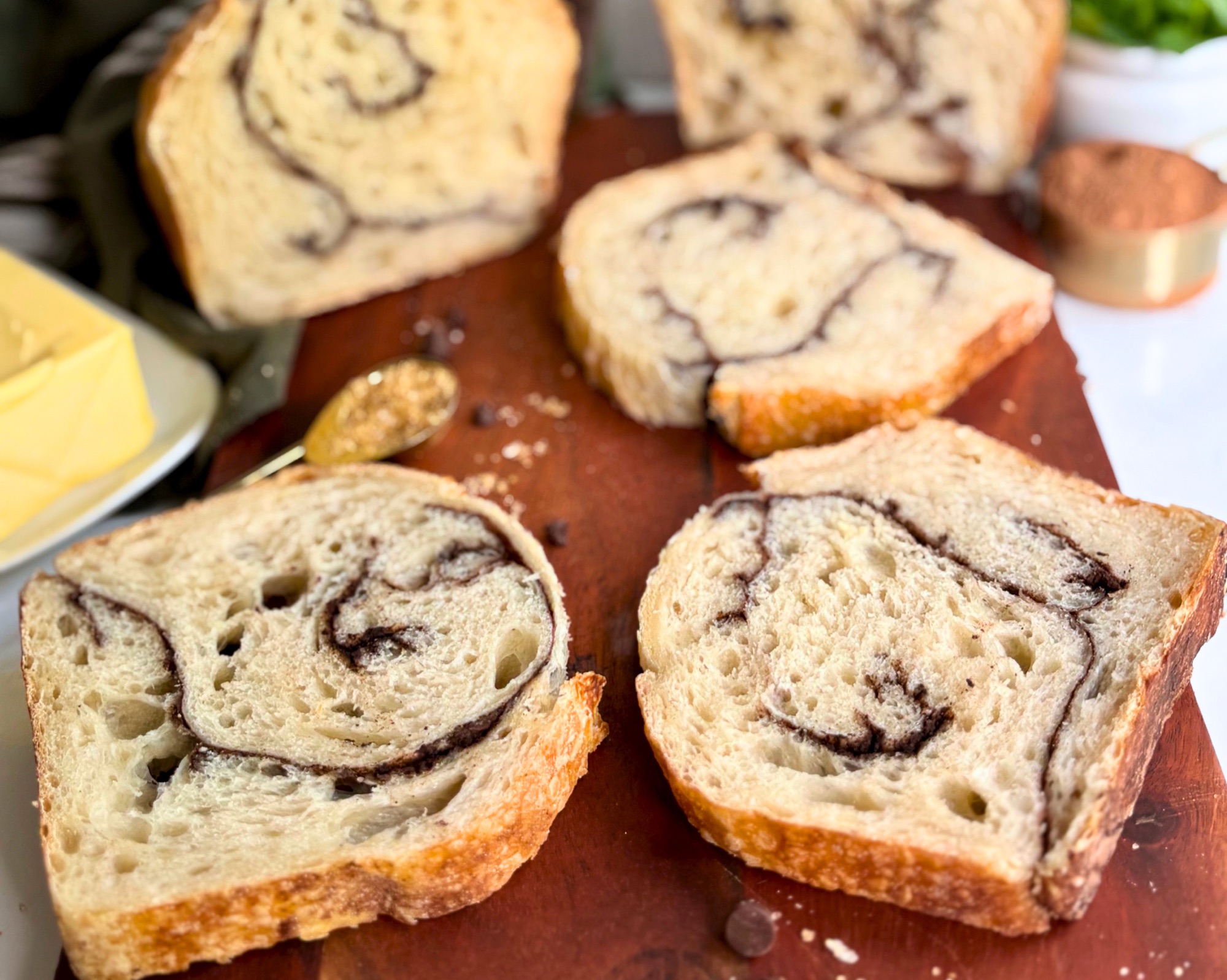
Picture this: You slice into a golden dinner roll and reveal a perfect spiral of herbs swirling through pillowy-soft dough. Your guests actually gasp.
These savory herb swirl dinner rolls are about to become your new signature move. They feature a stunning golden spiral of garlic, herbs, and spices running through tender brioche-style sourdough. The kind of bread that stops dinner conversation mid-sentence and has everyone asking, “Wait, you MADE these?”
Here’s what makes them special: that gorgeous swirl isn’t just for show. Every bite delivers a perfect balance of buttery dough and aromatic herbs.
Why You’ll Love This Recipe:
- Stunning presentation: That golden herb swirl is visible in every slice
- Easier than they look: Simple rolling technique, impressive results
- Flexible timing: Make them same-day or overnight for minimal morning work
- Customizable: Adjust size and herbs to your preference
- Real sourdough flavor: Natural fermentation adds incredible depth
These rolls work for everything from holiday tables to weeknight soup dinners. Serve them warm with butter, alongside your favorite stew, or use them for the world’s fanciest sliders. The enriched dough gives you that soft, pull-apart texture while the herb swirl adds a burst of flavor in every bite.
Why This Recipe Works

I’ve figured out exactly what makes the difference between good rolls and show-stopping ones.
The Swirl That Actually Stays Put
Most swirled breads have a frustrating problem: gapping. Those annoying air pockets that separate your beautiful layers and make your swirl look sad. I use egg wash instead of butter for this. It acts like glue, binding the herb layers to the dough without creating separation during baking.
That Gorgeous Golden Color
The turmeric and paprika aren’t just hanging out for fun, they create a vibrant golden-orange swirl that’s visible even with a modest amount of herbs. You get that Instagram-worthy presentation without overpowering herb flavor. It’s a visual game changer that adds delicious taste.
Flexibility Built In
Whether you need these ready in 8 hours or want to stretch the process over two days, this recipe adapts to your life. My personal favorite? Shape them the night before, refrigerate overnight, and bake fresh in the morning. You get bakery level flavor development with almost zero morning effort. Your kitchen smells amazing, you look like a baking genius, and you actually got a full night’s sleep. That’s what I call a win.
Before You Begin
About Your Sourdough Starter
Use active, fed starter that has doubled in size within 4-6 hours of feeding. If your starter is sluggish or you’re using discard, expect longer fermentation times. The more active your starter, the better your results.
Key Ingredient Notes:
Buttermilk adds tang and creates extra tender crumb. Regular whole milk works fine as a substitute, or make your own by mixing 235g milk with 1 tablespoon lemon juice or vinegar (let it sit 5 minutes).
All-purpose flour creates softer, more tender rolls than bread flour. Trust me on this one, bread flour works, but AP flour is the move for that pillowy texture.
Room temperature butter is crucial. If your butter isn’t soft enough to incorporate easily, you’ll fight with your dough. Set it out an hour before you start.
Dried herbs provide concentrated flavor and better color than fresh. If you want to use fresh herbs, triple the amount and pat them very dry before using.
Turmeric and paprika are your secret weapons for that visible golden swirl. They add color without affecting flavor significantly. Don’t skip them if you want that wow factor presentation.
Recipe Information
Prep Time: 30 minutes (active)
Bulk Fermentation: 6-8+ hours
Final Proof: 1.5-3 hours
Bake Time: 20-25 minutes
Total Time: 10-14 hours (depending on fermentation)
Yield: 12-18 rolls (adjustable)
Difficulty: Intermediate
Keywords: sourdough dinner rolls, herb swirl rolls, savory dinner rolls, sourdough bread rolls, homemade dinner rolls, herb bread rolls, swirl bread technique
Print Recipe
Ingredients
For the Dough:
- 81g active sourdough starter
- 235g buttermilk, room temperature
- 15g granulated sugar
- 2 large eggs (approximately 95g)
- 520g all-purpose flour
- 10g salt
- 49g unsalted butter, room temperature
For the Herb Swirl:
- 1 large egg + 1 tablespoon water (for egg wash)
- 6g garlic powder (2 teaspoons)
- 6g onion powder (2 teaspoons)
- 8g dried parsley (2 tablespoons)
- 2g dried rosemary, crushed fine (1 teaspoon)
- 2g dried thyme (1 teaspoon)
- 6g fine sea salt (1 teaspoon)
- 1g black pepper (1/2 teaspoon)
- 1g turmeric (1/2 teaspoon) – for golden color
- 2g paprika (1 teaspoon) – for orange-red color
- Optional: 15-23g finely grated Parmesan cheese (2-3 tablespoons)
Total herb mixture: approximately 34g (without Parmesan)
Amount per roll:
- Small rolls (18 rolls): approximately 1/2 teaspoon per roll
- Medium rolls (15 rolls): approximately 1/2 to 3/4 teaspoon per roll
- Large rolls (12 rolls): approximately 3/4 to 1 teaspoon per roll
Instructions
Step 1: Make the Dough
- In a large mixing bowl or the bowl of a stand mixer, combine the active sourdough starter, buttermilk, and sugar. Mix until well combined.
- Add the eggs and whisk until fully incorporated into the mixture.
- Add the flour and salt to the wet ingredients. Mix with a wooden spoon or dough hook attachment on low speed until a shaggy dough forms and no dry flour remains (about 3-4 minutes).
- Autolyse Rest: Cover the bowl and let the dough rest for 20-30 minutes. This allows the flour to fully hydrate and gluten to begin developing, making it easier to incorporate the butter.
- After the rest, add the softened butter a tablespoon at a time, mixing well between each addition. Continue mixing until the butter is fully incorporated and the dough is smooth and elastic (about 8-10 minutes by hand or 5-7 minutes with a stand mixer).
- The dough should be soft, slightly tacky but not sticky. It should pull away from the sides of the bowl.
Step 2: Bulk Fermentation
- Cover the bowl with a lid or plastic wrap.
- Let the dough rise at room temperature (70-72°F) for 6-8+ hours, or until increased in size by 75-100%.
- Perform 2-3 sets of stretch and folds during the first 2 hours (every 30-45 minutes). This helps develop gluten structure and strengthen the dough.
- The dough is ready when it looks puffy and aerated, has nearly doubled in size, and passes the poke test (when you gently poke the dough, it should spring back slowly, leaving a slight indentation).
Step 3: Prepare the Herb Filling
- In a small bowl, mix together the garlic powder, onion powder, dried parsley, rosemary, thyme, salt, black pepper, turmeric, and paprika until evenly combined. If using Parmesan, you can either mix it into the herb blend or keep it separate to test both ways.
- If your rosemary is in larger pieces, crush it between your fingers or use a mortar and pestle to break it down into smaller pieces so it distributes evenly.
- In another small bowl, whisk together the egg and 1 tablespoon of water to create an egg wash. Set aside.
Step 4: Shape the Rolls

Divide & Pre-Shape
- Once the dough has completed bulk fermentation, turn it out onto a lightly floured work surface.
- Divide the dough into your desired portions:
- 12 large rolls: 83g each
- 15 medium rolls: 67g each
- 18 small rolls: 56g each
- Tested size: 60g portions work perfectly for medium dinner rolls and gives 16 rolls.
- Take each weighed portion and gently use a push-pull motion with your cupped hand to create a smooth, round ball. Place the pre-shaped balls on your work surface with the seam side down. This creates surface tension and makes the final shaping much easier.

Bench Rest
- Cover the pre-shaped balls lightly with a towel or plastic wrap and let them rest for 15 minutes. This allows the gluten to relax, making them easier to roll out without tearing or springing back.
Roll Out the Dough
- Working with one portion at a time, roll each dough ball into a rough rectangle approximately 8-9 inches long and about 2 inches wide, keeping it about 1/4 inch thick. The dough should be thin enough to see multiple rotations in your swirl.
- For reference: 60g portions rolled to these dimensions create the perfect size dinner roll with an ideal swirl.
- Check for air bubbles: Gently press out or pop any large air bubbles you see with your rolling pin. These can create gaps in your final swirl.
Apply the Filling

- Brush the entire surface generously with egg wash, making sure to get all the way to the edges.
- Sprinkle approximately 1/2 to 1 teaspoon of the herb mixture evenly over the egg-washed surface, spreading it all the way to the edges except for a small 1/2-inch border on one short end (this will be your sealing edge).
Roll & Seal
- The rolling technique for a perfect centered swirl:
- Position the dough so the clean border edge is at the top (farthest from you)
- Starting from the bottom or top edge (closest to you), begin rolling the dough up, rolling it into a tight log
- As you roll, use gentle but firm pressure to keep the roll snug
- Continue rolling until you reach the clean edge at the top
- Sealing the roll:
- When you reach the end, pinch the seam closed firmly along the length of the roll
- Pinch and slightly tuck the ends under to seal them and prevent the filling from escaping
- The roll should feel cohesive and hold together well
Arrange in Pan

- Place the rolled and sealed log seam-side down in your greased baking pan. This creates an oblong-shaped roll with a visible swirl pattern throughout. The oblong shape maintains the swirl perfectly and shows off that beautiful herb spiral when sliced.
- Arrange all shaped rolls in a greased 9×13-inch baking pan (for 12-18 rolls) or 9×9-inch pan (for 9 rolls). Space them so they’re close with the short edges touching
Pro Tip: The oblong shape is the best way to showcase the beautiful herb swirl, it’s easier to shape and maintains the spiral pattern perfectly throughout the roll.
Step 5: Final Proof
- Cover the pan loosely with plastic wrap or a clean bag.
- Let the rolls proof at room temperature for 1.5-3 hours, or until they are puffy, have nearly doubled in size, and are touching each other in the pan.
- The timing will depend on the temperature of your kitchen and the activity of your starter. The rolls are ready to bake when they look soft and pillowy, and a gentle poke leaves a slight indentation that slowly springs back.
Make-Ahead Option (Overnight Cold Proof):
For maximum convenience and flavor development, you can refrigerate the shaped rolls overnight instead of doing a room temperature proof. After shaping the rolls in Step 4, cover the pan tightly with plastic wrap and place directly in the refrigerator for 8-16 hours. The next morning, remove from the refrigerator and let sit at room temperature for 1-2 hours to take the chill off before baking. The rolls are ready when they look puffy and slightly risen.
Step 6: Bake
- Preheat your oven to 375°F (190°C) about 30 minutes before you’re ready to bake.
- Gently brush the tops of the proofed rolls with the remaining egg wash.
- Optional: Sprinkle with flaky sea salt, additional herbs, or Parmesan.
- Bake for 20-25 minutes, or until the rolls are deep golden brown and the internal temperature reaches 190-200°F.
- Remove from the oven and brush the hot rolls with melted butter for an extra soft, glossy finish (optional).
- Let cool in the pan for 5-10 minutes, then transfer to a wire rack or serve warm directly from the pan.


Savory Herb Swirl Dinner Rolls (Sourdough)
Ingredients
For the Dough:
- 81 g active sourdough starter
- 235 g buttermilk room temperature
- 15 g granulated sugar
- 2 large eggs approximately 95g
- 520 g all-purpose flour
- 10 g salt
- 49 g unsalted butter room temperature
For the Herb Swirl:
- 1 large egg + 1 tablespoon water for egg wash
- 6 g garlic powder 2 teaspoons
- 6 g onion powder 2 teaspoons
- 8 g dried parsley 2 tablespoons
- 2 g dried rosemary crushed fine (1 teaspoon)
- 2 g dried thyme 1 teaspoon
- 6 g fine sea salt 1 teaspoon
- 1 g black pepper 1/2 teaspoon
- 1 g turmeric 1/2 teaspoon
- 2 g paprika 1 teaspoon
- 15-23 g finely grated Parmesan cheese 2-3 tablespoons, optional
Instructions
Step 1: Make the Dough
- In a large mixing bowl or the bowl of a stand mixer, combine the active sourdough starter, buttermilk, and sugar. Mix until well combined.
- Add the eggs and whisk until fully incorporated into the mixture.
- Add the flour and salt to the wet ingredients. Mix with a wooden spoon or dough hook attachment on low speed until a shaggy dough forms and no dry flour remains (about 3-4 minutes).
- Cover the bowl and let the dough rest for 20-30 minutes. This allows the flour to fully hydrate and gluten to begin developing, making it easier to incorporate the butter.
- After the rest, add the softened butter a tablespoon at a time, mixing well between each addition. Continue mixing until the butter is fully incorporated and the dough is smooth and elastic (about 8-10 minutes by hand or 5-7 minutes with a stand mixer).
- The dough should be soft, slightly tacky but not sticky. It should pull away from the sides of the bowl.
Step 2: Bulk Fermentation
- Cover the bowl with a damp towel or plastic wrap.
- Let the dough rise at room temperature for 6-8+ hours, or until increased in size by 75-100%.
- Perform 2-3 sets of stretch and folds during the first 2 hours (every 30-45 minutes). This helps develop gluten structure and strengthen the dough.
- The dough is ready when it looks puffy and aerated, has nearly doubled in size, and passes the poke test (when you gently poke the dough, it should spring back slowly, leaving a slight indentation).
Step 3: Prepare the Herb Filling
- In a small bowl, mix together the garlic powder, onion powder, dried parsley, rosemary, thyme, salt, black pepper, turmeric, and paprika until evenly combined. If using Parmesan, you can either mix it into the herb blend or keep it separate to test both ways.
- If your rosemary is in larger pieces, crush it between your fingers or use a mortar and pestle to break it down into smaller pieces so it distributes evenly.
- In another small bowl, whisk together the egg and 1 tablespoon of water to create an egg wash. Set aside.
Step 4: Shape the Rolls
- Once the dough has completed bulk fermentation, turn it out onto a lightly floured work surface.
- Divide the dough into your desired portions: 12 large rolls (83g each), 15 medium rolls (67g each), 18 small rolls (56g each), or 60g portions(16 rolls) for perfect medium dinner rolls.
- Take each weighed portion and gently use a push-pull motion with your cupped hand to create a smooth, round ball. Place the pre-shaped balls on your work surface with the seam side down. This creates surface tension and makes the final shaping much easier.

- Cover the pre-shaped balls lightly with a towel or plastic wrap and let them rest for 15 minutes. This allows the gluten to relax, making them easier to roll out without tearing or springing back.
- Working with one portion at a time, roll each dough ball into a rough rectangle approximately 8-9 inches long and about 2 inches wide, keeping it about 1/4 inch thick. The dough should be thin enough to see multiple rotations in your swirl.

- Gently press out or pop any large air bubbles you see with your rolling pin. These can create gaps in your final swirl.
- Brush the entire surface generously with egg wash, making sure to get all the way to the edges.
- Sprinkle approximately 1/2 to 1 teaspoon of the herb mixture evenly over the egg-washed surface, spreading it all the way to the edges except for a small 1/2-inch border on one short end (this will be your sealing edge).
- Position the dough so the clean border edge is at the top (farthest from you). Starting from the bottom edge (closest to you), begin rolling the dough up toward the top, rolling it into a tight log. As you roll, use gentle but firm pressure to keep the roll snug. Continue rolling until you reach the clean edge at the top.
- When you reach the end, pinch the seam closed firmly along the length of the roll. Pinch and slightly tuck the ends under to seal them and prevent the filling from escaping. The roll should feel cohesive and hold together well.
- Place the rolled and sealed log seam-side down in your greased baking pan. This creates an oblong-shaped roll with a visible swirl pattern throughout.
- Arrange all shaped rolls in a greased 9×13-inch baking pan (for 12-18 rolls) or 9×9-inch pan (for 9 rolls). Space them so they’re close with the short edges touching

Step 5: Final Proof
- Cover the pan loosely with plastic wrap or a damp towel.
- Let the rolls proof at room temperature for 1.5-3 hours, or until they are puffy, have nearly doubled in size, and are touching each other in the pan.
- The timing will depend on the temperature of your kitchen and the activity of your starter. The rolls are ready to bake when they look soft and pillowy, and a gentle poke leaves a slight indentation that slowly springs back.
Step 6: Bake
- Preheat your oven to 375°F (190°C) about 30 minutes before you’re ready to bake.
- Gently brush the tops of the proofed rolls with the remaining egg wash.
- Optional: Sprinkle with flaky sea salt, additional herbs, or Parmesan.
- Bake for 20-25 minutes, or until the rolls are deep golden brown and the internal temperature reaches 190-200°F.
- Remove from the oven and brush the hot rolls with melted butter for an extra soft, glossy finish (optional).
- Let cool in the pan for 5-10 minutes, then transfer to a wire rack or serve warm directly from the pan.
Notes
Tips & Notes

Shaping Success
Why Egg Wash Instead of Butter? This is the game-changer. Egg wash binds the herb layers and prevents the gapping and separation that happens with butter-based fillings. The egg acts like glue, keeping your beautiful swirl intact through proofing and baking.
Achieving the Perfect Swirl:
- Roll your dough thin (about 1/4 inch) for multiple rotations in the swirl
- Use the push-pull rolling technique to create tight, even spirals
- Pop any air bubbles before adding filling to prevent gaps
- Spread filling all the way to edges except the sealing edge
- Don’t overwork the dough when shaping or the swirl can shift
Visual Enhancement: The turmeric and paprika create a golden-orange color that makes the herb swirl much more visible when you slice the rolls, without overpowering the flavor. Both are mild spices that complement the savory profile perfectly.
Testing Different Sizes: Make a mixed batch (4 small, 4 medium, 4 large) to see which size you prefer. Smaller rolls work well for appetizers, while larger rolls are perfect for dinner service or sandwiches.
Flavor Customization
Variations to Try:
- Italian: Use more basil and oregano, add Italian seasoning
- French: Add tarragon and increase thyme, use herbes de Provence
- Mediterranean: Mix in za’atar, sumac, and sesame seeds
- Garlic lovers: Double the garlic powder or add roasted garlic to the dough
- Cheesy: Mix in more Parmesan or add shredded cheddar to the filling
Make-Ahead Magic
My Favorite Method (Overnight Cold Proof After Shaping):
Shape the rolls completely, place them in the pan, cover tightly with plastic wrap, and refrigerate for 8-16 hours (overnight). The next morning, remove from refrigerator, let sit at room temperature for 1-2 hours, then bake. This gives you fresh-baked rolls with minimal morning work AND develops incredible flavor from the cold fermentation!
Other Make-Ahead Options:
Cold Bulk Fermentation (Advanced): After mixing the dough, let it rise at room temperature for 3-4 hours with 2-3 sets of stretch and folds until it’s at least 50% risen. Then place the covered bowl in the refrigerator for an overnight cold ferment (8-12 hours). The next day, remove from the fridge, let it come to room temperature for about 30 minutes, then shape the rolls and do a full room temperature final proof (1.5-3 hours) before baking. This method develops the most complex sourdough flavor but requires patience during the final proof since the dough will be cold.
Dough Stage: After bulk fermentation, refrigerate the dough for up to 24 hours before shaping. Great if you want to split the work across two days.
Freezer Friendly: Freeze shaped, unbaked rolls on a baking sheet until solid, then transfer to a freezer bag for up to 3 months. Thaw overnight in refrigerator and proof before baking.
Storage & Serving
Storage: Store baked rolls in an airtight container at room temperature for up to 3 days. For longer storage, freeze in a freezer bag for up to 3 months. Reheat frozen rolls in a 300°F oven for 10-15 minutes.
Serving Suggestions:
- Serve warm with herb butter or honey butter
- Perfect alongside soups like tomato bisque, French onion, or butternut squash
- Great with pasta dishes, roasted chicken, or holiday meals
- Use for sliders or small sandwiches
- Serve as part of a bread basket with other artisan breads
Reheating: Wrap in foil and heat at 300°F for 10 minutes, or microwave individual rolls for 15-20 seconds.
Nutrition Information (per medium roll)
Approximate values:
- Calories: 165
- Carbohydrates: 26g
- Protein: 5g
- Fat: 4g
- Fiber: 1g
- Sodium: 320mg
Troubleshooting
Dough Issues:
- Too sticky: Add 1-2 tablespoons of flour at a time until manageable but still soft
- Too dry: Add 1 tablespoon of buttermilk at a time. Enriched doughs should be soft and slightly tacky
- Didn’t rise: Your starter may not have been active enough, or your kitchen may be too cold. Make sure your starter doubles within 4-6 hours of feeding.
Proofing Problems:
- Rose too much/overproofed: They may collapse or have large irregular holes. Watch closely during final proof—rolls should be puffy and nearly doubled, not tripled in size
- Dense or gummy: May be underbaked. Ensure internal temperature reaches 190-200°F. Also check that your starter was active and dough completed bulk fermentation properly
Swirl Issues:
- Herbs fell out during rolling: Make sure to brush the dough generously with egg wash first—it acts as the glue! Also ensure herbs are evenly distributed and pressed lightly into the egg wash
- Swirl has gaps or separated: Ensure you’re rolling tightly with the push-pull technique. Let rolls cool completely before slicing to allow structure to set
- Swirl isn’t visible enough: Add the turmeric and paprika for color. You can also increase the herb amount slightly, but start conservatively to avoid overpowering flavor
Baking Issues:
- Uneven browning: Rotate pan halfway through baking. If tops brown too quickly, tent with foil
- Rolls stuck to pan: Make sure to grease pan well. Line with parchment paper for easiest removal
Texture Problems:
- Crumb is too tight/not enough holes: Dough may need gentler handling during shaping. Also ensure you’re doing stretch and folds during bulk fermentation to develop gluten structure
Frequently Asked Questions
Can I use instant yeast instead of sourdough starter?
Yes, but the flavor will be different. Replace starter with 7g instant yeast and add 40g more flour and 40g more buttermilk to the dough. Follow the manufactures instructions with the temperature of the buttermilk. The bulk proofing will also be shorter.
Can I make these without a stand mixer?
Absolutely! Mix and knead by hand. The dough will take about 10-15 minutes of kneading to develop properly.
How do I know when bulk fermentation is done?
The dough should increase in size by 75-100%, look puffy and aerated, and pass the poke test (springs back slowly when poked).
Can I use fresh herbs instead of dried?
Yes, but use 2-3x the amount. Fresh herbs have more moisture which can affect the swirl appearance. Pat them very dry before using.
Do I have to use buttermilk?
No, regular whole milk works fine. You can also make a buttermilk substitute by mixing 235g milk with 1 tablespoon lemon juice or vinegar and letting it sit for 5 minutes.
Can I refrigerate the rolls overnight after shaping?
Yes! This is actually my favorite method. Shape the rolls completely, place in the pan, cover tightly with plastic wrap, and refrigerate for 8-16 hours. The next day, let them sit at room temperature for 1-2 hours, then bake. The cold fermentation adds incredible depth of flavor!
What’s the best pan to use?
A 9×13-inch metal baking pan works great for 12-18 rolls. You can also use a 9×9-inch pan for 9 rolls, or even a cast iron skillet for a rustic presentation.
How do I reheat leftover rolls?
Wrap in foil and heat at 300°F for 10 minutes, or microwave individual rolls for 15-20 seconds.
Why didn’t my swirl show up?
Make sure you’re using the turmeric and paprika for color enhancement. Also, roll the dough thin enough (1/4 inch) to create multiple rotations in the swirl.
More Sourdough Recipes You’ll Love
Looking for more ways to use your sourdough starter? Try these delicious recipes:


Final Thoughts
These savory herb swirl dinner rolls have become my secret weapon for impressing people. They look incredibly complicated but the technique is actually straightforward once you get the hang of it. And here’s the thing: even if your first batch isn’t picture-perfect, they’ll still taste amazing.
My first attempt? The swirls were wonky, the shapes were uneven, and I definitely didn’t get that Instagram-worthy golden spiral. But they disappeared in about 10 minutes.
Start with the recommended herb amounts and adjust in future batches based on your preferences. Some people love adding extra garlic powder for more punch, others prefer a subtler herb presence. There’s no wrong answer.
Have you made these herb swirl rolls? Leave a comment below and let me know how they turned out! Rate the recipe with stars and don’t forget to share photos on Instagram using #H3artOfTheHome – I love seeing your beautiful bakes and featuring them in my stories!
💬 Leave a Comment & Rating: Did you try this recipe? Leave a star rating and comment below! Your feedback helps other bakers and means the world to me.
📱 Share this recipe: Text this to a friend, email it to your mom, or share it in your Facebook baking group! Everyone needs this recipe in their life.
🔔 Want more recipes like this? Subscribe to my email newsletter for weekly sourdough recipes, bread baking tips, and exclusive content delivered straight to your inbox!
Connect With Me:
📷 Instagram: [@h3artofthehome] – Tag me in your bakes!
✉️ Email Newsletter:
Thank you for baking with me! Happy baking!
This post may contain affiliate links. I only recommend products I believe in, and if you choose to buy them, I may receive a small commission that helps support this site


Leave a Reply