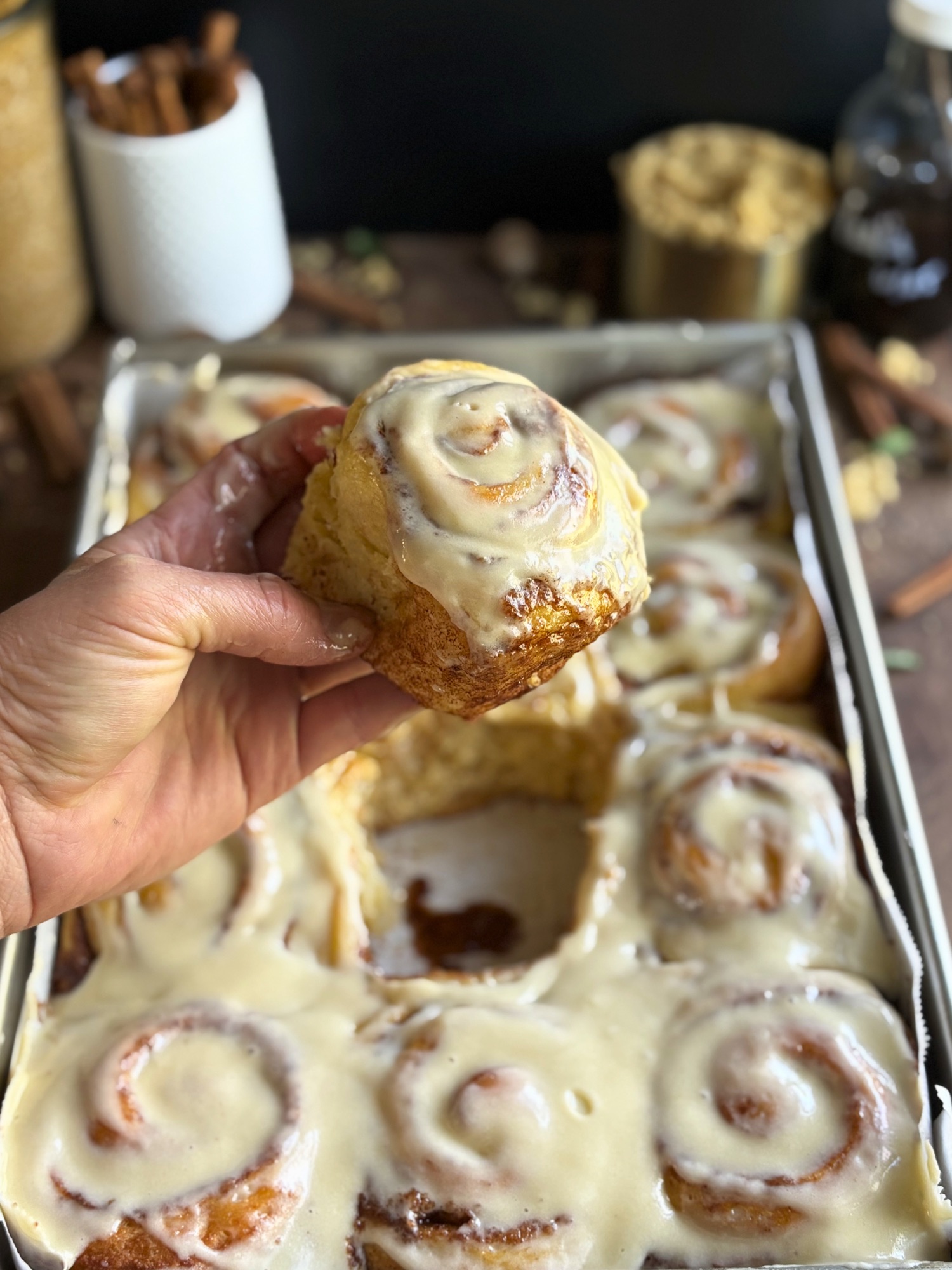
Not everyone keeps a sourdough starter on their counter. Not everyone wants to. And that is exactly why this recipe exists.
These high protein Greek yogurt cinnamon rolls are everything my sourdough version delivers in terms of texture, flavor, and that deeply satisfying cream cheese glaze, but made with active dry yeast for a same day bake that anyone can pull off. No starter, no long fermentation windows, no waiting until tomorrow. Just pillowy, golden cinnamon rolls with a genuine protein boost built right into the dough.
The secret is nonfat Greek yogurt. It replaces the water or milk you would typically find in a standard cinnamon roll dough, and in doing so it quietly transforms an indulgent breakfast into something that actually works harder for you. The yogurt adds protein, builds structure, and creates a crumb that stays soft longer than a standard enriched dough would.
I developed this recipe because I believe cinnamon rolls should not be reserved for people who bake with sourdough. If you have been making my high protein sourdough cinnamon rolls and you want a faster version for weekday baking, this is it. And if you have never made cinnamon rolls from scratch before, this is the recipe to start with.

Table of Contents
- Why Greek Yogurt Changes Everything
- The Science Behind Protein and Blood Sugar
- Ingredients and What They Do
- Which Greek Yogurt to Use
- Full Fat vs Nonfat Greek Yogurt
- Prefer a Sourdough Version?
- How to Make High Protein Greek Yogurt Cinnamon Rolls
- Recipe
- Tips for Success
- Storage and Reheating
- More High Protein Bakes from H3art of the Home
- Frequently Asked Questions
Why Greek Yogurt Changes Everything

Most cinnamon roll recipes are built on a foundation of whole milk, butter, and eggs. That combination produces a rich, tender dough that nobody is complaining about. But swapping the milk for nonfat Greek yogurt does something those recipes are not doing: it adds a meaningful amount of protein without adding fat, without changing the texture in any negative way, and without requiring protein powder or any supplement.
Greek yogurt is strained to remove liquid whey and lactose. That straining process concentrates the protein and reduces the carbohydrate content compared to regular yogurt. The result is a thick, dense dairy product that behaves more like a semi solid than a liquid in dough, which means it contributes structure and moisture at the same time. That dual function is why it works so well here.
In this dough, the Greek yogurt is doing the heavy lifting that milk and water would do in a standard recipe, but it is also feeding the yeast, contributing to gluten development, and helping the rolls stay soft after baking. The protein in the yogurt binds to the flour proteins and creates a stronger, more elastic dough that holds up better during shaping and baking.
The result is a cinnamon roll that has the same pillowy pull-apart quality you expect, but with a crumb that is noticeably more substantial. These are not light and airy in the hollow sense. They have presence. They hold up.
The Science Behind Protein and Blood Sugar
Here is the real reason to make these instead of a standard cinnamon roll, and it has nothing to do with calories or macros.
When you eat a meal heavy in carbohydrates without protein, your blood sugar rises quickly and drops just as fast. That cycle is what creates the mid morning crash after a pastry breakfast. You feel great for forty five minutes and then you are hungry, foggy, and reaching for something else. The carbohydrate is not the problem. The lack of protein alongside it is.
Protein slows digestion. When protein is present in a meal alongside carbohydrates, the body processes everything more gradually, which produces a slower, more sustained rise in blood sugar rather than a sharp spike. That smoother curve is what keeps you full longer and prevents the energy crash.
Greek yogurt specifically has a well documented low glycemic impact. Research has shown that the protein to carbohydrate ratio in plain yogurt is what drives its low glycemic index. The higher the protein content relative to the carbohydrate content, the more it blunts the blood sugar response. Nonfat plain skyr, which has one of the highest protein to carbohydrate ratios of any yogurt on the market, is doing exactly that in this dough.
So when you eat one of these rolls, you are eating a carbohydrate forward breakfast the way it should be eaten: with enough protein built in to give your body something to work with. The same taste, the same experience, with a meaningfully different outcome than a standard cinnamon roll.
That is worth baking for.

Ingredients and What They Do
Every ingredient in this recipe has a specific job. Here is what is happening and why.
Bread Flour
Bread flour has a higher protein content than all purpose flour, which means more gluten development and a stronger dough structure. That structure is what allows the rolls to rise tall, hold their shape during baking, and produce that soft but substantial crumb. All purpose flour will work as a substitute but the rolls will be slightly softer and less structured.
Active Dry Yeast
This recipe uses active dry yeast, specifically Red Star, which requires a brief proofing step before it goes into the dough. That proofing step is your confirmation that the yeast is alive and active before you commit the rest of the ingredients. If your yeast does not foam during proofing, it is not active and should not be used.
Nonfat Greek Yogurt
The protein engine of this recipe. The yogurt replaces the water or milk that would typically make up the primary liquid in a standard cinnamon roll dough. It adds protein, moisture, and structure without adding fat. Warm it briefly in the microwave before using it so the dough does not start cold.
Whole Milk
A small amount of whole milk warmed to 110 degrees F is used to proof the yeast. The warmth activates the yeast and a pinch of the measured sugar gives it something to feed on immediately. Keep this step separate from the yogurt until the yeast has foamed.
Eggs
Eggs add richness, fat, and structure. The proteins in the egg whites help the dough set during baking while the yolks add color and contribute to a tender crumb.
Butter
Softened butter goes into the dough after the initial mix and is added gradually while the mixer runs. Adding it slowly allows it to fully incorporate into the gluten structure rather than coating it, which gives the dough that characteristic soft, extensible quality of an enriched bread.
Cornstarch in the Filling
The cornstarch is not a filler. It is a functional ingredient that thickens the filling as it bakes, preventing it from leaking out and keeping that gooey interior set and defined rather than runny.

Which Greek Yogurt to Use
Any plain nonfat Greek yogurt will work in this recipe. What you are looking for is a thick, unstirred yogurt with no added sugar, no added fruit, and no flavoring. The yogurt needs to be plain so it does not introduce sweetness or flavor that will compete with the filling and glaze.
For the highest protein content and the most consistent results, I recommend Siggi’s plain nonfat skyr. Skyr is an Icelandic style dairy product that is strained even further than standard Greek yogurt, which concentrates the protein even more. Siggi’s nonfat plain skyr comes in at around 17 grams of protein per 5.3 ounce serving, which is significantly higher than most Greek yogurt brands on the market.
The thickness of Siggi’s also means it holds its moisture in the dough rather than releasing it all at once, which contributes to a more stable dough and a softer finished roll.
If you use a thinner Greek yogurt, your dough may be slightly wetter and you may need to add a small amount of additional flour to compensate.
Full Fat vs Nonfat Greek Yogurt
You can make this recipe with full fat Greek yogurt. The rolls will still bake beautifully and the flavor will be slightly richer. However, there are a couple of things to know before making that swap.
Full fat Greek yogurt has a higher water content relative to its fat content, which means it releases moisture into the dough differently. The dough will be more tacky coming off the mixer. Do not add extra flour immediately. Let the dough rest for 10 minutes and it will smooth out as the flour absorbs the moisture.
The higher fat content also creates a slightly more tender crumb. The rolls may spread slightly more during the second rise and bake, so keep an eye on the pan.
For the highest protein content, nonfat is the better choice. The fat in full fat yogurt replaces some of the protein by weight, which lowers the overall protein per gram compared to nonfat.

Prefer a Sourdough Version?
This recipe was developed as the yeasted counterpart to my High Protein Sourdough Cinnamon Rolls. Both recipes use the same Greek yogurt base and produce the same pillowy, high protein result. The difference is the leavening agent and the timeline.
High Protein Sourdough Cinnamon Rolls
The sourdough version uses an active peaked starter in place of the yeast and requires a longer fermentation window, which some bakers prefer for the additional benefits that come with slow fermentation.
If you do not have a sourdough starter and want to get one going, I have a complete guide to building one with minimal waste that will walk you through the process from day one.
How to Create a Healthy Sourdough Starter with Minimal Waste
How to Make High Protein Greek Yogurt Cinnamon Rolls
The full recipe is in the card below. Here is a walkthrough of the key steps so you know what to look for at each stage.
Proofing the Yeast

Warm 50 grams of whole milk to 110 degrees F. It should feel warm to the touch but not hot. Hot liquid kills yeast. Add the yeast and a small pinch of the measured sugar. Give it a gentle stir and let it sit for 5 to 10 minutes. You are looking for visible foam and a slightly yeasty aroma. If nothing happens after 10 minutes, the yeast is not active.
Warming the Skyr
Microwave the skyr for 30 seconds before adding it to the dough. Cold skyr going into the mixer will lower the overall dough temperature and slow the yeast activity. This one small step makes a real difference in how the dough comes together.
Mixing and Kneading
The dough will look shaggy for the first couple of minutes. This is normal. As the butter incorporates and the gluten develops, it will smooth out. Knead on medium speed for 8 to 10 minutes until the dough is smooth and pulls cleanly from the sides and bottom of the bowl.
Greek yogurt dough behaves differently from a standard milk based dough. The moisture is bound up in the protein structure of the yogurt rather than being free liquid, which means the dough may feel slightly tacky off the mixer even when fully developed. Do not add extra flour. Let the dough rest for 10 minutes and it will smooth out on its own.
The Bulk Rise

Place the dough in a lightly oiled bowl, cover, and let it rise in a warm spot until doubled in size. An oven with just the light on, aimed for 75 to 80 degrees F, works well. Plan for 60 to 90 minutes depending on your kitchen temperature.
Shaping and Filling

Roll the dough to approximately 18 by 12 inches. The 12 inch side should be facing you. Spread the whipped butter edge to edge first, then sprinkle the cinnamon sugar mixture evenly over the butter. Starting from the long edge closest to you, roll the dough away from you into a tight log. Use unflavored dental floss for the cleanest cut.
The Second Rise

Arrange the rolls in a buttered 9 by 13 inch pan and cover. Let them rise until puffed and touching, about 45 to 60 minutes. They should look pillowy and soft before they go in the oven.
Baking and Glazing

Bake at 350 degrees F for 32 to 38 minutes until the tops are golden and the internal temperature of the center roll reaches at least 190 degrees F. Do not rely on color alone to judge doneness. The thermometer is your most reliable tool.
Spread the cream cheese glaze over the rolls while they are still warm. The warmth allows the glaze to melt slightly into the crevices between the rolls, which is what produces that glossy, layered look.

High Protein Cinnamon Rolls with Greek Yogurt (Fluffy Yeasted Dough)
Equipment
- Stand mixer with dough hook attachment
- 9×13 inch baking pan
- kitchen scale
- Rolling Pin
- Unflavored dental floss or bench scraper
- Instant read thermometer
- Plastic wrap or damp towel
- Small Bowl
- Hand mixer or stand mixer for glaze
Ingredients
Dough
- 560 grams bread flour 4 and 2/3 cups
- 7 grams active dry yeast Red Star preferred (2 and 1/4 teaspoons)
- 265 grams nonfat skyr Siggi’s plain preferred (1 cup + 2 tablespoons)
- 50 grams whole milk warmed to 110 degrees F (3 tablespoons + 1 teaspoon)
- 75 grams unsalted butter softened (5 tablespoons)
- 45 grams granulated sugar 3 tablespoons + 1 teaspoon
- 9 grams fine sea salt 1 and 1/2 teaspoons
- 2 large eggs room temperature
- 5 grams vanilla extract 1 teaspoon
Filling
- 85 grams unsalted butter room temperature, whipped (6 tablespoons)
- 85 grams light brown sugar packed (6 tablespoons packed)
- 85 grams granulated white sugar 6 tablespoons + 1 teaspoon
- 12 grams ground cinnamon 1 tablespoon + 1 teaspoon
- 20 grams cornstarch 2 tablespoons + 2 teaspoons
Cream Cheese Glaze
- 113 grams full fat cream cheese room temperature (4 ounces)
- 60 grams unsalted butter softened (4 tablespoons)
- 180 grams powdered sugar 1 and 1/2 cups
- 2 to 3 tablespoons whole milk
- 5 grams vanilla extract 1 teaspoon
- pinch of salt
Instructions
- Warm the skyr by microwaving it in a microwave-safe bowl for 30 seconds until slightly warm to the touch. Set aside.
- Proof the yeast by warming the milk to 110 degrees F. Combine the warm milk, yeast, and a small pinch of the measured sugar in a small bowl. Stir gently and let sit for 5 to 10 minutes until foamy and fragrant. If the yeast does not foam, it is not active and should not be used.
- Combine the bread flour and remaining sugar in the bowl of a stand mixer fitted with the dough hook. Whisk briefly to distribute.
- Add the foamy yeast mixture, warmed skyr, eggs, and vanilla extract to the flour. Mix on low speed until a shaggy dough forms, about 2 minutes.
- Add the salt and softened butter to the dough one tablespoon at a time with the mixer running on low speed. Adding the butter slowly allows it to fully incorporate into the gluten structure rather than coating it.
- Increase the mixer speed to medium and knead for 8 to 10 minutes until the dough is smooth, supple, and pulls cleanly from the sides and bottom of the bowl. The dough will feel slightly tacky, which is normal for a Greek yogurt dough.
- Let the dough rest for 10 minutes after kneading. Greek yogurt releases its moisture slowly, and this rest allows the flour to fully absorb the liquid so the dough smooths out on its own. Do not add extra flour.
- Shape the dough into a ball and place it in a lightly oiled bowl. Cover with plastic wrap or a damp towel and let rise in a warm spot at 75 to 80 degrees F until doubled in size, about 60 to 90 minutes. An oven with just the light on works well.
- While the dough rises, make the filling by whisking together the brown sugar, granulated sugar, cinnamon, and cornstarch in a small bowl until fully combined. Set aside.
- Turn the risen dough out onto a lightly floured surface and press it into a rough rectangle. Roll to approximately 18 by 12 inches with the 12 inch side facing you.
- Spread the whipped butter evenly across the entire surface of the dough, going all the way to the edges.
- Sprinkle the cinnamon sugar mixture evenly over the butter and press lightly so it adheres.
- Starting from the long edge closest to you, roll the dough away from you into a tight, even log.
- Use unflavored dental floss or a bench scraper to cut the log into 12 equal rolls. To use floss, slide it under the log, cross the ends over the top, and pull to make a clean cut without compressing the dough.
- Arrange the rolls cut side up in a buttered 9 by 13 inch baking dish. Cover and let rise in a warm spot until the rolls are puffed, touching, and pillowy, about 45 to 60 minutes.
- Preheat the oven to 350 degrees F while the rolls complete their second rise.
- Bake for 32 to 35 minutes until the tops are deep golden and the internal temperature of the center roll reaches at least 190 degrees F on an instant read thermometer. Do not rely on color alone to judge doneness.
- While the rolls bake, make the glaze by beating the cream cheese and butter together until completely smooth with no lumps.
- Add the powdered sugar, vanilla extract, salt, and 2 tablespoons of milk to the cream cheese mixture. Beat until light and fluffy. Add the third tablespoon of milk if needed to reach a spreadable consistency.
- Spread the glaze generously over the rolls while they are still warm. The warmth of the rolls allows the glaze to melt slightly into the layers. Serve immediately.
Notes
Tips for Success
- Warm your skyr before mixing. Thirty seconds in the microwave brings it to slightly above room temperature and prevents the dough from starting cold.
- Proof your yeast every time. Active dry yeast can lose potency over time and there is no recovery once the dough is mixed.
- Do not add extra flour if the dough feels tacky. Greek yogurt dough tightens up with a 10 minute rest.
- Use dental floss to cut the rolls. A knife compresses the log and distorts the spiral. Floss gives you a clean cut with a defined swirl.
- Use a thermometer. Pull the rolls at 190 degrees F internal temperature in the center roll.
- Glaze while warm. The heat of the rolls helps the glaze settle into the layers rather than sitting on top.

Storage and Reheating
Store leftover rolls covered at room temperature for up to 2 days or in the refrigerator for up to 5 days. The yogurt in the dough acts as a natural moisture retainer, which means these rolls stay softer longer than a standard cinnamon roll would.
To reheat, microwave individual rolls for 20 to 30 seconds until warmed through. If the glaze has set, a fresh spoonful of cream cheese glaze on top brings it right back.
To freeze, allow the rolls to cool completely before glazing. Wrap individually in plastic wrap and freeze for up to 2 months. Thaw at room temperature and glaze just before serving.

More High Protein Bakes from H3art of the Home
If you love building protein into everyday baked goods without protein powder or complicated additions, here are a few more recipes worth bookmarking.
High Protein Sourdough Sandwich Bread uses the same nonfat Greek yogurt base to produce a soft, pillowy loaf with triple the protein of store bought sandwich bread.
High Protein Yeasted Sandwich Bread is the same loaf made with active dry yeast for a same day bake without a sourdough starter.
High Protein Honey Whole Wheat Sourdough Bread brings white whole wheat flour and nonfat Greek yogurt together for 7 grams of protein per slice with a deep honey sweetness.
Frequently Asked Questions
Can I use instant yeast instead of active dry yeast?
Yes. If using instant yeast, reduce the amount to 7 grams (2 and a quarter teaspoons). Skip the proofing step entirely and add the instant yeast directly to the flour. Rise times may be slightly shorter, so start checking the dough at the 45 minute mark during the bulk rise.
Can I use full fat Greek yogurt?
Yes, with a small adjustment. Full fat Greek yogurt produces a slightly wetter dough. Do not add extra flour right away. Let the dough rest for 10 minutes after kneading and it will smooth out. The rolls will be slightly richer in flavor. Add flour 1 Tablespoon at a time if its overly sticky
Why is my dough so stiff after mixing?
Greek yogurt releases its moisture more slowly than milk or water because it is bound up in the protein structure. If your dough felt stiff during mixing, add warm milk or warm water 10 grams at a time with the mixer running and give it 2 minutes between additions before deciding if more is needed. The dough should be smooth and slightly tacky but not dry or tearing.
My yeast did not foam. What do I do?
Discard it and start with fresh yeast. Yeast that does not foam is not active and will not leaven the dough. The most common causes are liquid that is too hot (above 120 degrees F kills yeast), liquid that is too cold (below 100 degrees F and the yeast will not activate quickly), or yeast that has expired.
Can I make these the night before?
Yes. After shaping and placing the rolls in the pan, cover tightly with plastic wrap and refrigerate overnight. In the morning, pull them out and let them come to room temperature and complete the second rise, about 60 to 90 minutes depending on your kitchen. Then bake as directed.
How much protein is in each roll?
Protein content will vary depending on the specific brands of Greek yogurt and bread flour you use. Siggi’s nonfat plain skyr has one of the highest protein contents of any yogurt on the market, which is why it is recommended here. For the most accurate count, enter your specific ingredients into a nutrition calculator.

Made These? I Want to Hear About It.
Leave a comment below and tell me how your rolls turned out. Did you use Siggi’s or a different Greek yogurt? How was the dough to work with? I read every single comment and I love hearing about your bakes.
If you share your rolls on Instagram or Facebook, tag me so I can see them and share them with the community. There is nothing better than watching this recipe work in someone else’s kitchen.
And if you want new recipes sent directly to your inbox before they hit the blog, sign up for the H3art of the Home newsletter below. You will never miss a drop.





Leave a Reply