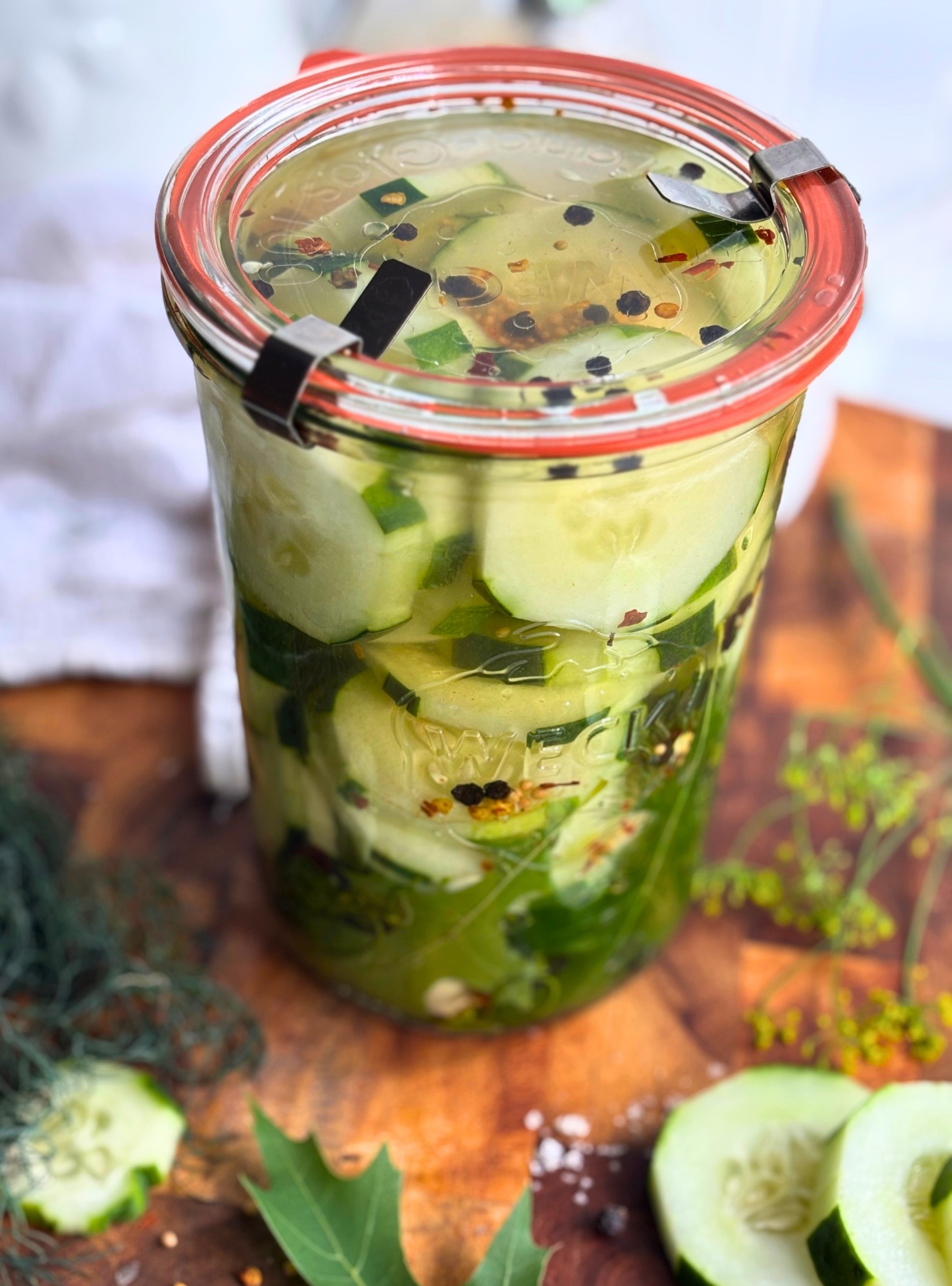
If you have ever stood in the refrigerated pickle aisle, bypassed every single shelf-stable jar, and made a beeline straight for the Grillo’s bucket at Costco, you already understand. There is something about those pickles that is just different. Crisp, cold, garlicky, aggressively dill forward, and somehow wildly addictive in the best possible way. They do not taste like something that sat in a warehouse for six months. They taste like something your neighbor made in their backyard, and you are not sure whether to be grateful or annoyed that you cannot stop eating them.
Here is the good news: you can make them yourself, at home, in a quart jar, with no boiling water bath, no complicated equipment, and no mystery preservatives. This copycat Grillo’s refrigerator pickle recipe gets you there with a handful of fresh ingredients and about 48 hours of patience.
The secret is in keeping it simple and keeping it cold.
Table of Contents
- What Makes Grillo’s Pickles Different
- Ingredients You Will Need
- The Role of Tannins: Why Oak Leaves Work
- Other Tannin Sources You Can Use Instead
- How to Make Refrigerator Pickles at Home
- Tips for Maximum Crunch
- Recipe
- Variations and Add-Ons
- How Long Do Refrigerator Pickles Last
- What to Serve With Them
- What to Do With the Leftover Brine (Pickled Hard Boiled Eggs)
- Frequently Asked Questions
- Leave a Comment and Connect
What Makes Grillo’s Pickles Different
Most jarred pickles on the store shelf are shelf-stable, which means they have been processed with heat to make them safe for long-term storage without refrigeration. That heat processing, while necessary for shelf stability, also softens the cucumber and dulls the flavor. The result is a pickle that tastes fine but lacks that satisfying snap.
Grillo’s operates differently. Their pickles are refrigerator pickles, which means they are never heat processed. The cucumbers go directly into a cold, vinegar-based brine and stay cold from production through purchase. Because there is no heat involved, the cucumbers retain their firm cell structure and the fresh herbs and garlic maintain their bright, sharp flavor. The result is a pickle that genuinely tastes fresh.
Making them at home follows the same principle. No canning, no boiling water bath, just clean ingredients, a well-seasoned brine, and cold temperature from start to finish.
↑ Back to Table of Contents
Ingredients You Will Need
This recipe is built on a short, clean ingredient list. Every element plays a role.

For the brine: The brine is a simple mixture of white distilled vinegar, water, non-iodized salt, and just a touch of sugar.
White distilled vinegar is the right call here because it provides a clean, sharp flavor without muddying the color or adding unwanted sweetness.
Non-iodized salt matters because iodine can interfere with the pickling process and cloud your brine. Kosher salt or pickling salt are both good options.
The mustard seeds and whole black peppercorns add subtle complexity without overpowering the garlic and dill. Smashed garlic cloves (not minced, not sliced) release their flavor slowly into the brine, giving you that signature garlicky depth that builds over a few days.
For the jar: Small English cucumbers are ideal for this recipe. They have thinner skin, fewer seeds, and a firmer flesh than standard American cucumbers, which tend to turn mushy in a cold brine. Slice them into spears for the classic Grillo’s look, or rounds if you prefer chips. Soaking the sliced cucumbers in ice water for 15 to 30 minutes before packing helps firm them up even further and gives you a crisper final product.
Fresh dill is important. Dried dill seed will not give you the same bright, grassy flavor. But can be used in a pinch. Use generous sprigs and do not be shy about it.
The optional oak leaf is a genuinely useful trick that deserves its own section below.
↑ Back to Table of ContentsThe Role of Tannins: Why Oak Leaves Work
If you have ever made refrigerator pickles and ended up with something soft and disappointing, the culprit is likely pectin breakdown. When cucumbers sit in an acidic brine, the pectin in their cell walls begins to break down over time, softening the texture. Tannins naturally slow this process.
Grape leaves are the traditional solution and the most widely recommended addition for crisp refrigerator pickles. Oak leaves work on the same principle. Both contain naturally occurring tannins that act as a gentle preservative for the cell structure of the cucumber, helping it hold its crunch for longer.
Oak leaves are particularly useful because they are widely available in most parts of the country and cost nothing if you have access to an oak tree. Choose young, unblemished leaves from a pesticide-free tree that you can positively identify. If you are not confident in your identification, skip the oak leaf and reach for Pickle Crisp (calcium chloride) from the canning aisle, or grab grape leaves from a specialty or Middle Eastern grocery store.
Tea leaves are another option some picklers swear by, since they are also high in tannins and easy to source. A small square of black tea (not herbal) tucked into the jar works well and adds no detectable flavor at the quantities used.
↑ Back to Table of Contents
Other Tannin Sources You Can Use Instead
Oak and grape leaves get all the attention, but they are far from your only options. Tannins are found across a wide range of common plants, and several of them are probably already in your kitchen or growing in your yard right now. Here is what works and how much to use in a quart jar.
Grape leaves. The traditional standard and the one most recipes call for. Use one fresh leaf per jar. Fresh is strongly preferred over jarred. If you have wild grapes growing anywhere near you, those leaves work just as well as cultivated ones.
Oak leaves. One small leaf per jar. White oak is the better choice here, since red oak carries more bitterness. Choose young, unblemished leaves from a tree you can positively identify and that has not been sprayed.
Black tea. The most accessible option by far, and the one to reach for when you have no access to fresh leaves at all. Use one tea bag or one teaspoon of loose leaf black tea per quart. You can drop it straight into the jar or steep it in the brine and strain it out before pouring. Make sure it is actually black tea, since that is where the tannins are. Herbal blends will not do anything for you.
Bay leaves. A great option because most people already have them in the cabinet. Use two to four bay leaves per quart. They contribute flavor along with the tannins, so keep that in mind if you want a cleaner dill profile.
Horseradish leaves. A classic old world addition that shows up in a lot of heritage pickle recipes. Use one to two leaves per quart. The leaves are what you want here, not the root.
Cherry, raspberry, blackberry, or strawberry leaves. All of these carry usable tannins and all of them work. Use one to two leaves per quart. If you grow berries at home, this is an easy free source you probably already have.
Pickle Crisp. Not a leaf and not a tannin, but worth including since it is what most people reach for. This is calcium chloride, and it firms up the pectin directly rather than slowing the enzymes that break it down. Use one quarter teaspoon per quart jar. It is sold in the canning aisle of most grocery stores.
One important note across all of these: stick to one tannin source per jar rather than combining several. Too much tannin will turn your pickles bitter and astringent, which is a harder problem to fix than a soft pickle. Rinse any fresh leaves before they go in the jar, the same way you would rinse your cucumbers.
How to Make Refrigerator Pickles at Home
The process is genuinely simple. Here is what you are doing and why each step matters:
Soak the cucumbers first. Before you do anything else, slice your cucumbers and soak them in ice water for at least 15 minutes. This step firms up the flesh and starts the cold process early. It makes a noticeable difference in the final crunch.
Make the brine and let it cool. Combine your vinegar, water, salt, sugar, garlic, mustard seeds, and peppercorns in a small saucepan and heat just until the salt dissolves. You do not need to boil it hard or simmer for a long time. As soon as the salt is dissolved, pull it off the heat. Then let it cool completely to room temperature before you pour it over the cucumbers. Pouring hot brine over cold cucumbers will start to soften them before they even have a chance to pickle properly.
Pack the jar tightly. Layer your dill and oak leaf into the jar first, then pack the cucumbers in snugly. You want them tight enough that they stay submerged in the brine but not so crushed that you are damaging the flesh.
Submerge everything. This is critical for both safety and flavor. Any cucumber poking out above the brine will not pickle evenly and can develop off flavors. A small fermentation disk or pickle pipe works well here to keep everything pressed down. If you do not have one, a clean zip-close bag filled with brine (so it will not dilute your pickles if it pops) can do the job.
Wait at least 48 hours. The pickles will be technically edible after 24 hours, but they will not taste like Grillo’s yet. The garlic and dill need time to fully infuse the brine, which then infuses the cucumber. At 48 hours they are good. At three to five days they are genuinely great.

Tips for Maximum Crunch
Getting a crisp refrigerator pickle is about managing a few key variables:
Start with the freshest cucumbers you can find. Cucumbers that have been sitting in a produce drawer for a week will not crisp up the way freshly bought or freshly picked ones will.
Use non-iodized salt. Iodized table salt can soften pickles and cloud the brine.
Always ice bath your cucumbers before pickling. The cold shock firms the flesh before the brine even touches them.
Use one of the tannin sources described above: oak leaf, grape leaf, or Pickle Crisp.
Keep your brine cool before adding it to the jar. Hot brine on fresh cucumbers begins the softening process immediately.
Store at a consistent, cold temperature. Fluctuations in fridge temperature can affect texture over time.
↑ Back to Table of Contents
Recipe

Grillo’s Style Refrigerator Pickles (Quart Jar Version)
Equipment
- Small saucepan
- Quart jar with lid
- kitchen scale
- Cutting board
- knife
- Fermentation disk or pickle pipe (optional, to keep cucumbers submerged)
Ingredients
Brine
- 180 grams white distilled vinegar 3/4 cup
- 180 grams water 3/4 cup
- 10 grams non-iodized salt 1 3/4 teaspoons
- 1 gram granulated sugar 1/4 teaspoon
- 2 grams whole mustard seeds 1/2 teaspoon
- 2 grams whole black peppercorns 1/2 teaspoon
- 2 garlic cloves smashed
Jar Contents
- 2 to 3 small English cucumbers sliced into spears or rounds (soaked in ice water 15 to 30 minutes before packing)
- 10 to 15 grams fresh dill 2 to 3 sprigs
- 1 oak leaf washed (optional, for crunch)
Optional Add-Ons
- 1 gram Pickle Crisp calcium chloride (1/4 teaspoon) for extra crunch if not using oak or grape leaf
- pinch of red chili flakes for heat
Instructions
INSTRUCTIONS
- Slice cucumbers into spears or rounds and soak them in a bowl of ice water for 15 to 30 minutes. This step firms up the flesh and gives you a crisper final pickle.
- Combine the vinegar, water, salt, sugar, garlic, mustard seeds, and peppercorns in a small saucepan. Heat over medium heat just until the salt dissolves completely. Remove from heat immediately and allow the brine to cool to room temperature before using.
- While the brine cools, pack your quart jar with the fresh dill and the oak leaf if using. Add the drained cucumber spears or rounds, packing them in snugly so they stay upright and submerged.
- Pour the completely cooled brine over the cucumbers, making sure every piece is fully submerged. If needed, add a fermentation disk or pickle pipe to keep the cucumbers pressed below the brine line.
- Seal the jar and refrigerate for at least 48 hours before eating. The flavor deepens and improves between 3 and 5 days. Store in the refrigerator for up to 4 weeks.
Notes
Variations and Add-Ons
Once you have the base recipe down, the variations are easy:
Spicy: Add a pinch of chili flakes directly to the jar before sealing. For more heat, tuck in a few thin slices of fresh jalapeño alongside the cucumbers.
Extra garlicky: Double the garlic cloves. Smash them aggressively so they release more oils into the brine.
Bread and butter style: Increase the sugar significantly (about 50 grams or a quarter cup), add thinly sliced onion, and include a small pinch of turmeric for color. This is a completely different flavor profile but uses the same cold-pack method.
Other vegetables: This brine works beautifully for quick-pickled red onions, carrots, green beans, or radishes. Adjust the wait time depending on the density of the vegetable (firmer vegetables like carrots benefit from an extra day or two).

How Long Do Refrigerator Pickles Last
Because these pickles are never heat processed, they are not shelf stable. They must stay refrigerated at all times, and they are at their best within the first two weeks. The crunch will gradually soften over time, and the garlic flavor will deepen and mellow.
Most batches will stay good for up to four weeks when kept cold and fully submerged in brine. If you notice any cloudiness in the brine, off smells, or any sliminess on the cucumbers, discard the batch.
Practically speaking, the bigger challenge is making them last that long.
↑ Back to Table of ContentsWhat to Serve With Them
Refrigerator pickles like these are genuinely multipurpose. They are excellent straight from the jar as a snack, which is honestly how most of them disappear. Beyond that:
They are the perfect topping for burgers and sandwiches, where the sharp acidity cuts through rich, fatty proteins.
Serve them alongside charcuterie boards in place of standard cornichons for a bolder, fresher flavor.
Chop them into a quick pickle relish for hot dogs, brats, or potato salad.
Use them as a garnish for a Bloody Mary or a simple chilled cocktail where you want a briny, savory note.
They also work well alongside rich, creamy dishes like macaroni and cheese or pulled pork, where the acidity provides balance.
↑ Back to Table of ContentsWhat to Do With the Leftover Brine
Here is actually what started this whole thing. After finishing a container of Grillo’s spears from Costco, there was a good amount of brine left in the jar. Rather than pour it down the drain, a few peeled hard boiled eggs went straight in. A few days in the refrigerator later, they were genuinely one of the best things to come out of that fridge in a while. Garlicky, dill forward, with that same clean brine flavor the pickles have. Pickles and eggs have always been a natural pair, and this is the easiest possible way to prove it.
If you make a batch of this homemade brine and have leftover liquid after packing your quart jar, do the same thing. Peel your hard boiled eggs completely, drop them into the remaining brine in a clean jar, make sure they are fully submerged, seal it, and refrigerate. That is the whole method.
A few things to keep in mind: because this is a leftover refrigerator brine and not a tested, measured pickling recipe with known salt and acid percentages, treat these conservatively. Enjoy them within one weeks and keep them cold at all times. Always use a clean utensil to pull eggs out of the jar rather than reaching in with your hands. If anything smells off or the brine looks unusual, discard them.
They are good to eat after a few days and genuinely excellent by day four or five. The flavor keeps developing the longer they sit, but the texture is best in that first week to ten day window before the whites start to get too firm.
Beyond eating them straight from the jar, they make an incredible egg salad. The brine does all the seasoning work for you, so all you really need is a little mayonnaise and whatever else you like. It is one of those things that sounds simple and then completely delivers.
If you want more fun hard boiled egg recipes that takes things up a notch. Check out my
- Hot sauce brined pickled eggs – A spicy sweet way to enjoy an otherwise bland egg!
- Pumpkin Spice High Protein Pudding – a sweet way to enjoy hard boiled eggs
- Pumpkin Cheesecake High Protein Pudding– adding even more protein with cottage cheese and hard boiled eggs combined.

Frequently Asked Questions
Can I use regular cucumbers instead of English cucumbers?
Regular American slicing cucumbers tend to have more seeds, thicker skin, and higher water content, which can lead to softer pickles. English cucumbers are strongly recommended for this recipe. Kirby cucumbers (small pickling cucumbers) are also an excellent option if you can find them.
Do I have to heat the brine?
Heating the brine makes it much easier to dissolve the salt quickly and evenly. You can make a cold brine by shaking the salt vigorously in the vinegar and water, but it takes considerably longer to dissolve and you risk ending up with uneven seasoning. A brief warm on the stove is the easier path.
Can I reuse the brine for a second batch?
It is not recommended. After a batch of cucumbers has sat in the brine, the salt and acid concentration may be lower than when you started, and bacteria from the cucumbers can be present in the liquid. Fresh brine gives you the best flavor and the safest result.
What is the difference between refrigerator pickles and fermented pickles?
Refrigerator pickles use an acidic brine (vinegar-based) to create the sour flavor quickly. Fermented pickles develop their sourness through lacto-fermentation, a process where beneficial bacteria convert sugars into lactic acid over days or weeks. Fermented pickles have a different, more complex flavor and offer probiotic benefits. This Grillo’s-style recipe is a refrigerator pickle, not a fermented pickle.
Can I make these in a gallon jar instead of a quart?
Yes. Simply scale the brine up proportionally. A gallon jar holds roughly four times the volume of a quart jar, so multiply all the brine ingredients by four. You will also need significantly more cucumbers.
Why is my brine cloudy?
A slight cloudiness from the garlic and spices is normal and does not indicate spoilage. If the brine turns significantly milky or the cucumbers develop a slimy texture or off smell, discard the batch.

Let’s Connect
If you make this recipe, I would love to hear how it turned out. Leave a comment below and let me know what variation you tried or what you ended up eating them with. Tag me on Instagram or Facebook so I can see your jar. And if you want more recipes like this sent directly to your inbox, sign up for the H3art of the Home newsletter below. New recipes, tips, and seasonal content, straight to you.
Note: Some links in this post are affiliate links. If you purchase through them, I earn a small commission at no extra cost to you. Thank you for supporting the blog






Leave a Reply