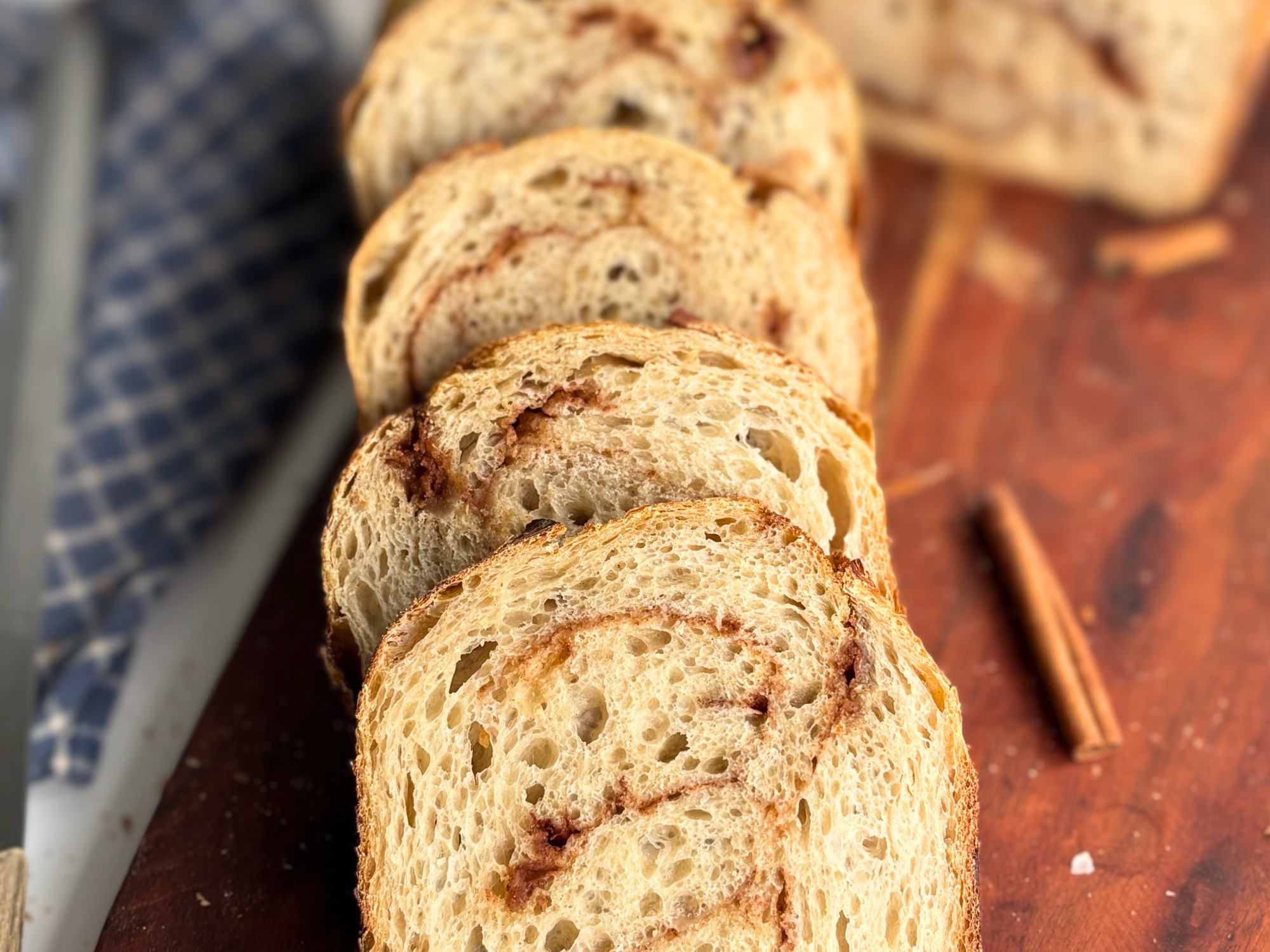
I did not plan to make this bread. I had a plain sourdough loaf sitting through its final cold proof in the fridge, shaped and ready to bake the next morning, and somewhere between one cup of coffee and the next I decided I wanted cinnamon instead. The problem is obvious to anyone who bakes sourdough. By the time a loaf has been shaped and cold proofed, the window for spreading filling onto a flat sheet of dough is long gone. You would have to deflate everything, reroll, reshape, and start the proof over.
So I tried something else. I turned the cold loaf out, made deep cuts into it, packed cinnamon sugar down into every one of those cuts, gently rolled the whole thing up, and dropped it into a loaf pan to bake. It worked. The swirl runs through every slice, the crumb stayed open and tender, and nobody would ever guess it started its life as a plain boule.
What I love about this method is the freedom it gives you. You are no longer locked into a flavor decision at shaping time. If you have a classic sourdough loaf already proofing and you change your mind, you can turn it into an inclusion bread at the very last step. This recipe is built directly off my classic sourdough bread, so if you already bake that loaf, you are most of the way there. And remember to just have fun!!
Table of Contents
- Why This Method Works
- What Makes This Different From Other Cinnamon Swirl Sourdough
- The Cinnamon Sugar Filling
- Why the Double Pan Method Matters
- Recipe
- Ingredient Notes
- How to Turn a Plain Loaf Into a Swirl Loaf
- Yeasted Version
- Tips for the Best Cinnamon Swirl
- How to Serve and Store
- Shop This Recipe
- Subscribe
- Frequently Asked Questions
Why This Method Works
Most cinnamon swirl breads are built the same way. You roll the dough into a rectangle, spread a layer of cinnamon sugar across it, and roll it into a log before the final proof. That approach works, but it commits you to the cinnamon decision early, and it is also the source of the dreaded gap, that hollow tunnel that forms when the rolled layers separate from the filling and pull away from each other during baking.
This method sidesteps both issues. Because you are working with a fully proofed, cold loaf, the dough is firm and easy to handle. The cuts you make create interior surface area, and the filling settles down into those cuts rather than sitting on one flat plane. When you roll the loaf up, the filling is already distributed throughout the dough rather than wrapped in a single spiral. The result is a marbled swirl that runs through the whole crumb instead of one tidy ribbon that can lift away from the bread.
The cold proof is doing real work here. A loaf straight from the fridge holds its structure while you cut, fill, and roll. A room temperature loaf would be slack and far more likely to deflate completely under the same handling.

What Makes This Different From Other Cinnamon Swirl Sourdough
The defining feature of this recipe is timing. Nearly every cinnamon swirl sourdough recipe asks you to add the filling during shaping, before the dough has proofed. This one adds the filling after the final cold proof, immediately before baking.
That difference matters for a few reasons. It means you can decide on the flavor at the last possible moment. It means a plain loaf you already have proofing can become something else entirely. And it means the swirl pattern comes out looking organic and marbled rather than perfectly concentric, which I happen to think is more beautiful and far more forgiving to execute.
If you have never made the base loaf, start with my classic sourdough bread and my sourdough starter guide. Once you are comfortable with that loaf, this variation is a small, fun detour rather than a whole new recipe to learn.

The Cinnamon Sugar Filling
The filling is simple, but the ratio matters. A straight mix of cinnamon and sugar will pull moisture from the dough as it bakes and can leave you with a wet, gummy layer where the filling sat. To prevent that, the filling includes a small amount of cornstarch, which absorbs the moisture released during baking and keeps the swirl distinct and dry rather than soggy.
This is the same principle that other bakers solve with a flour and milk paste, but a dry cornstarch blend is easier to work with when you are sprinkling filling down into cuts rather than spreading a paste onto a flat surface. The dry mix falls into every crevice. A paste would not.
I use mostly brown sugar for the deeper, almost caramel note it brings, with a smaller amount of granulated sugar mixed in. The brown sugar carries the flavor, while the granulated sugar weeps less and sets cleaner where the filling settles, which helps prevent the soft, sticky spots that can form anywhere the filling pools thicker. The full breakdown of amounts and conversions lives in the recipe card below.
Why the Double Pan Method Matters

Baking this loaf with a second pan inverted on top as a lid is what gives it both lift and a clean crust. The covered pan traps the steam the dough releases, which keeps the surface soft long enough for the loaf to spring upward before the crust sets. Without that trapped steam, the crust would firm up too early and the cinnamon sugar on the surface would caramelize and darken before the inside finished rising.
I bake this in a 10 by 5 inch USA loaf pan with a second pan inverted over the top. After the first stretch of baking with the lid on, I remove the top pan, make a single score down the center, replace the lid, and continue baking covered before finishing with the lid off for color. That mid bake score lets the loaf open along a controlled line instead of bursting somewhere unpredictable, and replacing the lid afterward protects that cinnamon sugar surface from scorching while the interior catches up.
One note that matters more for this loaf than for a plain one. The sugar on and in this bread browns fast, so the loaf will look done well before it actually is. Do not trust color alone. Bake until the internal temperature reaches 190 degrees Fahrenheit. The exact temperatures and timing are in the recipe card.
Recipe

Easy Cinnamon Swirl Sourdough Bread
Equipment
- Digital Kitchen Scale
- Banneton or proofing basket
- 2 10 by 5 inch loaf pans
- Parchment paper
- Kitchen scissors
- Bread lame
- Instant read thermometer
Ingredients
For the Sourdough Loaf
- 75 grams active sourdough starter 1/3 cup
- 350 grams room temperature filtered water 1 1/2 cups
- 500 grams bread flour 4 cups
- 10 grams salt 1 3/4 teaspoons
For the Cinnamon Sugar Filling
- 50 grams brown sugar 1/4 cup
- 12 grams granulated sugar 1 tablespoon
- 4 grams cinnamon 1 1/2 teaspoons
- 5 grams cornstarch 2 teaspoons
Instructions
- Mix the flour, starter, and water together until a rough, shaggy dough forms. Cover and let rest for 1 hour.
- Add the salt using wet hands, working it into the dough until fully incorporated.
- Perform stretch and folds every hour for 3 hours, then let the dough bulk ferment covered at room temperature until it has increased in size by 50 to 70 percent and jiggles when gently shaken. Anywhere from 6-12 hours depending on the temperature and strength of your dough and starter.
- Lightly flour your work surface, turn the dough out, and pre shape it into a round. Let it rest seam side down for 20 to 30 minutes.
- Shape the dough into a batard, place it seam side up in a banneton, and cover. Cold proof in the refrigerator for 8 to 12 hours.
- When you are ready to bake, stir together the brown sugar, granulated sugar, cinnamon, and cornstarch in a small bowl to make the filling.
- Turn the cold loaf out onto parchment, top side down.

- Slice down through the loaf vertically.

- Then go back through those slices with kitchen scissors to cut them into sections, opening up the interior.

- Sprinkle the cinnamon sugar filling generously down into all of the cuts, distributing it evenly so no single spot gets a thick pile.

- Starting at one end, gently roll the loaf up into a log, taking care not to deflate it. Tuck the bottom edge underneath to seal.
- Set the rolled loaf on parchment and lower it into a parchment lined 10 by 5 inch loaf pan. Place a second loaf pan upside down on top to create a mini Dutch oven.
- Bake at 450 degrees Fahrenheit for 9 minutes with the lid on.
- Remove from the oven, take off the top pan, and score one line down the center of the loaf. Replace the lid and bake for 30 minutes.
- Remove the lid and bake for a final 10 minutes, or until the internal temperature reaches 190 degrees Fahrenheit. Because the sugar makes this loaf brown early, use a thermometer rather than relying on color.
- Let the loaf cool for 3 to 4 hours before slicing.
Notes
Ingredient Notes
This loaf is built on the same short ingredient list as a classic sourdough, with a cinnamon sugar filling added at the end. A few things worth knowing:
Active sourdough starter gives the loaf its rise and its long, slow fermentation. If you need to build or revive yours, my sourdough starter guide walks through it.
Bread flour in the 11 to 13 percent protein range gives the structure that lets the crumb stay open and hold up to handling after the cold proof.
Cinnamon is the star of the filling, so use one you genuinely like the taste of. Ceylon is milder and more floral, while the more common cassia cinnamon is bolder and spicier.
Cornstarch is the quiet workhorse. It keeps the filling from weeping and turning gummy where it sits.
Brown sugar brings a deeper flavor than white and makes up most of the filling, with a smaller amount of granulated sugar added in to help the swirl set cleaner. The full ingredient amounts and conversions are in the recipe card.
How to Turn a Plain Loaf Into a Swirl Loaf
This is the heart of the recipe, and the recipe card has the precise steps. Here is the shape of it so you understand what you are doing and why.
You start with a classic sourdough loaf that has finished its final cold proof in the fridge. Turn it out onto parchment, top side down.

Slice down through the loaf vertically, then…

go back through those slices with kitchen scissors to cut them into sections, opening up the interior.

Sprinkle the cinnamon sugar filling generously down into all of those cuts so it works its way through the dough rather than sitting on the surface.

From there you roll the loaf up gently, starting at one end, taking care not to crush the air out of it. Tuck the end underneath to seal, set it on parchment, and lower it into your loaf pan. Then it goes straight into a hot oven with the double pan method. No second proof. The cold dough and the oven spring do the rest.
Yeasted Version
If you do not keep a sourdough starter, you can use this same last minute swirl technique on a yeasted loaf. Shape and proof a standard yeasted loaf, give it a chill in the fridge so it firms up enough to handle, then cut, fill, roll, and bake the same way. The chill is the important part. A warm, fully proofed yeasted loaf is too slack to take this handling without collapsing, so let it firm up first. Keep an eye on it, because a yeasted dough will bake faster than sourdough, but the 190 degree internal temperature target still applies.
Tips for the Best Cinnamon Swirl
Work with the loaf cold. The colder and firmer it is, the cleaner your cuts and the less it deflates.
Cut deeper than feels comfortable. Shallow cuts give you a faint swirl. Deep cuts that open up the interior give you that marbled, all the way through look.
Get the filling down into the cuts, not just on top. The whole point of this method is interior distribution. A spoon or a small measuring scoop helps you direct it.
Roll gently. You are not trying to compress the loaf, just gather it back into a log. Crushing it removes the open crumb you worked to build.
Trust the thermometer, not the color. This loaf browns early thanks to the sugar. Pull it at 190 degrees Fahrenheit internal, not when it looks dark.
How to Serve and Store

This bread is at its best toasted, with butter melting down into the cinnamon pockets. It also makes exceptional French toast, since the swirl runs all the way through and the slightly firmer sourdough crumb holds up to a custard soak without falling apart.
Store the cooled loaf at room temperature in a bread bag or wrapped well for three to four days. For longer storage, slice it first and freeze the slices, then toast straight from frozen whenever you want one. Slicing before freezing means you only thaw what you need.
Frequently Asked Questions
Can I really add the cinnamon swirl after the dough has proofed?
Yes, and that is the whole idea behind this recipe. Because the loaf is cold and firm from its final proof in the fridge, it holds up to being cut, filled, and rolled without losing its structure. You add the filling right before baking and skip a second proof entirely.
Why is my cinnamon swirl gummy or wet?
A wet swirl usually comes from cinnamon sugar pulling moisture from the dough as it bakes. The cornstarch in this filling is there specifically to absorb that moisture and keep the swirl distinct. Make sure you are including it. And make sure you’re spreading the dry rub evenly over the sections.
Do I need a special pan for the double pan method?
No. Any two loaf pans of the same size work, with one inverted over the other to act as a lid. I use a 10 by 5 inch USA pan. The point is simply to trap steam during the first part of the bake.
How do I know when the loaf is done?
Bake until the internal temperature reaches 190 degrees Fahrenheit. This loaf browns early because of the sugar, so it will look finished before it actually is. A thermometer is the only reliable way to tell.
Can I make this without a sourdough starter?
Yes. The same last minute swirl technique works on a yeasted loaf. Chill the proofed loaf first so it firms up, then cut, fill, roll, and bake the same way.
What can I do with leftover slices?
Toast them, or turn them into French toast. The swirl runs through every slice and the crumb is sturdy enough to hold up to a custard soak.

Shop This Recipe
Some of the links below are affiliate links, which means I may earn a small commission if you purchase through them. It does not cost you anything extra, and it helps keep the blog running so I can keep sharing free recipes with you. Thank you for the support.
These are the tools I reach for when making this cinnamon swirl sourdough bread:
USA Pan 10 by 5 inch Loaf Pan is the pan I use for this loaf, and I use a second one inverted on top for the double pan method that gives the bread its lift and clean crust.
Unbleached Parchment Paper makes it easy to lower the rolled loaf into the pan and lift the baked bread back out.
Bread Lame gives you a clean, controlled score down the center of the loaf partway through baking.
Digital Instant Read Thermometer is essential for this recipe. Because the sugar makes the loaf brown early, you need to bake to an internal temperature of 190 degrees Fahrenheit rather than relying on color.
Kitchen Scissors are what I use to cut the cold loaf into sections so the cinnamon sugar can settle down into every opening.
Digital Kitchen Scale takes the guesswork out of both the dough and the filling, so your results stay consistent every time.
Bench Scraper helps with handling and shaping the dough cleanly. My favorite Campbells Dough Knife or one from Amazon

Subscribe
Never want to miss a recipe? Sign up for the H3art of the Home newsletter and I will send new recipes straight to your inbox, from sourdough staples to the fun seasonal bakes. It is the easiest way to keep fresh ideas coming to your kitchen, and it is always free.
Did You Make This Recipe?
If you bake this cinnamon swirl sourdough, I would love to hear how it went. Leave a comment and a rating below to let me know, and tag me on social media if you share a photo so I can see your swirl. For more sourdough recipes sent straight to your inbox, sign up for the H3art of the Home newsletter.





Leave a Reply