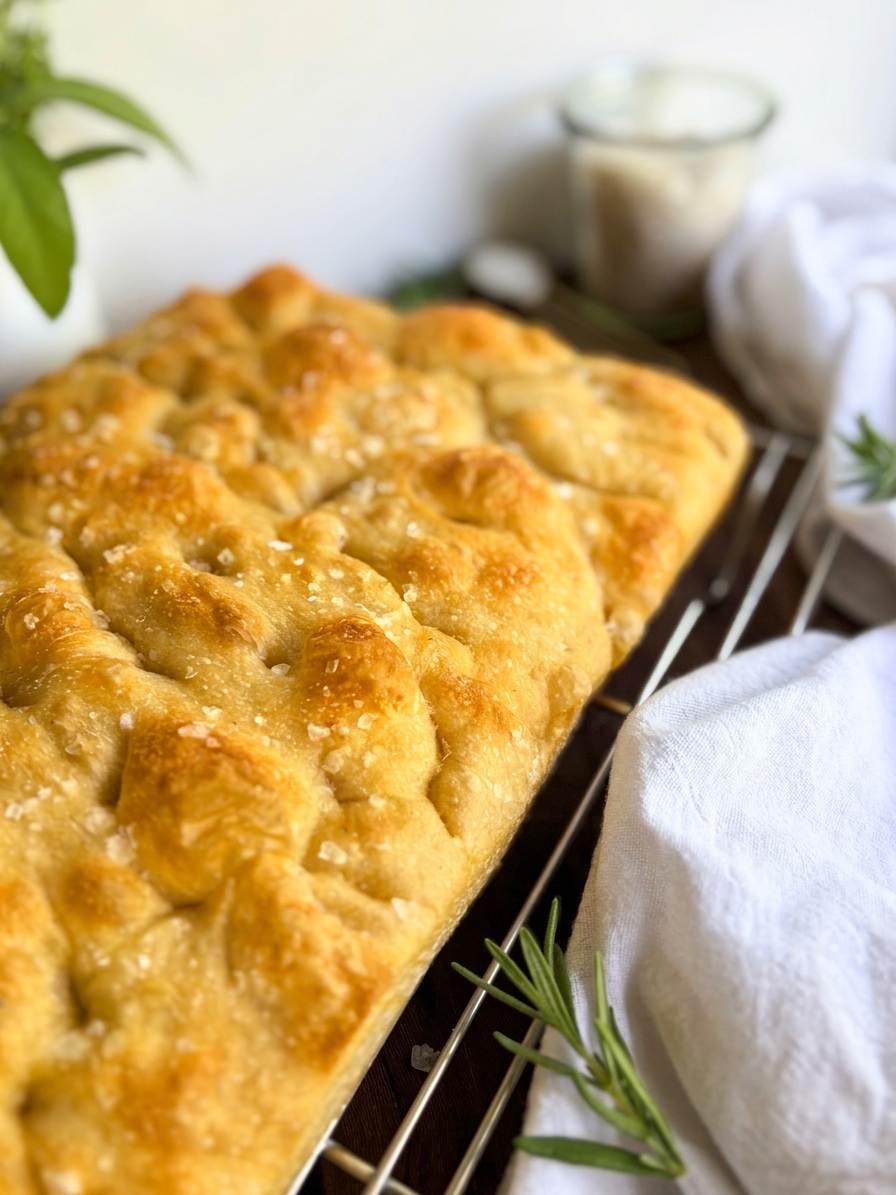
If you have been hanging around H3art of the Home for any amount of time, you already know focaccia. You have seen it stuffed, swirled, rolled into cinnamon rolls, layered with pizza toppings, and piled high with caramel apple filling. We have done a lot with this dough.
But I realized I never actually published the one that started it all: a classic, simple, no-fuss sourdough focaccia. Just flour, water, salt, starter, and a generous pour of extra virgin olive oil. No shaping. No scoring. No stress. Just a high hydration dough that practically makes itself overnight, then bakes into a golden, pillowy, crispy bottomed bread that is honestly one of the most satisfying things to pull out of the oven.
This is the recipe I come back to when I want something impressive with almost no effort. The overnight fermentation does all the heavy lifting while you sleep, and by the next afternoon you have a loaf worth tearing into straight from the pan.
Table of Contents
- Why This Recipe Works
- What You Need
- Recipe
- How Overnight Fermentation Changes Everything
- The Envelope Fold
- How to Know When Your Dough Is Ready to Bake
- How to Dimple Focaccia
- The Pull-Apart Focaccia Series
- No Starter? Make the Yeasted Focaccia Instead
- Ways to Use This Focaccia
- Shop This Recipe
- FAQ
- Let’s Hear From You
- Subscribe
Why This Recipe Works
Sourdough focaccia is one of the best entry points into sourdough baking, and that is not an accident. The dough is forgiving in a way that a boule or a baguette simply is not. Because focaccia is high hydration and baked in a pan rather than free form, there is no shaping skill required, no Dutch oven, and no precise timing window where everything falls apart if you miss it by an hour.
The process is straightforward: mix all your ingredients together in one bowl, rest the dough, do a few stretch and folds until you can feel the gluten starting to build, do one final slap and fold, and then leave it alone overnight. By morning you will have a dough that has doubled or tripled in size, domed on top, with bubbles across the surface and enough jiggle to make you genuinely excited to bake it.
The oil is the other key player here. A generous pour of extra virgin olive oil in the bottom of the pan creates that signature fried crust underneath. More oil on top before dimpling keeps the surface from drying out and gives you those golden crispy peaks between each dimple. Do not skip the oil. Do not reduce the oil. It is the whole point.

What You Need
The ingredient list for this focaccia is short. Bread flour gives you the structure and chew that all purpose cannot quite match at this hydration level. Active sourdough starter is the only leavener here, so make sure yours is fed and bubbly before you begin. Extra virgin olive oil is the traditional choice for focaccia and brings a richness and depth of flavor that a neutral oil simply cannot replicate. Flaky sea salt on top is non negotiable.
That is genuinely it. Five ingredients, one bowl, one pan, and time.

Recipe

Sourdough Focaccia
Equipment
- Large mixing bowl
- Digital Kitchen Scale
- 9×13 inch light colored aluminum baking pan
- Danish dough whisk or stiff spatula
- Plastic wrap or damp kitchen towel
Ingredients
- 500 grams bread flour 4 cups plus 2 tablespoons
- 400 grams water room temperature (1 and 2/3 cups)
- 75 grams active sourdough starter 1/3 cup
- 10 grams fine sea salt 1 and 2/3 teaspoons
- 60 grams extra virgin olive oil for the pan 1/4 cup
- Extra virgin olive oil for drizzling on top 2 to 3 tablespoons
- Flaky sea salt for topping
- Fresh or dried rosemary for topping optional
Instructions
Step 1: Mix the dough
- In a large bowl combine the bread flour, water, active sourdough starter, and salt. Mix well until no dry flour remains. The dough will be very wet and sticky. That is correct. Do not add more flour. Cover and let rest for one hour.
Step 2: Stretch and fold
- With wet hands, grab one side of the dough and stretch it up as far as it will go without tearing, then fold it down over the center. Rotate the bowl a quarter turn and repeat. Complete four folds to finish one set. Repeat this a few times, until you can feel the dough starting to build strength and hold its shape slightly better with each set. It will not feel like bread dough. That is normal.
Step 3: Slap and fold
- Once the dough has built some strength, perform one slap and fold. Pick the dough up, slap it down onto the surface, and fold it over itself.placing the seam underneath and a smooth top facing up. Cover.

Step 4: Bulk ferment
- Leave the covered bowl at room temperature for 8 to 14 hours depending on your kitchen temperature. The dough is ready when it has doubled or tripled in size, is visibly domed, has bubbles across the surface, and pulls away easily from the sides of the bowl when you run a spatula around the edge. It should be very jiggly when you gently shake the bowl. Watch the dough, not the clock.
Step 5: Prepare the pan
- Pour the olive oil into the 9×13 pan and use your hands to work it evenly across the bottom, into the corners, and up the sides. If your pan is not a reliable nonstick, lay a sheet of parchment in the pan before adding the oil.
Step 6: Envelope fold and transfer
- Carefully turn the dough directly out of the bowl and into the oiled pan. Using oiled hands, bring the bottom edge of the dough up to about the two thirds mark, then bring the top edge down to the bottom, layering the dough over itself. Flip the dough so the seam side faces down, then rotate it so it sits vertically in the pan rather than horizontally. See the photo above for reference.

Step 7: Second rise
- Cover the pan and let the dough rest at room temperature for 2 to 4 hours until it is light, fluffy, and very jiggly when you gently shake the pan. It should look soft and alive. Do not rush this step.

Step 8: Preheat and dimple
- Preheat the oven to 430 degrees F. Run your hands under cool water and flick off the excess so your hands are just barely damp, not dripping. Drizzle 2 to 3 tablespoons of olive oil over the top of the dough. Starting at the edge closest to you, press your fingers straight down through the dough all the way to the bottom of the pan, then pull them out and continue working your way across the entire surface in rows. Press firmly and go all the way down. The dimples hold the oil and create the signature golden peaks as the focaccia bakes.

Step 9: Season and bake
- Sprinkle generously with flaky sea salt. Add rosemary now if using, pressing it gently into the dimples. Bake for 25 to 30 minutes until the top is deep golden and the edges are visibly crisped. Lift a corner to check the bottom. It should be a rich, even golden brown.
Step 10: Cool and serve
- Let the focaccia rest in the pan for 5 minutes, then transfer immediately to a wire rack so the bottom stays crisp as it cools. Slice and serve warm.
Notes
How Overnight Fermentation Changes Everything
The overnight bulk fermentation is where most of the magic happens with this recipe. A long, slow, room temperature ferment gives the sourdough starter time to fully develop the dough, which does a few important things.
First, it builds a more complex, layered flavor without any added ingredients. Second, the extended fermentation breaks down some of the phytic acid in the flour, which many people find makes the bread easier to digest. And third, it creates those large, irregular air pockets in the crumb that make focaccia so light and open inside.
The bulk ferment can take anywhere from 8 to 14 hours depending on your kitchen temperature. You are looking for the dough to have doubled or tripled in size, be visibly domed, have bubbles across the surface, and pull away cleanly from the sides of the bowl when you run a spatula around the edge. It should be very jiggly when you gently shake the bowl. Watch the dough, not the clock.

The Envelope Fold
Once your dough has completed the overnight bulk ferment, it is time for the envelope fold. This is the step that trips people up the most if they have never seen it, so take a good look at the photos before you start.
Pour your quarter cup of olive oil into the 9×13 pan and work it around the bottom and up the sides. If your pan is not a reliable nonstick, lay a sheet of parchment in first before adding the oil.

Turn the dough directly out of the bowl and into the oiled pan. Do not punch it down or deflate it. You want to keep as many of those fermentation bubbles intact as possible. Using oiled hands, bring the bottom edge of the dough up to about the two thirds mark, then bring the top edge all the way down to the bottom, layering the dough over itself like a letter. Flip the dough so the seam faces down, then rotate it so it sits vertically in the pan rather than horizontally. Cover and let it rise for 2 to 4 hours.

How to Know When Your Dough Is Ready to Bake
After the envelope fold, the dough needs another 2 to 4 hours in the pan before it is ready to dimple and bake. It should look soft, puffy, and alive. When you gently shake the pan, the whole thing should jiggle like it has somewhere to be. That jiggle is your green light.
Do not rush this second rise. Underproofed focaccia will bake up dense and flat, and no amount of oil will fix it. If the dough still feels firm or does not move much when you shake the pan, give it more time.

How to Dimple Focaccia
Dimpling is one of those steps that looks simple but makes a real difference in the final loaf. Done right, it distributes the oil evenly across the surface, creates the signature peaks and valleys that crisp up in the oven, and prevents the top from puffing up into a smooth dome instead of that classic focaccia texture.
Before you dimple, run your hands under cool water and flick off the excess. You want your hands just barely damp, not dripping. This stops the dough from sticking to your fingers without adding extra water to the surface.
Drizzle 2 to 3 tablespoons of olive oil over the top of the risen dough first.

Then starting at the edge closest to you, press your fingers straight down through the dough all the way to the bottom of the pan. Pull your fingers out and move up an inch, pressing again. Work your way across the entire surface in rows. Press firmly and go all the way down every single time. Shallow dimples fill back in as the dough bakes. Deep dimples hold the oil and create those golden peaks.

Finish with a generous sprinkle of flaky sea salt. Add fresh or dried rosemary now if you are using it, pressing it gently into the dimples so it stays put during baking.

The Pull-Apart Focaccia Series
Once you have made this classic focaccia once, you will understand why this dough has become the foundation for one of the most popular series on the blog. The same high hydration, overnight sourdough base adapts beautifully to both sweet and savory variations, and we have taken it just about everywhere you can imagine.
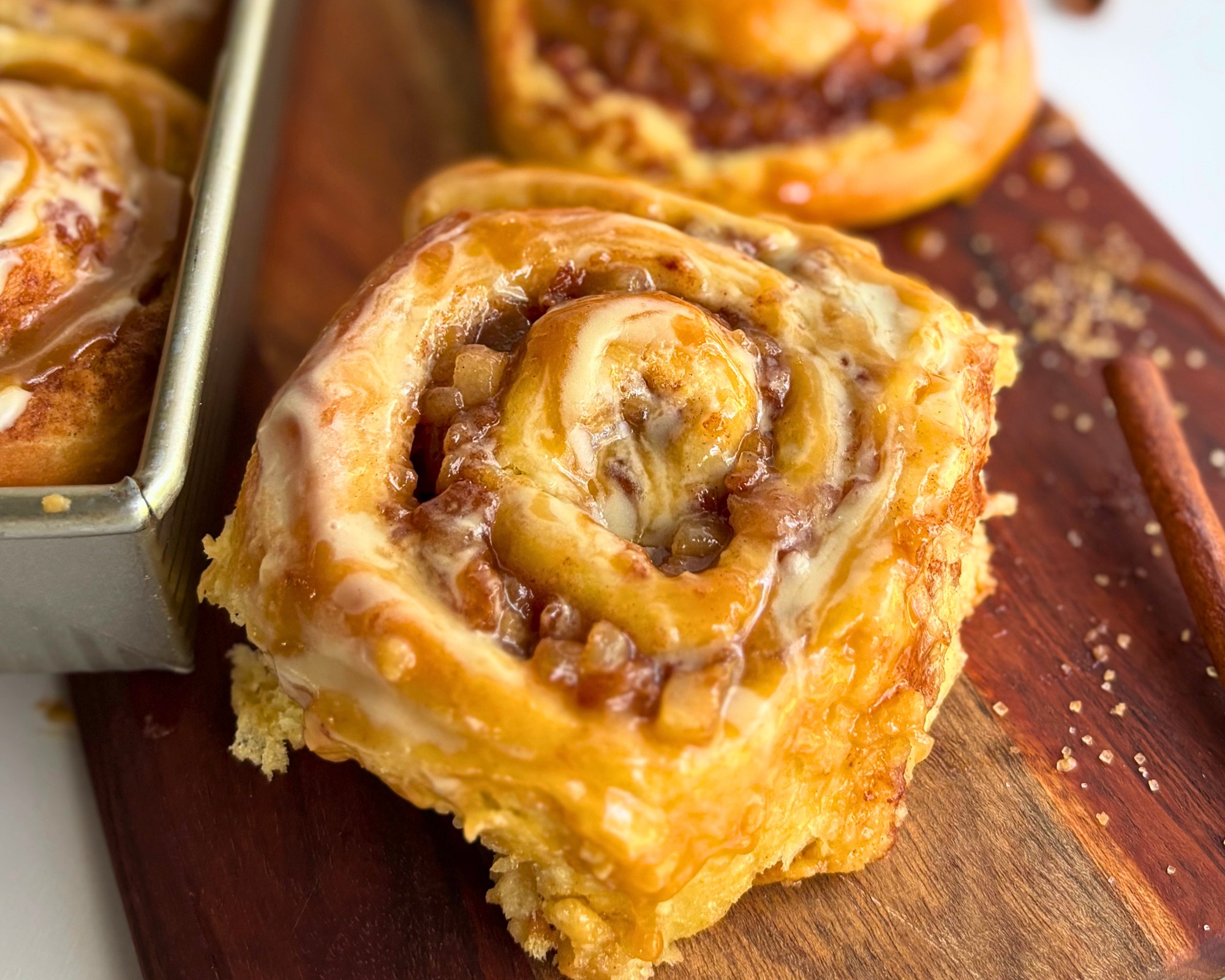
From garlic parmesan to cinnamon roll to caramel apple to jelly donut, the pull-apart focaccia series has grown into its own thing here at H3art of the Home. The recipe you are making right now is the starting point for all of it.


No Starter? Make the Yeasted Focaccia Instead
Not everyone has an active sourdough starter on hand, and that is completely fine. The yeasted focaccia version of this recipe uses instant yeast instead of starter and goes from mixing bowl to table in about 3 to 4 hours. Same method, same pan, same crispy bottom. The only real difference is the leavener and the timeline.
If you want focaccia today without an overnight ferment, that is the one to make.
Ways to Use This Focaccia
Once you have a pan of this baked and cooled, the plain loaf is just the starting point. Here are two of our favorite ways to take it further.
This is the easiest summer lunch I have made in a long time, and my boys demolished them. Slice the baked focaccia into squares, cut each strip in half lengthwise so the crumb side faces up, then top with pizza sauce, mozzarella, pepperoni, and whatever else your family likes. A few minutes in the oven and you have focaccia pizza sticks that are crispy on the bottom, chewy in the middle, and worth making every single week.
Focaccia Pizza Squares

Yeasted Focaccia
No sourdough starter? The yeasted version of this recipe uses the same method and bakes up just as golden and pillowy, with a same-day timeline from mix to table.
Shop This Recipe
These are the tools and ingredients I use and recommend for this focaccia. Product links are affiliate links, which means I may earn a small commission at no extra cost to you.
9×13 Light Colored Aluminum Baking Pan – A lighter pan gives you better control over how quickly the bottom browns. Dark pans retain more heat and can over crisp the bottom before the top is done.
Extra Virgin Olive Oil – Use one you would be happy to dip bread into. The flavor carries through into the final loaf.
Flaky Sea Salt – Maldon is the classic choice. The large flakes stay visible on top and give you that satisfying crunch in every bite.
Danish Dough Whisk – Makes mixing a high hydration dough significantly easier than a spoon or spatula.
Digital Kitchen Scale – Sourdough baking by weight is the only way to get consistent results. Volumetric measuring for a high hydration dough leaves too much room for error.

FAQ
Can I use all purpose flour instead of bread flour?
You can, and the focaccia will still bake up soft and delicious. Bread flour has a higher protein content, which gives the dough more structure and a slightly chewier crumb. If all purpose is what you have, it will work fine, just know the texture will be a little softer and less chewy than the bread flour version.
How do I know if my starter is ready to use?
Your starter should be fed and at peak activity before you mix the dough. It should have doubled in size since its last feeding, smell pleasantly fermented, and pass the float test: drop a small spoonful into water, and if it floats, it is ready. If it sinks, give it more time.
Can I refrigerate the dough after the overnight rise?
Yes. If your dough is fully risen and you are not ready to bake yet, you can cover it and pop it in the fridge for up to 24 additional hours. Pull it out about 30 minutes before you want to do the envelope fold and second rise to let it come back to room temperature.
Why is there so much oil in this recipe?
The oil in the bottom of the pan is what creates the signature crispy, almost fried bottom crust that makes focaccia focaccia. The oil on top keeps the surface from drying out and creates those golden peaks between the dimples. This is not a recipe to reduce the oil on. It is doing real structural work, not just flavoring.
My dough was really wet and sticky after mixing. Did I do something wrong?
No. This is an 80% hydration dough, which means it is supposed to be very wet and sticky right after mixing. Do not add more flour. The gluten develops during the overnight ferment, and the dough transforms dramatically between the initial mix and the next morning. The three panel photo in the fermentation section above shows exactly what to expect at each stage.
How do I store leftover focaccia?
Store it at room temperature in an airtight container or wrapped tightly for up to 2 days. To revive the crust, reheat in a 350 degree oven for about 10 minutes. Focaccia also freezes well: slice it, freeze individual pieces on a sheet pan, then transfer to a freezer bag for up to 3 months. Reheat straight from frozen.
Can I add toppings before baking?
Absolutely. Fresh rosemary pressed into the dimples is the classic move. You can also add thinly sliced garlic, halved cherry tomatoes, olives, or caramelized onions before baking. Keep any toppings lightly coated in olive oil so they do not burn during baking.
What is the difference between this and the pull-apart focaccia recipes?
This is the base recipe in its purest form: olive oil, flaky salt, and nothing else. The pull-apart focaccia series takes this same dough and transforms it with fillings, toppings, and techniques that turn it into something entirely different. If you want to explore those variations, start here first, then browse the carousel above.

Let’s Hear From You
If you make this sourdough focaccia, I want to see it. Tag me on Instagram so I can share it, and leave a comment below letting me know how it turned out. Did you add toppings? Did you bake it plain and just eat half the pan warm? Both are valid. Drop a star rating on the recipe card while you are here. It helps more people find this recipe, and I read every single comment.
Subscribe
I deliver new recipes every week straight to your email. I do not sell or use your information and I will not send you spam.




Leave a Reply