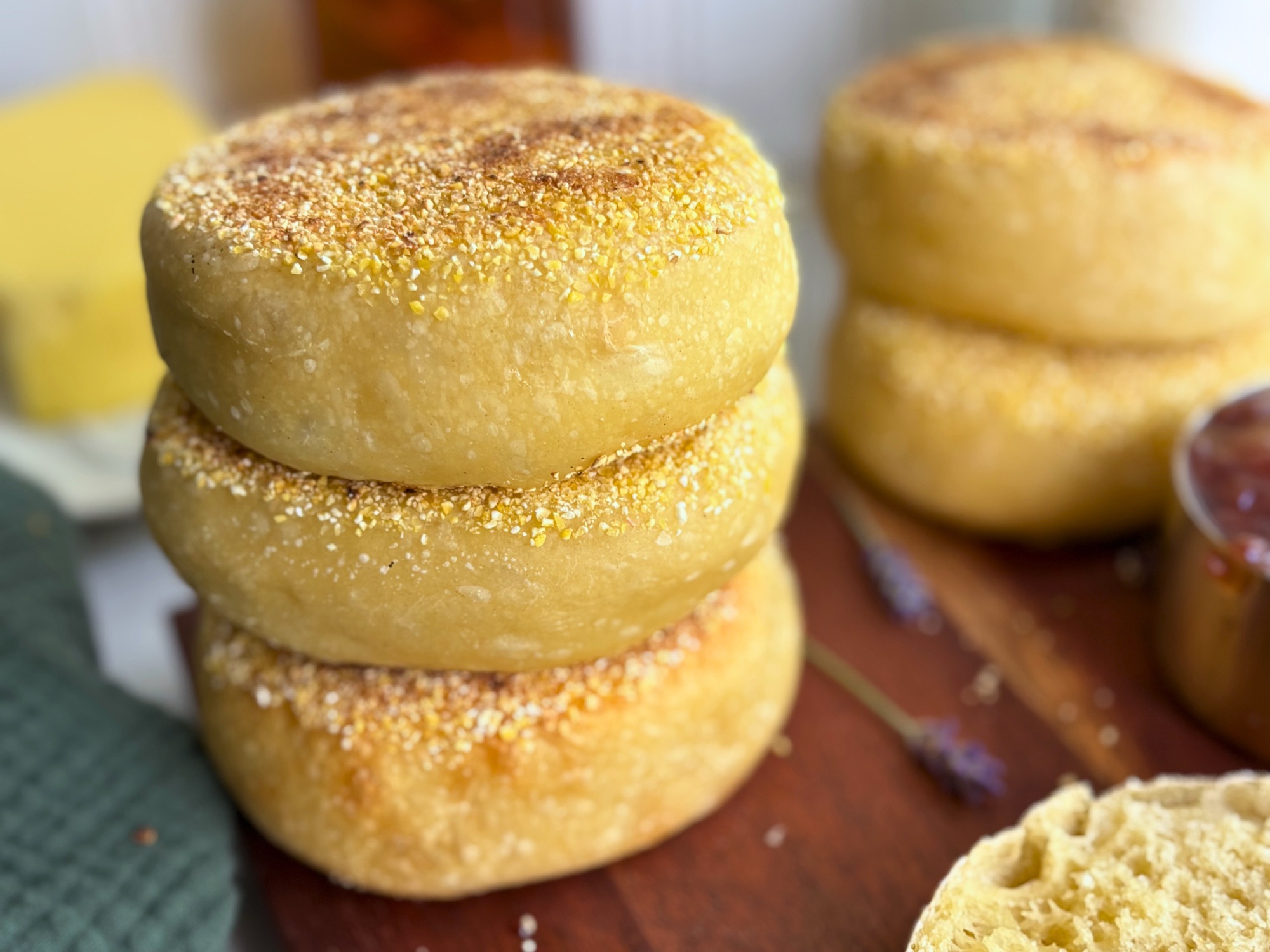
These High Protein Sourdough English Muffins pack 12 grams of protein into every single muffin, and they do it with no protein powder. The secret is nonfat Greek yogurt worked right into the dough, which gives you a soft, fork split crumb full of nooks and crannies and a real breakfast that actually keeps you full.
I have been deep in my high protein series for a while now, building out everything from High Protein Monkey Bread to High Protein Donuts to High Protein Sandwich Bread, and English muffins were the one breakfast staple I kept coming back to. I have three boys to feed before school and a long list of mornings that get away from me. A muffin that toasts up crisp, holds a fried egg, and carries 12 grams of protein is the kind of thing that earns a permanent spot in my freezer. This one did.
If you have made my Sourdough Focaccia or any of the high protein bakes, the rhythm here will feel familiar. Long overnight ferment, simple shaping, a quick stovetop cook, and a short finish in the oven to set the centers.

Table of Contents
Why You Will Love These

Twelve grams of protein per muffin. That number beats almost every protein English muffin out there, and it comes entirely from whole food sources. Bread flour, an active starter, one egg, and a generous amount of nonfat Greek yogurt do all the work.
No protein powder. If you have ever baked with protein powder you know the trade off. It tends to leave things dry and chalky and a little sad. Greek yogurt does the opposite. It hydrates the dough, keeps the crumb soft, and adds protein without a single scoop of powder.
The crumb is exactly what an English muffin should be. Open, craggy, and built for fork splitting so every nook and cranny grabs the butter. This is not a dense protein hockey puck. It is a real English muffin.
Made on the stovetop, no rings required. These cook on a skillet the traditional way, and both shaping methods work without English muffin rings. Simple tools, real results.
Made for meal prep. One batch makes about eight, they freeze beautifully, and they toast straight from frozen. Make a batch on the weekend and breakfast is handled all week.
The Macros

Here is what one muffin gives you, and why these earn the high protein name. These numbers are calculated using Kirkland organic nonfat Greek yogurt and King Arthur organic bread flour. Your exact numbers will shift a little depending on the brands you use.
Per muffin:
- Calories: 260
- Protein: 12 g
- Carbs: 44 g
- Fat: 2.7 g
- Fiber: 1.4 g
Here is the part that matters. Forget muffin versus muffin for a second, because mine is a bigger muffin and that is not a fair fight. Look at it bite for bite instead. Gram for gram, these are close to thirteen percent protein. A standard store bought English muffin sits around seven. That means every single bite of mine brings nearly double the protein of the one in the plastic sleeve, and it does it with real food. Greek yogurt, an egg, an active starter, and good flour, not a scoop of powder. Same beloved nooks and crannies, a whole lot more staying power.
Ingredients
Here is what goes into these and why each one matters. Full measurements are in the recipe card below.
Bread flour. The higher protein content in bread flour builds the structure and chew that an English muffin needs. It also quietly adds to the protein total.
Active sourdough starter. Use it at peak, bubbly and active. This is your leavening and your flavor, and the long ferment makes these easier to digest.
Nonfat Greek yogurt. The star of the show and the reason these hit 12 grams of protein. Nonfat carries the most protein per gram, and it doubles as most of the liquid in the dough. A quick note on brands below, because thickness varies a lot and it changes how the dough feels.
Egg. One whole egg for richness and a little extra protein.
Honey. A small amount to feed the ferment and add the faint sweetness English muffins are known for.
Butter. Softened and kneaded in at the end for a tender crumb.
Baking powder. A small amount of insurance leavening to help the crumb open up, the same trick I use in my High Protein Donuts.
Cornmeal. For dusting the pan during the second proof. It carries straight onto the muffin and gives you that classic crust.
A note on your yogurt. Greek yogurt thickness varies a lot from brand to brand. Thicker, drier strained yogurts soak up more liquid and give you a stiffer dough. The water in this recipe is calibrated for a thick yogurt. If your dough feels stiff like a bagel dough after mixing, just work in a little extra water a tablespoon at a time until it relaxes into a soft, supple dough. More on this in the tips section.
How to Make Sourdough English Muffins Step by Step

The full step by step is in the recipe card below, but here is what is actually going on at each stage so you understand the why and can read your dough instead of just watching the clock.
It starts with warm yogurt. Greek yogurt straight from the fridge is cold enough to slow your ferment and fight the dough as it comes together. A quick warm up takes the chill off and helps everything mix smoothly. You want it warm, never hot.

The dough comes together soft, and that is on purpose. Once everything is combined and cohesive, the softened butter gets worked in at the end, which keeps the crumb tender without coating the flour too early. The dough should feel soft and slightly tacky. This is also where your yogurt brand shows up. A thick, dry strained yogurt will give you a much stiffer dough than a softer one, so if yours feels stiff like a bagel dough, a little extra water brings it right back. A stiff dough is the number one reason these come out tight instead of open.
The rest and the stretch and folds do the heavy lifting for texture. Letting the dough hydrate, then folding it a few times, builds the strength that gives you the open, airy crumb full of nooks and crannies. Kneading alone will not get you there with this dough, so this is not a step to skip.
After an overnight ferment, shaping is simple, and the small details matter more than they look. The short rest after shaping lets the gluten relax so you can gently dedome each muffin without tearing or deflating it. From there you have a choice. You can finish with a same day room temperature proof, or you can cold proof overnight in the fridge and finish the proof the next day, which is what I do. Both work. The cold proof just spreads the timeline out and deepens the flavor.

The cook is low and slow, every time. A dry cast iron skillet over medium low heat browns the outside gradually while the inside catches up. If they brown too fast, the centers stay raw, so resist the urge to rush the heat. The short finish in the oven guarantees the middles are fully set, and a thermometer reading of 200 degrees in the center is your only truly reliable doneness check.

Finally, always fork split, never slice. Piercing around the edge with a fork and pulling the muffin apart by hand is what creates those craggy nooks and crannies that catch the butter. A knife just gives you a smooth, flat interior.
Two Ways to Shape
Both methods work, but I recommend the weigh and ball method. It wastes no dough since there is nothing to reroll, and it gives you perfectly even muffins.

The technique is the same one you would use for a hamburger bun. Cup your hand over the ball of dough like a cage, with the dough against the counter, and move your hand in a small circular motion, clockwise or counterclockwise, to build a smooth, round top. The friction against the counter creates a tight, even surface.
The rest before you flatten is the part people skip, and it makes all the difference. Fresh off shaping, the gluten is tight and the dough fights you. A short rest lets it relax so you can gently dedome each muffin without tearing or knocking the air out. You are not flattening to a number, just taking the dome off so they cook evenly.
If you prefer the classic way, you can roll out the dough and cut instead. Work the dough as little as possible to keep the gas in, cut with a three and a half inch cutter pressing straight down without twisting, and reroll your scraps only once. It is a great look, it just costs you a little dough.
A note on tools. I use a thin plastic bowl scraper to lift and move the dough, since I bake these on USA pans and do not want to scratch them with metal. A plastic or silicone scraper is gentle on the pans, though a bench scraper works too. Both are linked in the shop section below.

Shop This Recipe
Here are the tools I reach for when making these. These are affiliate links, which means I may earn a small commission at no extra cost to you.
- Cornmeal for dusting the pan and giving the muffins their signature crust
- Thin plastic bowl scraper my favorite for lifting and moving the dough without scratching my pans
- Bench scraper a great alternative for portioning and handling the dough
- USA pan sheet pan what I proof and bake on, nonstick and sturdy
- Cast iron skillet for that even, low and slow stovetop cook
- Digital thermometer the reliable way to check for a fully set center
- Kitchen scale for weighing your dough into even portions
Tips for the Best Crumb

Mind your yogurt brand. This is the single biggest variable. Thick, dry strained yogurts will give you a much stiffer dough than a softer yogurt will. Fage 0%, Siggi’s skyr are great options. The recipe is built for a thick yogurt, but if your dough comes out stiff like a bagel dough, add water a tablespoon at a time until it softens.
Do the stretch and folds. The rest plus folds is what develops the strength for a light, open crumb. Kneading alone will not get you there with this dough.
Give it a full second proof. Whether you proof at room temperature or finish after an overnight cold proof, do not rush it. A slightly fuller proof opens the crumb even more. Underproofed muffins bake up tight and dense. Use the poke test and read your dough rather than the clock.
Keep the heat low. Cook low and slow. If the outsides are browning before the insides cook, drop the heat. The oven finish is your safety net for fully set centers.
Use a thermometer. Color on the outside can fool you. The only reliable doneness test is 200 degrees in the center.
Want the Yeast Version?
No starter, no problem. I also have a same day yeasted version of these high protein English muffins that skips the overnight ferment and uses instant yeast instead. Same soft crumb, same 12 grams of protein, ready in a fraction of the time. Find the full recipe here: High Protein Yeast English Muffins.
How to Store
Room temperature. Store cooled muffins in an airtight container at room temperature for up to three days.
Freezer. These freeze beautifully for up to two months. Let them cool completely, then freeze in a zip top bag. Toast straight from frozen, no thawing needed. This is how I keep breakfast ready all week.
Frequently Asked Questions

Why are my English muffins not getting nooks and crannies? The two usual culprits are a dough that was too stiff and an underproofed muffin. A stiff dough cannot trap the air that creates the holes, so make sure yours is soft and supple, adjusting water for your yogurt brand. Then give the dough its full rest and stretch and folds, and do not rush the second proof. Those open, craggy nooks and crannies come from a well hydrated, properly fermented, fully proofed dough.
Can I make these ahead of time? Yes, and this is how I usually do it. Shape the muffins, then cold proof them in the fridge overnight and finish the proof the next morning before cooking. You can also cook the whole batch and freeze them for up to two months, then toast straight from frozen.
Can I use whole milk or 2 percent Greek yogurt? You can, but you will lose some protein and the dough will be a little drier, so you may need to adjust the water. Nonfat is what keeps these at 12 grams of protein per muffin.
Why is my dough so stiff? Almost always the yogurt brand. Thicker strained yogurts absorb more liquid. Just work in extra water a tablespoon at a time until the dough is soft and supple.
Do I need English muffin rings? No. Both shaping methods here work without rings.
Can I skip the oven finish? I do not recommend it. The oven step guarantees the centers are fully set without burning the outsides. It is the difference between gummy and perfect.
Why fork split instead of slicing? Fork splitting tears the crumb and creates the craggy nooks and crannies that hold butter and toppings. A knife gives you a flat, smooth interior.
Can I make these without a stand mixer? Yes. Mix and knead by hand, then rely on the rest and stretch and folds to build strength.
Recipe
The full recipe card with measurements and instructions is below.

High Protein Sourdough English Muffins
Equipment
- Stand Mixer
- kitchen scale
- Sheet pan
- Cast iron skillet or griddle
- Thin plastic bowl scraper or bench scraper
- Digital thermometer
Ingredients
- 400 grams bread flour 3 1/3 cups
- 100 grams active sourdough starter at peak (scant 1/2 cup)
- 285 grams nonfat plain Greek yogurt 1 cup plus 2 tablespoons
- 45 grams water 3 tablespoons
- 1 large egg
- 15 grams honey 1 tablespoon
- 20 grams unsalted butter softened (1 1/2 tablespoons)
- 8 grams salt 1 1/3 teaspoons
- 2 grams baking powder 1/2 teaspoon
- Cornmeal for dusting the pan
Instructions
The Dough
- Warm the Greek yogurt in the microwave for 30 to 40 seconds and stir well to take the chill off. You want it warm, not hot, which helps the dough come together and keeps the fermentation moving.
- In a large bowl or stand mixer, combine the warmed yogurt, water, egg, and honey. Add the active starter and stir to combine.
- Add the flour, salt, and baking powder and mix until a shaggy dough comes together.
- Once the dough is cohesive, add the softened butter and knead it in. Continue kneading 8 to 10 minutes by hand or 5 to 6 minutes with a dough hook on medium speed until the dough is smooth and supple. The dough will be soft and slightly tacky, which is correct, so resist adding extra flour. If your yogurt is very thick and the dough feels stiff like a bagel dough, work in extra water 1 tablespoon at a time until it softens.
- Cover and rest the dough for 1 hour so the flour and yogurt fully hydrate. Then perform 2 to 3 sets of stretch and folds spaced about 15 minutes apart. This builds the strength that gives you an open, airy crumb.
- Cover and ferment at room temperature for 8 to 12 hours, or overnight, until the dough has doubled and is puffy. In a warm kitchen, start checking earlier.
- Dust a sheet pan generously with cornmeal. Divide the dough into 8 equal portions of about 116 grams each. If you want more muffins, make them a smaller amount.
Shaping
My Preferred Method
- Shape each one like a hamburger bun by cupping your hand over the ball like a cage with the dough against the counter, then moving your hand in a small circular motion to build a smooth, round top. Place each one on the cornmeal dusted pan.
Roll & Cut
- Alternatively, gently roll the dough to 3/4′ – 1′ thick and cut rounds with a 3-3.5 inch cutter, pressing straight down without twisting, and reroll scraps only once.
- Let the shaped pieces rest about 15 minutes so the gluten relaxes. Then gently push each one down until the top is no longer domed. Do not flatten to a specific thickness, just take the dome off.
For the second proof you have two options.
- For a same day bake, proof at room temperature until puffed and airy, usually 1 to 2 hours. Then continue to cook and bake.
- For an overnight option, cover the pan well and cold proof in the fridge overnight, then pull out and finish proofing at room temperature until ready, about 3 hours. Times are only a guide, so read your dough. Use the poke test by gently pressing the side with a floured finger, and when the indent springs back slowly and leaves a faint mark, they are ready.
Cook
- Heat a dry cast iron skillet or griddle over medium low heat with no oil. Transfer the muffins gently using a plastic bowl scraper or bench scraper, taking care not to deflate them. Cook 5 to 7 minutes per side until deep golden brown. If they brown in under 4 minutes, lower the heat so the centers can cook through.
- Transfer the browned muffins to a 350 degree oven for 8 to 10 minutes to set the centers fully. They are done at 200-205 degrees F in the center.
- Let cool at least 15 minutes before splitting. Fork split only by piercing around the edge with a fork and pulling apart by hand for the craggy nooks and crannies.
Notes
Subscribe
Loved this recipe? Subscribe to get my latest high protein and sourdough recipes delivered straight to your inbox.






Leave a Reply