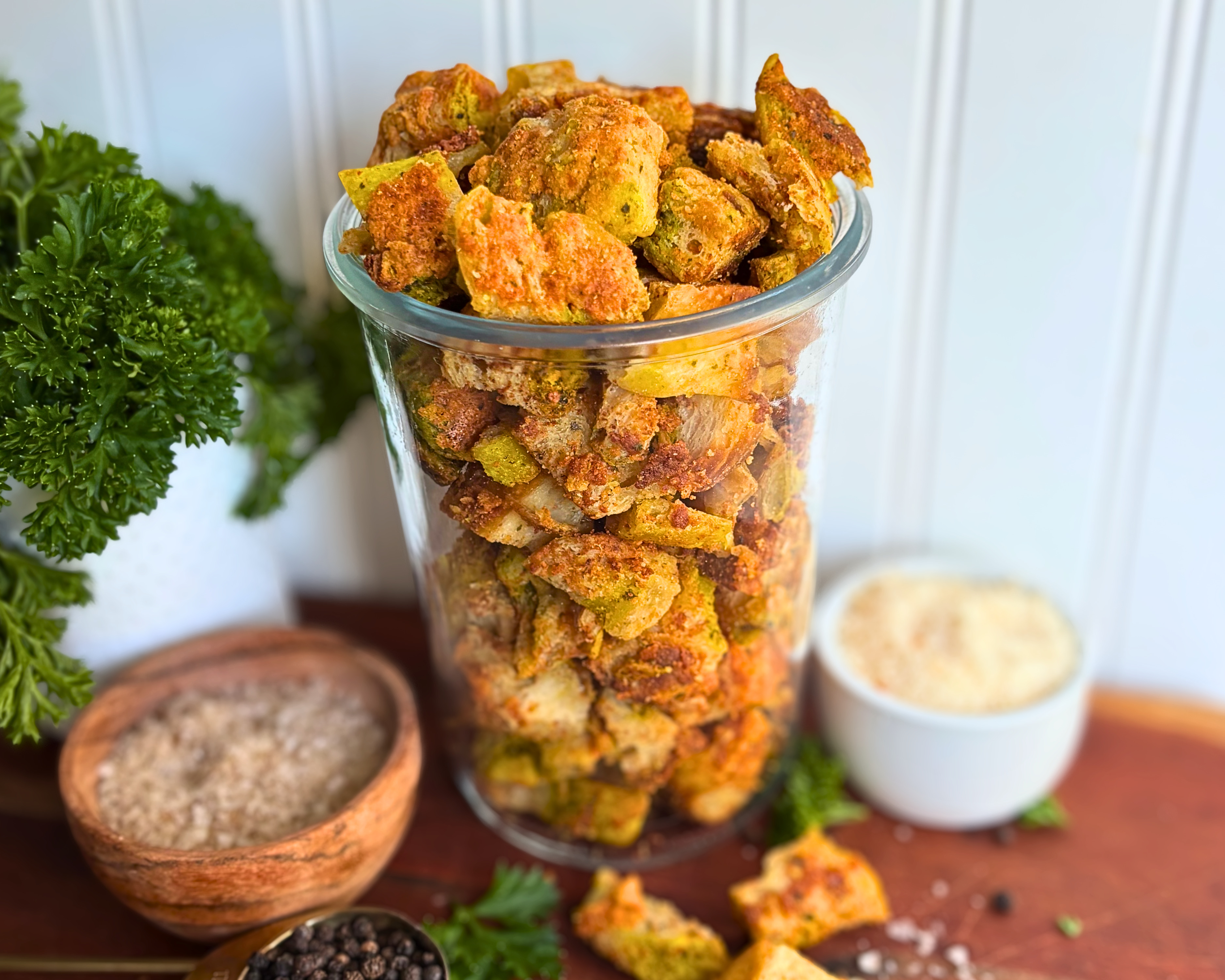
If you have ever tossed a tray of homemade croutons with a generous handful of Parmesan, only to find most of that cheese sitting in the bottom of your salad bowl instead of on the bread, these Parmesan crusted croutons are the fix you have been looking for. They come out of the oven golden and crunchy all the way through, with a crisp layer of Parmesan baked right onto every side, so the cheese stays on the crouton from the sheet pan to the very last bite.
These started with a loaf of mine that did not turn out the way I wanted, and rather than let a good loaf of bread go to waste, I went looking for a way to turn it into the kind of crouton I actually want on a salad or floating on top of a bowl of soup. What I landed on is a simple two stage bake, low and slow to dry the bread out first and then a quick hot finish once the cheese goes on, and it works with sourdough, leftover French bread, a store bought loaf, or pretty much any bread sitting on your counter getting a little too firm to slice.
Table of Contents
- Why You Will Love These Croutons
- How These Croutons Started
- The Secret to Getting Parmesan to Stick
- Ingredients and What Each One Does
- How to Make Parmesan Crusted Croutons
- Making These with Any Bread
- Expert Tips
- How to Serve Them
- How to Store Homemade Croutons
- Shop This Recipe
- Frequently Asked Questions
- Parmesan Crusted Croutons Recipe
- More Recipes You Will Love
- Subscribe for Free
Why You Will Love These Croutons
Homemade croutons are one of those small things that make a weeknight salad or a bowl of soup feel like something you would order out, and these have a few things going for them that the boxed kind never will.

- The cheese actually stays put. The Parmesan bakes into a crisp golden crust on the outside of every crouton instead of falling off in the bowl.
- They are crunchy all the way to the center. The bread dries out low and slow before the cheese ever touches it, so you do not end up with a crisp outside and a chewy middle.
- Any bread works. Sourdough, French bread, a store bought loaf, or the heel ends you have been saving all turn into great croutons.
- The seasonings are already in your pantry. Garlic powder, onion powder, dried parsley, and a little turmeric for color are all it takes.
- One loaf makes a big batch. A whole loaf fits on a single half sheet pan, so you have croutons ready for salads and soups all week.
Back to Table of Contents | Jump to Recipe
How These Croutons Started
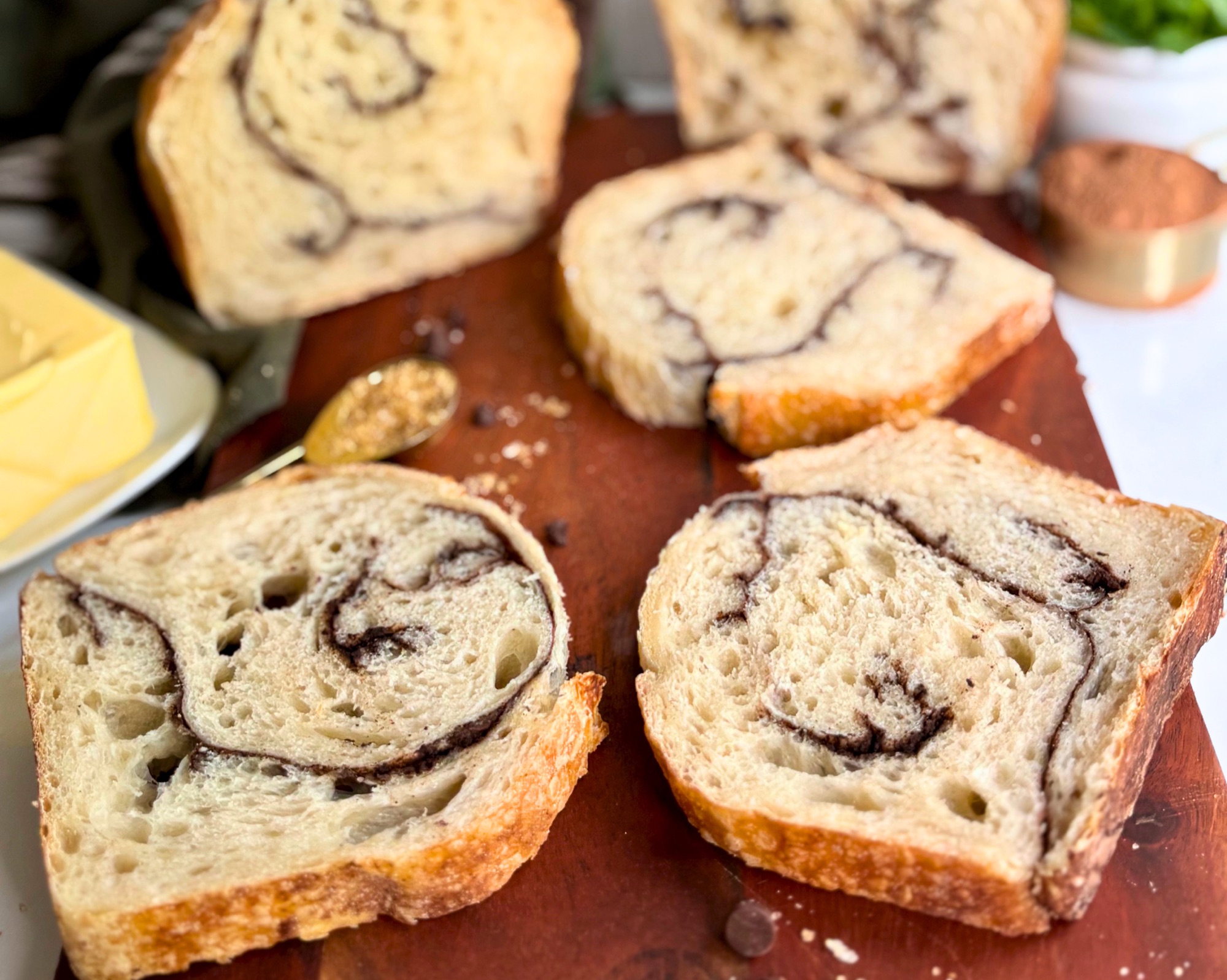
I have been building a series of swirl loaves using my own technique, the Cold Swirl Method, where the filling goes into a fully cold proofed loaf right before it bakes, and you can see it in action in my Cheddar Everything Bagel Swirl Sourdough Bread. My first test of a garlic Parmesan herb version did not come out the way I wanted, and I had a full loaf of perfectly good bread sitting on the counter that was not going to make it onto the blog as a swirl loaf.

Instead of tossing it, I cubed the whole thing up the next day and decided it was going to become the best Parmesan crouton I could make. Those golden streaks you can see running through the bread in some of these photos are the leftover swirl filling, and since a little turmeric gives the croutons that same warm color, it earned a spot in the seasoning for the final recipe. The good news is that you do not need a swirl loaf, or even sourdough, to make these, because the method is what makes them work.
Back to Table of Contents | Jump to Recipe
The Secret to Getting Parmesan to Stick
Most Parmesan crouton recipes go one of two ways. Either the cheese gets tossed on at the very beginning, where a long bake darkens it and can turn it bitter before the bread has a chance to dry out, or it gets sprinkled on at the end, where it has nothing to hold onto and ends up in the bottom of the bowl. These croutons split the difference by giving the bread and the cheese each the bake they need, and a few small details make the cheese bond to the bread instead of just sitting on top of it.

The bread dries first, plain. The cubes get their first toast with only olive oil and seasonings, low and slow, so the bread is almost completely dry before the cheese ever goes on.
Butter becomes the glue. Once the croutons come out of the oven, they go right back into the bowl and get tossed in melted butter while they are still hot. Warm croutons keep the butter fluid, so it coats every surface evenly and leaves a tacky layer for the cheese to grab onto.
The cheese goes on cold with a little cornstarch. Cold Parmesan straight from the fridge stays dry and free flowing, so it scatters evenly instead of clumping, and a spoonful of cornstarch mixed in helps it bind to the bread as it melts.
Use your hands, not a spoon. I found the cheese adheres much better when you mix by hand, pushing and squeezing the croutons as you go so the Parmesan presses into the buttery surface instead of just rolling around the bowl.
Stir once the cheese starts to melt. About five minutes into the hot finish, the Parmesan starts to soften, and giving everything a stir at that point lets any loose cheese melt back onto the croutons and bond in place.
Back to Table of Contents | Jump to Recipe
Ingredients and What Each One Does
Everything in these croutons is something you probably already have, and each ingredient has a specific job, so here is why each one is there. You will find the exact amounts in the recipe card below.

Day old bread. Bread that has sat out for a day has already lost some moisture, so it dries out faster in the oven and holds its cube shape instead of compressing when you toss it. I used a 900 gram sourdough loaf, but any bread works, which I cover further down.
Olive oil. The first coat of fat carries the seasonings onto the bread and helps the outside of each cube crisp up during the low and slow toast.
Garlic powder, onion powder, and dried parsley. Dried seasonings hold up to the long first toast without scorching, and together they give the croutons a savory, garlicky base that goes with just about any salad or soup. Use a little less parsley if you want the cheese to be the main flavor.
Turmeric. A small amount gives the croutons a warm golden color without making them taste like curry.
Salt and black pepper. Just enough to season the bread itself, keeping in mind the Parmesan adds plenty of salt of its own.
Butter. The second coat of fat, added while the croutons are hot, is what the Parmesan sticks to.
Grated Parmesan. I used a bag of already grated Parmesan, which is dry and fine enough to coat evenly. Keep it cold until the moment it goes into the bowl.
Cornstarch. A small amount mixed into the cheese helps it bind to the croutons as it melts.
Back to Table of Contents | Jump to Recipe
How to Make Parmesan Crusted Croutons
The full step by step with times and temperatures is in the recipe card, so this section walks through what you are looking for at each stage and why the order matters.

Season the bread. Cut your bread into bite size cubes, toss them with the olive oil first, and then add the seasonings. Oil first means the seasonings have something to stick to instead of falling to the bottom of the bowl.
Toast low and slow until dry. Spread the cubes on a half sheet pan and toast them at a low temperature until they are dried out. This is the stage that varies the most, because every loaf of bread is different, so go by feel rather than the clock. If you like a crouton with a little give in the center, pull them a bit earlier, and if you want them crunchy all the way through, keep going.

Butter and cheese while they are hot. Dump the hot croutons straight back into the bowl you seasoned them in, pour the melted butter over them, and toss. Then add the cold Parmesan and cornstarch and mix with your hands, pushing and squeezing as you go so the cheese presses on.

Finish hot. Spread the croutons back on the same pan and put it in the oven, then turn the oven up to the finishing temperature and let it preheat with the pan already inside. Give everything a stir after about five minutes, once the Parmesan starts to melt, and bake until the cheese is golden and the croutons are crunchy.
Let them cool on the pan. Leave the croutons alone on the pan as they cool, because the melted cheese firms up and sets as the temperature drops, and moving them too soon can knock it loose.

Back to Table of Contents | Jump to Recipe
Making These with Any Bread
You do not need a sourdough loaf to make these. Leftover French bread, a store bought Italian loaf, ciabatta, a sandwich loaf, or the odds and ends of a few different breads all work, and the method stays exactly the same.
The one thing worth doing is weighing your bread. The recipe is built around a 900 gram loaf, so if yours is smaller, you can scale the oil, seasonings, butter, Parmesan, and cornstarch down to match and keep the coating in the right proportion. Softer breads and sandwich loaves tend to dry out faster than a crusty loaf, so start checking them early during the low and slow toast.
If you do want to bake your own sourdough loaf for croutons, my Minimal Waste Sourdough Starter guide walks you through getting a starter going from scratch.
Back to Table of Contents | Jump to Recipe
Expert Tips
These are the small details that make the difference between Parmesan croutons and croutons with some Parmesan near them.
- Dry the bread before the cheese goes on. The cheese only needs a short, hot bake, so the bread should be nearly done before you add it.
- Keep the cheese cold and the croutons hot. Cold cheese stays dry and coats evenly, while hot croutons keep the butter fluid so the cheese has something to grab.
- Mix with your hands. Pushing and squeezing presses the cheese into the butter far better than tossing with a spoon.
- Stir at the five minute mark. Once the Parmesan starts to melt, a stir lets the loose cheese bond back onto the croutons.
- Watch the last few minutes. Garlic powder can turn bitter if the edges get too dark, so pull them as soon as the cheese is golden.
- Save the crispy cheese bits on the pan. The little pieces of baked Parmesan left behind are delicious sprinkled over a salad.
- Let them cool undisturbed. The cheese sets as it cools, so leave them on the pan until they reach room temperature.
Back to Table of Contents | Jump to Recipe
How to Serve Them
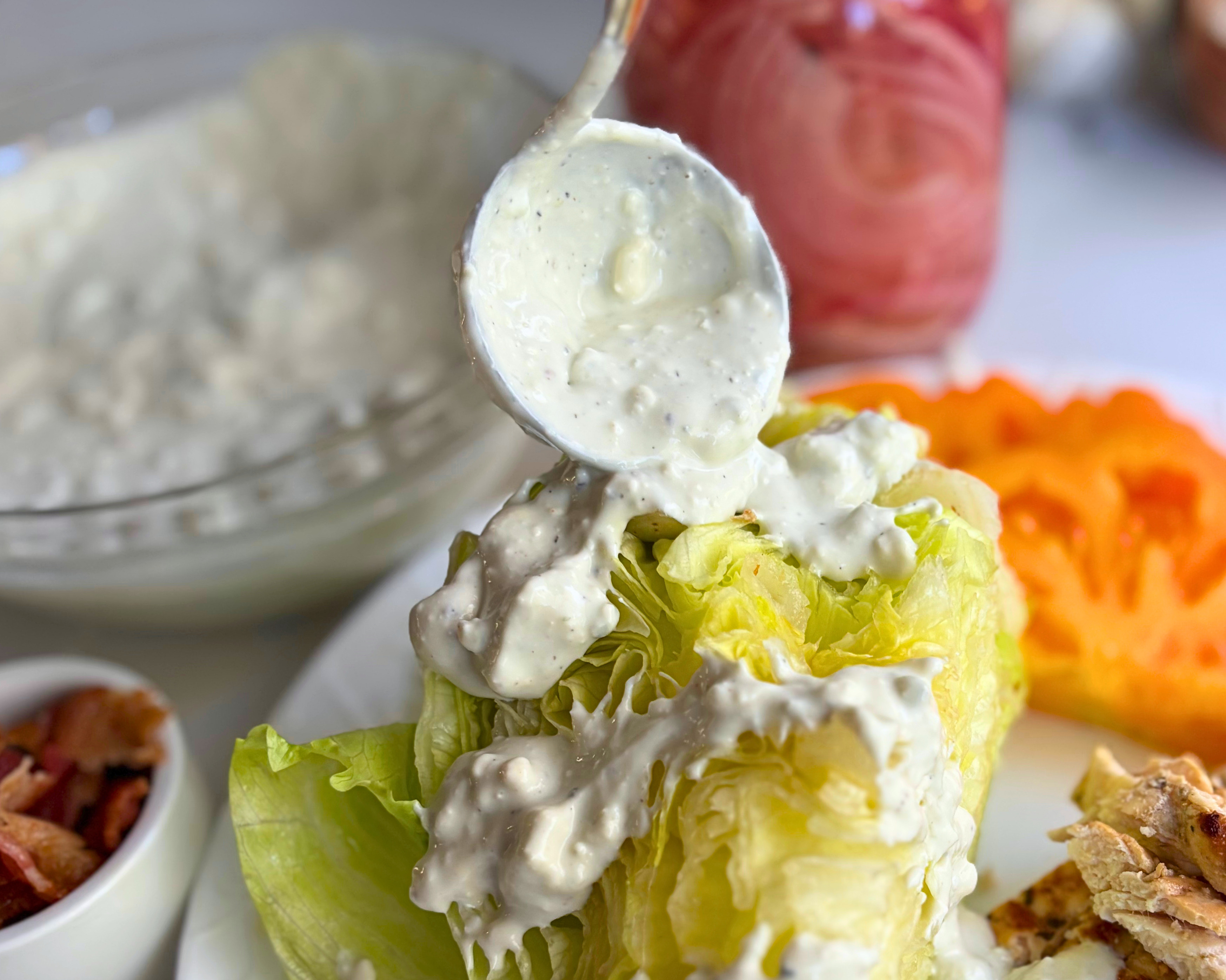
My favorite way to use these is on a wedge salad, piled over a crisp quarter of iceberg with my creamy HIGH PROTEIN BLUE CHEESE DRESSING, pickled red onions, crumbled bacon, and sliced grilled chicken on the side to make it a full meal. The crunch of the croutons against the cold lettuce and creamy dressing is exactly what a wedge salad needs.

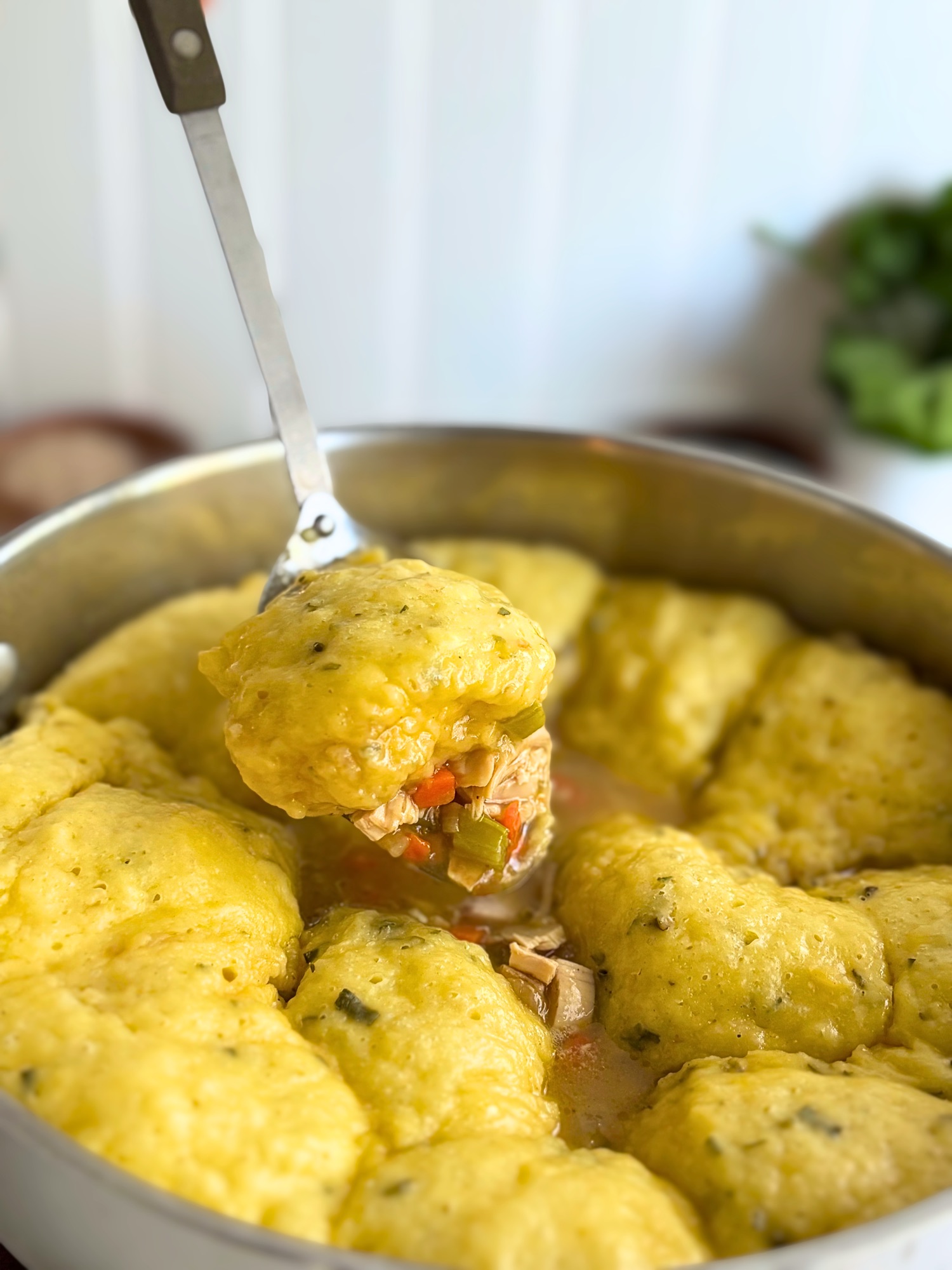
They are just as good floating on a bowl of soup, especially a cozy tomato soup or a simple chicken soup made with my Homemade Chicken Bone Broth. Toss them into a Caesar salad, scatter them over roasted vegetables, or keep a jar on the counter for snacking, because they disappear fast either way.
Back to Table of Contents | Jump to Recipe
How to Store Homemade Croutons
Let the croutons cool completely on the pan before you store them, since any warmth left inside turns to steam in a closed container and softens the crunch you worked for. Once they are fully cool, keep them in an airtight container at room temperature for up to three days.

For longer storage, freeze them in a freezer bag or airtight container for up to three months. If they lose a little crunch, spread them on a sheet pan and warm them in a 350°F oven for about five minutes, then let them cool again before serving.
Back to Table of Contents | Jump to Recipe
Shop This Recipe
These are the tools and ingredients I used to make this batch. Some of the links below are affiliate links, which means I earn a small commission at no extra cost to you, and it helps support the blog.

- Half Sheet Pan: A full loaf of cubed bread fits on one half sheet pan, and I use the same pan for both the first toast and the cheesy finish.
- Large Stainless Steel Mixing Bowl: You need plenty of room to toss a whole loaf of croutons with butter and cheese by hand without sending them over the side.
- Jovial Organic Extra Virgin Olive Oil: The olive oil I used for the first coat on the bread.
- Serrated Bread Knife: Makes clean cubes out of a crusty day old loaf without squashing it.
- Digital Kitchen Scale: Weighing your bread is the easiest way to scale the coating to match the loaf you have.
Frequently Asked Questions
These are the questions I get most about homemade croutons, and the ones I had myself while working out how to keep the cheese on.

Why does Parmesan fall off homemade croutons?
Parmesan falls off when it has nothing to stick to. Sprinkled over dry bread, it just sits on the surface, and if it goes on at the start of a long bake, it can overbrown before the bread is dry. Tossing hot croutons in melted butter first, then mixing in cold Parmesan by hand and finishing them in a hot oven, bakes the cheese right onto the bread.
Do I really need the cornstarch?
It is a small amount, but it helps the Parmesan bind to the croutons as it melts. The bag of grated Parmesan I used already contained a little starch to keep it from clumping, and I still added a tablespoon of cornstarch for a better hold.
Can I use freshly grated Parmesan?
Yes. Grate it as finely as you can, ideally on a microplane, so it coats like a fine powder and keeps it cold until you add it to the bowl.
Can I use fresh bread instead of day old bread?
You can, but fresh bread holds more moisture, so it will take longer to dry during the low and slow toast. Cubing the bread and letting it sit out for a few hours first helps.
Why toast the croutons at a low temperature first?
A low oven dries the bread out evenly all the way to the center without browning the outside too quickly. That leaves the croutons ready for a short, hot finish, which is all the Parmesan needs.
How do I know when the croutons are done?
After the first toast, the croutons should feel dry and firm, with only as much give in the center as you like. After the cheesy finish, the Parmesan should be melted and golden and the croutons should sound crunchy when you stir them. They will crisp up a little more as they cool.
Can I use a different cheese?
I have only tested this with Parmesan. Hard, aged grating cheeses like Pecorino or Asiago are the closest swap, while soft melting cheeses like mozzarella turn chewy once they cool.
How long do homemade croutons last?
Stored in an airtight container at room temperature, they keep for up to five days, and they can be frozen for up to three months.
Can I make these ahead for a party or holiday meal?
Yes, they are a great make ahead side. Bake them a day or two before, let them cool completely, and store them airtight until you are ready to serve.
Back to Table of Contents | Jump to Recipe
Parmesan Crusted Croutons Recipe

Parmesan Crusted Croutons
Equipment
- Half sheet pan
- Large mixing bowl
- Serrated bread knife
- Serrated bread knife
Ingredients
- 900 g day old bread cubed (sourdough, French bread, a store bought loaf, or any bread you have on hand)
- 40 g olive oil 3 tablespoons
- 5 g garlic powder 1 1/2 teaspoons
- 4 g onion powder 1 1/2 teaspoons
- 1.5 g ground turmeric 1/2 teaspoon
- 1 g dried parsley 2 teaspoons, or 1 teaspoon for a lighter herb flavor
- 3 g fine sea salt 1/2 teaspoon
- black pepper a few cracks
- 42 g unsalted butter melted (3 tablespoons)
- 100 g grated Parmesan kept cold (1 1/4 cups)
- 8 g cornstarch 1 tablespoon
Instructions
- Heat the oven to 275°F. Cut the bread into bite size cubes and place them in a large bowl.
- Drizzle the olive oil over the bread and toss to coat, then sprinkle on the garlic powder, onion powder, turmeric, parsley, salt, and pepper and toss again until evenly seasoned.
- Spread the cubes in a single layer on a half sheet pan and bake for about 30 minutes, stirring once or twice, until the bread is dried out. Pull them earlier for a softer center or keep going for croutons that are crunchy all the way through.
- Pour the hot croutons straight back into the bowl, drizzle with the melted butter, and toss to coat.
- Stir the cornstarch into the cold Parmesan, add it to the bowl, and mix by hand, pushing and squeezing the croutons as you go so the cheese presses onto the buttery surface.
- Spread the croutons back on the same pan and put it in the oven, then set the oven to 375°F and let it preheat with the pan inside.
- Stir after about 5 minutes, once the Parmesan starts to melt, then continue baking for a total of 10 to 15 minutes, until the cheese is golden and the croutons are crunchy.
- Let the croutons cool completely on the pan without moving them so the cheese sets, then serve or store.
Notes
More Recipes You Will Love
If you love turning a good loaf of bread into something new, these are a few more from my kitchen to try next.
- High Protein Blue Cheese Dressing
- The Easiest Cheddar Everything Bagel Swirl Sourdough Bread
- The Easiest Cinnamon Swirl Sourdough Bread
- Easy No Knead Sourdough Baguettes
- Homemade Chicken Bone Broth
- How to Create a Sourdough Starter
Back to Table of Contents | Jump to Recipe
Subscribe for Free
If you want more recipes like these, from swirl loaves and high protein bakes to easy ways to use up every last bit of bread, subscribe to H3art of the Home. It is completely free, and new recipes land right in your inbox so you never miss one.




Leave a Reply