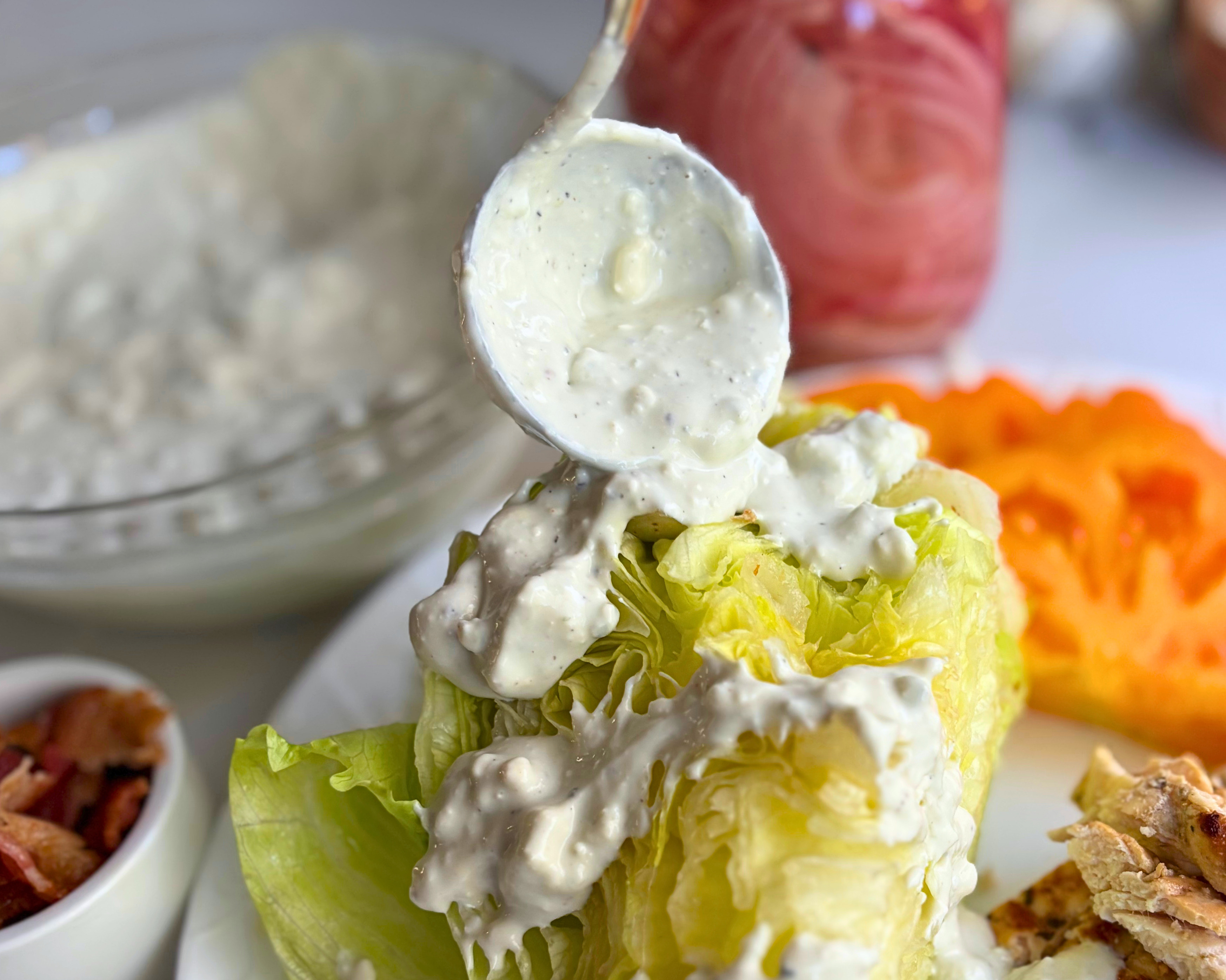
The last wedge salad I ordered out came with a heavy pour of blue cheese dressing and a pile of sweet pickled red onions on top, and I have been thinking about it ever since. I wanted to make it at home to go with grilled chicken, and I wanted the dressing to be good and blue cheesy, salty, and creamy, the kind that clings to every ridge of the iceberg, while still pulling its weight on protein.
So I built this one around whole milk Greek yogurt and a full cup of real blue cheese crumbled straight from a wedge, with just enough mayonnaise to keep it as rich as a steakhouse dressing should be. Greek yogurt is the hero here, and it is the reason every two tablespoons carry almost 4 grams of protein, while the classic bottled chunky blue cheese dressing most of us grew up with lists none at all and comes in at nearly twice the calories.
Below I walk through why each ingredient is there, what happened when I tried cutting the fat, how long to let it rest, and how I build the full wedge salad with crispy bacon, quick pickled red onions, and my Parmesan crusted croutons.
Table of Contents
- Why You Will Love This Dressing
- What Makes It High Protein
- Ingredients and Why They Matter
- How to Make High Protein Blue Cheese Dressing
- What I Learned Testing It
- Choosing Your Blue Cheese
- How I Build the Wedge Salad
- Quick Pickled Red Onions
- Expert Tips
- Storage and Make Ahead
- More Ways to Use It
- Shop This Recipe
- FAQ
- Recipe
- More Recipes You Will Love
- Subscribe for Free
Why You Will Love This Dressing
This is not a lightened up dressing that tastes like it is l, because it was built to taste like the one you get at a steakhouse first and to carry extra protein second.

- It is thick, chunky, and loaded with real blue cheese, with half the cheese mashed into the base so the flavor runs all the way through and the other half folded in so you still get big salty pockets in every bite.
- Whole milk Greek yogurt makes up most of the base, which is where the extra protein comes from without any protein powder.
- It comes together in one bowl with a fork in about ten minutes, with no blender and nothing to cook.
- It works far beyond salad, from dipping wings and vegetables to topping burgers and grilled chicken.
- You can use it the moment it is mixed, and it only gets better as it rests in the fridge.
Back to Table of Contents | Jump to Recipe
What Makes It High Protein
Most blue cheese dressings start with a base of mayonnaise and sour cream, and the bottled versions lean heavily on oil, which is why a classic store bought chunky blue cheese dressing lists 0 grams of protein per serving. This version swaps most of that base for Greek yogurt, which is thick enough to hold the dressing together and brings real protein along with it.

The blue cheese pulls its weight too, since a full cup of crumbled blue cheese adds nearly 29 grams of protein to the batch on its own. Together that puts the whole batch at about 45 grams of protein, which works out to almost 4 grams in every two tablespoons at roughly 72 calories, compared to about 130 calories and no protein in the same amount of the bottled chunky dressing.
If you are building a protein forward dinner like I was, a generous quarter cup over a wedge gives you around 7 grams of protein before you add the bacon, the extra crumbles, or the grilled chicken.
Back to Table of Contents | Jump to Recipe
Ingredients and Why They Matter
Every ingredient here has a job, and the exact amounts are in the recipe card below so you can measure everything by weight.

- Whole milk Greek yogurt: This is the base and the protein source, and whole milk matters more than you would think, which I explain in the testing section below. I use FAGE Total 5%.
- Blue cheese: Buy a wedge and crumble it yourself, since the flavor and texture are noticeably better than packaged crumbles.
- Mayonnaise: Just two tablespoons give the dressing that rich, rounded steakhouse body that yogurt alone cannot quite deliver. I use an avocado oil mayonnaise.
- Buttermilk: A small splash loosens the yogurt into a dressing you can spoon over a wedge and adds a little classic buttermilk flavor.
- Fresh lemon juice: Lemon brightens the whole dressing and keeps the richness from feeling heavy.
- Worcestershire sauce: One teaspoon adds a savory depth that makes the blue cheese taste fuller without being identifiable on its own.
- Garlic: One small clove, finely grated so it melts into the base instead of leaving sharp bites of raw garlic.
- Salt and black pepper: Start with the amounts in the card and adjust after the dressing rests, since blue cheeses vary a lot in how salty they are.
Back to Table of Contents | Jump to Recipe
How to Make High Protein Blue Cheese Dressing
The whole method comes down to one idea, which is treating the blue cheese in two ways so you get flavor throughout the base and chunks you can actually see and taste.

Start by crumbling the wedge into small pieces and mashing half of it into the yogurt, mayonnaise, lemon juice, Worcestershire, garlic, salt, and pepper with a fork. Press the cheese against the side of the bowl as you go, because the more of it you break down into the base, the more the whole dressing tastes like blue cheese instead of like yogurt with cheese in it.
Then stir in the buttermilk until the dressing loosens to the consistency you like, and fold in the remaining crumbles gently so they stay in chunks.

If you want it thinner for drizzling, add buttermilk a splash at a time, and if you want it thicker for dipping, leave a little out. The full measurements and steps are in the recipe card below.
Back to Table of Contents | Jump to Recipe
What I Learned Testing It
My first batch was made with half nonfat and half whole milk Greek yogurt, and while it was not sour, it was missing something that took me a minute to put my finger on, which turned out to be richness.

Fat is what gives a creamy dressing that coating, mouth filling quality and what makes blue cheese taste full instead of thin, and swapping half the yogurt for nonfat took a noticeable amount of it out. That is why the recipe calls for whole milk Greek yogurt and why I kept a small amount of mayonnaise in the base rather than cutting it entirely. If you only have nonfat or low fat yogurt on hand, an extra tablespoon of mayonnaise or a tablespoon of heavy cream puts that richness back.
The second thing I learned is that this dressing changes as it sits. It is good enough to use the moment it is mixed, but after a rest in the fridge the blue cheese melts further into the base and the whole thing tastes stronger and more rounded.
The last adjustment was salt. I started with a quarter teaspoon, and after the dressing rested I added another quarter teaspoon along with a few more cracks of pepper. The recipe card lists the starting amount and where mine landed, so you can season toward it after you taste your own batch.
Back to Table of Contents | Jump to Recipe
Choosing Your Blue Cheese
Buying a wedge instead of a container of crumbles is the single biggest upgrade you can make to this dressing.
Packaged crumbles are usually coated to keep them from clumping, which leaves them drier and less creamy, while a wedge crumbled by hand is moist enough to mash smoothly into the yogurt and still holds together in rich, distinct chunks when you fold the rest in.
Any blue cheese you enjoy will work, from a mild, creamy blue to a sharper, saltier one. A milder cheese gives you a softer, creamier dressing, and a bolder one gives you that big, punchy steakhouse flavor, so pick based on how strong you like it and remember to taste before adding the second round of salt.
Back to Table of Contents | Jump to Recipe
How I Build the Wedge Salad
A wedge salad is less of a recipe and more of an assembly, and the dressing is what carries it, so be generous with it.

Cut a cold head of iceberg lettuce into quarters and leave the core attached so each wedge holds together on the plate. Keep the lettuce in the fridge until the last minute, because cold, crisp iceberg is half the appeal.
Spoon the dressing over the top so it runs down into the layers, then pile on chopped crispy bacon, extra blue cheese crumbles, and a tangle of quick pickled red onions. I serve mine with thick slices of tomato on the side and sliced grilled chicken alongside, which turns it into a full dinner.

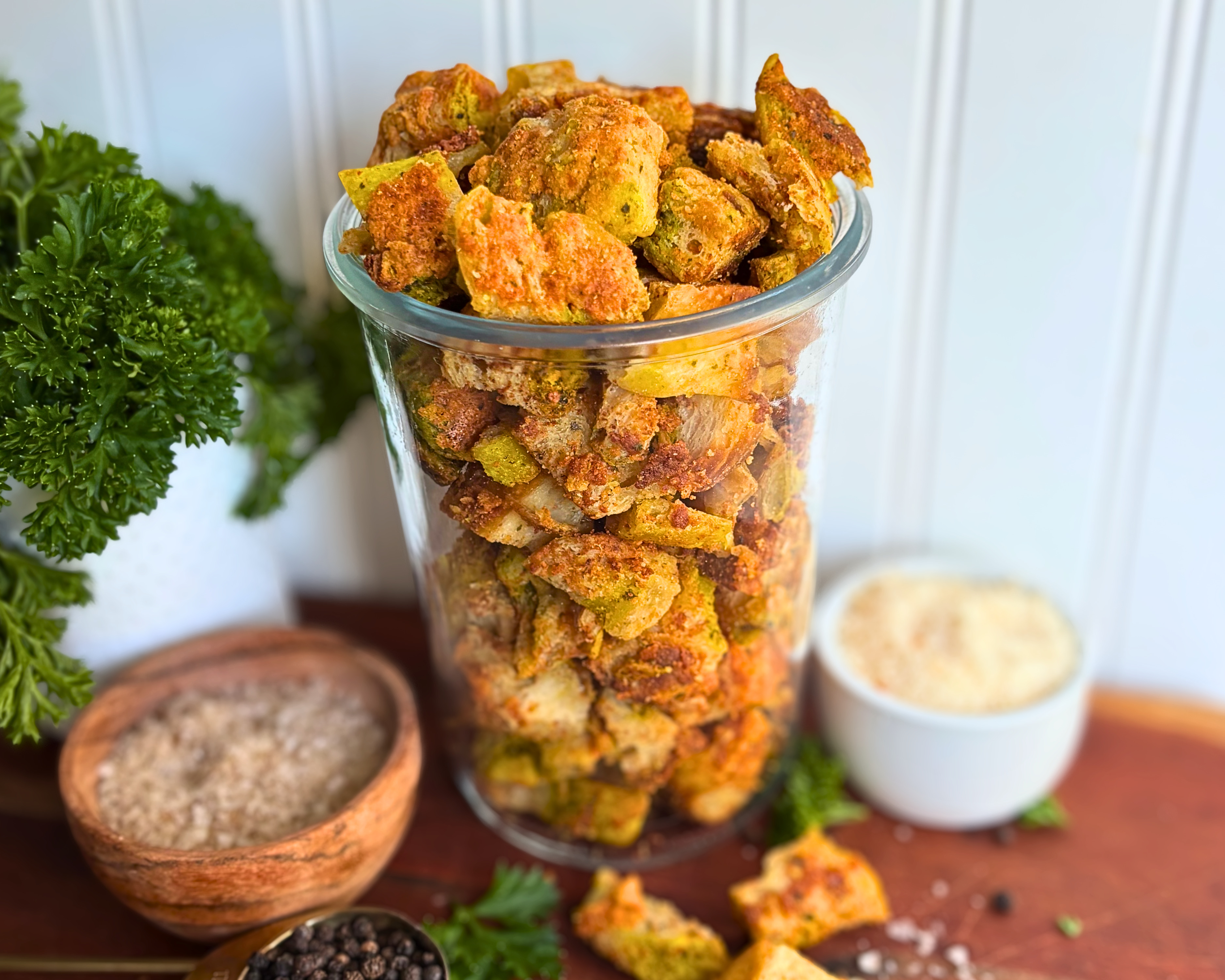
For crunch, I add my Parmesan Crusted Croutons, which are golden and cheesy and give every bite a crunchy contrast to the creamy dressing.
I keep this salad nut free, so you will not find the candied pecans or walnuts that show up on a lot of restaurant wedges, and with the bacon and croutons bringing the crunch, nothing feels missing.
Quick Pickled Red Onions
The wedge salad that inspired this one came topped with sweet pickled red onions, and they make such a difference that I now consider them part of the salad rather than an extra. They cut through the richness of the dressing with a bright, sweet bite, and they are ready in about an hour, so you can make them while the dressing rests.

What You Need
- 150 g red onion, 1 medium onion, sliced as thin as you can into rings or half moons
- 120 g apple cider vinegar (½ cup)
- 118 g water (½ cup)
- 38 g granulated sugar (3 tbsp)
- 3 g fine sea salt (½ tsp)
- A few whole black peppercorns, optional
- 1 pint jar with a lid
How to Make Them
- Add the vinegar, water, sugar, and salt to a pint jar. Shake well.
- Pack the sliced onion into the pint jar, tucking in the peppercorns if you are using them.
- Pressing them down with a spoon so they are fully covered.
- Put the lid on and move the jar to the fridge. The onions will turn bright pink and be ready to use within the hour.
Tips for the Best Pickled Onions
- I keep the salt low on purpose, since the dressing, blue cheese, and bacon already bring plenty of salt to the salad.
- For sweeter onions, increase the sugar to 50 g (¼ cup).
- Apple cider vinegar gives them a mellow, fruity sweetness that pairs well with blue cheese and bacon.
- Leftovers keep in the fridge for about two weeks, and they are just as good on burgers, tacos, and grain bowls.
Back to Table of Contents | Jump to Recipe
Expert Tips
These are the small things that take this dressing from good to the one you keep making.

- Use whole milk Greek yogurt. Nonfat yogurt makes a thinner, flatter dressing, and the richness is worth it. However, if you’re watching your calories or fat intake non-fat will work just fine.
- Mash half the cheese hard. The more blue cheese you work into the base, the more blue cheesy the whole dressing tastes.
- Weigh your ingredients. Greek yogurt and crumbled cheese pack very differently into a measuring cup, so a scale gives you the same dressing every time.
- Grate the garlic. A finely grated clove disappears into the base, while chopped garlic leaves harsh raw bites.
- Salt after it rests. The cheese keeps seasoning the dressing as it sits, so wait to add more salt until it has chilled.
- Thin it last. Add buttermilk a splash at a time at the end so you control the texture for drizzling or dipping.
Back to Table of Contents | Jump to Recipe
Storage and Make Ahead
This dressing is a great make ahead recipe, since the flavor improves after a rest in the fridge.
Store it in an airtight jar in the refrigerator and plan to use it within 5 to 7 days. Because it is made with fresh dairy and contains no preservatives, it will not last as long as a bottled dressing. It may loosen slightly as it sits, so give it a good stir before serving.
I do not recommend freezing it, since yogurt and mayonnaise based dressings tend to separate and turn grainy once thawed.
Back to Table of Contents | Jump to Recipe
More Ways to Use It
Once you have a jar of this in the fridge, it ends up on almost everything.
- Spooned over a classic iceberg wedge salad
- As a dip for Buffalo wings, celery, carrots, and cucumbers
- Spread on burgers or a grilled chicken sandwich
- Drizzled over sliced grilled chicken or steak
- Tossed with chopped romaine and bacon for a chopped salad
- Spooned over a baked potato in place of sour cream
Back to Table of Contents | Jump to Recipe
Shop This Recipe
These are the tools and ingredients I used to make this dressing. I earn a small commission from purchases made through these affiliate links at no extra cost to you, which helps support the blog and keeps the recipes coming.
- Primal Kitchen Avocado Oil Mayo: The mayonnaise I use for the small amount of richness this dressing needs.
- Organic Worcestershire Sauce: The Worcestershire I keep on hand for the savory depth in the base.
- Glass Mixing Bowls: I mix the dressing right in a glass bowl so I can see how much of the cheese has broken down.
- Silicone Spoon Spatula: Perfect for folding in the last of the crumbles without breaking them up and for scraping every bit out of the bowl.
- Microplane Grater: The easiest way to grate a garlic clove so fine it melts into the dressing.
- Wide Mouth Mason Jars: I store the dressing and the quick pickled onions in these.
- Digital Kitchen Scale: For weighing the yogurt and cheese so the dressing turns out the same every time.
Back to Table of Contents | Jump to Recipe
FAQ
Can I use nonfat Greek yogurt?
You can, but the dressing will be thinner and less rich. When I tested it with half nonfat yogurt, it was missing the full, creamy body a blue cheese dressing should have. If nonfat is all you have, add an extra tablespoon of mayonnaise or a tablespoon of heavy cream to bring the richness back.
Can I make it without mayonnaise?
Yes, you can replace the mayonnaise with more Greek yogurt or with sour cream. It will still be good, but the mayonnaise is what gives it that rich steakhouse quality, so expect a slightly lighter, more yogurt forward dressing.
How much protein is in this blue cheese dressing?
The whole batch has about 45 grams of protein, which is almost 4 grams in every two tablespoons. Most of it comes from the Greek yogurt and the blue cheese.
Why does the flavor get better after it sits?
As the dressing rests in the fridge, more of the blue cheese softens into the base and the garlic mellows, so the flavor becomes stronger and more blended. It is good right away, but a rest of a few hours or overnight is when it tastes its best.
How do I make it thinner or thicker?
Add buttermilk a splash at a time for a thinner, pourable dressing. For a thick dip, use less buttermilk.
Can I use packaged blue cheese crumbles?
You can, but crumbling your own from a wedge gives you a creamier dressing and better chunks, since packaged crumbles tend to be drier.
How long does homemade blue cheese dressing last?
Stored in an airtight container in the refrigerator, it keeps for 5 to 7 days. Stir it before serving if it has loosened a little.
What do you put on a wedge salad?
A classic wedge salad is a quarter of iceberg lettuce topped with blue cheese dressing, bacon, extra blue cheese crumbles, and tomato. I add quick pickled red onions and Parmesan crusted croutons to mine and serve it with grilled chicken.
Back to Table of Contents | Jump to Recipe
Recipe

High Protein Blue Cheese Dressing
Equipment
- Medium glass mixing bowl
- fork
- Silicone spoon spatula
- Microplane grater
- Digital Kitchen Scale
- Airtight jar for storage
Ingredients
- 170 g plain whole milk Greek yogurt ¾ cup
- 135 g blue cheese crumbled from a wedge (1 cup), divided
- 28 g mayonnaise 2 tbsp
- 30 g buttermilk 2 tbsp, plus more to thin
- 15 g fresh lemon juice 1 tbsp
- 5 g Worcestershire sauce 1 tsp
- 4 g garlic 1 small clove, finely grated
- 1.5 g fine sea salt ¼ tsp, plus up to 1.5 g more (¼ tsp) to taste
- 1 g freshly cracked black pepper ½ tsp, plus more to taste
Instructions
- Crumble the blue cheese wedge into small pieces and divide it into two equal portions of about 68 g (½ cup) each.
- In a medium bowl, combine the Greek yogurt, mayonnaise, lemon juice, Worcestershire sauce, grated garlic, 1.5 g (¼ tsp) salt, and 1 g (½ tsp) pepper with the first portion of blue cheese.
- Mash the cheese into the base with a fork, pressing it against the side of the bowl, until the base is creamy and the blue cheese is worked all the way through.
- Stir in the buttermilk until smooth. For a thinner dressing, add more buttermilk a splash at a time.
- Gently fold in the remaining blue cheese so it stays in chunks.
- Use the dressing right away, or cover and refrigerate for at least 1 hour, and up to overnight, for the best flavor.
- Stir and taste after chilling, then add up to 1.5 g (¼ tsp) more salt and a few more cracks of pepper as needed.
Notes
More Recipes You Will Love
If you like making your own staples at home, these are a few more from my kitchen.
- Parmesan Crusted Croutons
- Grillo’s Style Refrigerator Pickles (Quart Jar Version)
- High Protein Hamburger Buns with Greek Yogurt
- Homemade Chicken Bone Broth (Instant Pot or Stovetop)
- Easy No Knead Sourdough Baguettes
- Cottage Cheese Chocolate Chip Cookies
Back to Table of Contents | Jump to Recipe
Subscribe for Free
If you make this dressing, I would love to hear how it turned out, so leave a comment below and tag me on social media so I can see your wedge salads.
Want more high protein recipes and homemade staples like this one sent straight to your inbox? Subscribe to the H3art of the Home newsletter. It is completely free, and you will be the first to know when new recipes go live.
Back to Table of Contents | Jump to Recipe




Leave a Reply