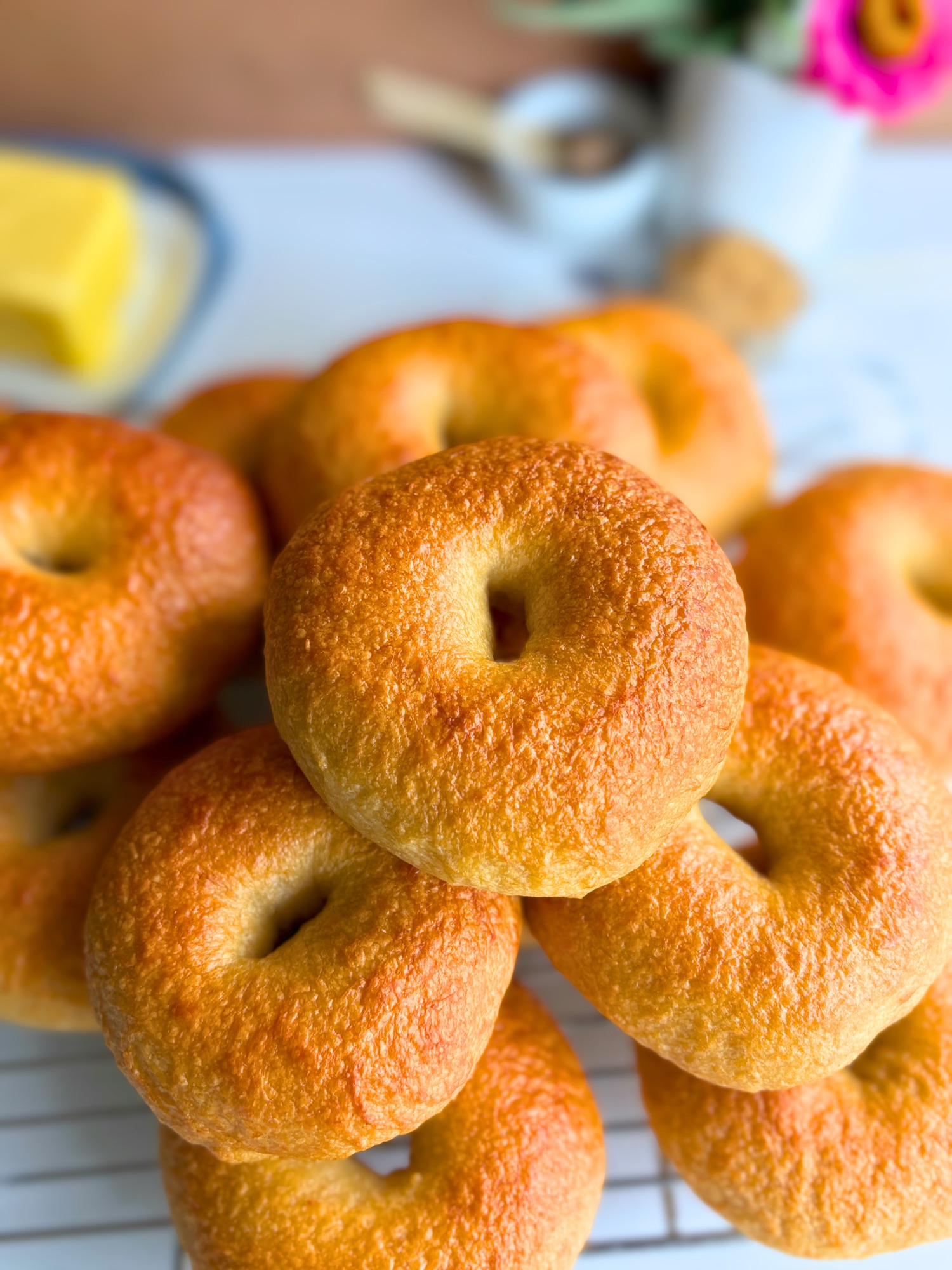
Most high protein bagels ask you to make a trade. You can have the protein, or you can have a bagel actually worth eating, and somewhere between the powder chalkiness and the dense little hockey puck texture you end up wishing you had just bought the real thing. These do not make you choose. They land at about 19.5 grams of protein each, they chew and pull the way a bagel is supposed to, and there is no protein powder anywhere in the ingredient list.
We are using cottage cheese to make that possible. (With a greek yogurt swap option) Blended completely smooth and worked straight into the dough, it takes the place of most of the water a normal bagel would use, so every bit of liquid going into this recipe is bringing protein with it instead of just hydration. That is the whole trick, and it is why these can carry a serious number without tasting like a supplement.
And if you have been scared off sourdough bagels because every recipe seems to want two days of waiting, here is the good news. These are a true same day sourdough as long as you start early in the morning, feed your starter, and let the bulk run through the day, so the overnight is an option rather than a requirement.

Table of Contents
- Why You Will Love These
- What Makes Them High Protein
- Ingredients You Will Need
- Why These Steps Matter
- Why Bagels Get Boiled
- Tips for the Best Bagels
- How to Store and Freeze
- No Starter Make the Yeast Version
- Greek Yogurt Variation
- More High Protein Sourdough Recipes
- Frequently Asked Questions
- Recipe
- Subscribe
Why You Will Love These
These bagels came out of a long stretch of testing where the goal was simple to say and hard to do, a bagel with real protein that still eats like a bagel. The cottage cheese does the heavy lifting while keeping the inside tender, the boil gives you that chewy set skin, and the whole thing holds a clean defined ring instead of slumping into a sad flat disc.
They are also flexible in the ways that actually matter to a real kitchen. Start early and they are a same day sourdough, or shape them the night before and bake in the morning, whichever fits your day. Either way you are not reaching for a tub of protein powder, and you are not settling for a bagel that tastes like a supplement.

What Makes Them High Protein
Start with the number that matters. These land at about 19.5 grams of protein per bagel, and they get there with no protein powder anywhere in sight. That is the whole thing in one line, a real bagel that just happens to carry serious protein.
The ingredient carrying that is the cottage cheese. In an ordinary bagel, water makes up most of the liquid in the dough, and water contributes nothing but hydration. Here that job goes to blended cottage cheese instead, so the liquid is pulling double duty, bringing real whole food protein along with the tender bite that makes these eat like a bagel rather than a dense diet food. The variation using greek yogurt is solid and has been tested thoroughly. You lose 1.5 grams of protein per bagel, but the ease of not having to blend the cottage cheese is the draw,
Just as important, this is a real bagel in every traditional sense. It is naturally leavened by the starter alone, with no baking powder or baking soda in the dough, and it ferments slowly enough to develop genuine flavor and all the benefits that come with a long rise. Then it gets boiled and baked exactly the way a bagel is supposed to be. That combination is what makes the protein feel like a bonus rather than the point, and it is a harder combination to find than it should be.
Ingredients You Will Need
Everything is measured in grams first with the cup and spoon amounts in parentheses, because weight is the only way these doughs come out the same twice.
- Cottage cheese, blended completely smooth, standing in for most of the water a normal bagel dough would use. Any curd that survives the blender turns into a wet spot in the crumb, so take it further than you think you need to. (See the Greek Yogurt Substitution section if you are using that)
- A splash of milk, to help the cottage cheese blend silky and to add a little tenderness.
- Bread flour, the structural backbone of the dough, so this is not the place for all purpose. You want the strength for a bagel that holds its ring and chews properly.
- Active sourdough starter, fed and peaked, doing all of the leavening here.
- Egg whites, for structure and a little moisture.
- Brown sugar, a small amount, which feeds the ferment and lays a soft malt note into the dough itself.
- Kosher salt.
- Honey and baking soda for the boiling bath, which together build the color, the chew, and the classic flavor of the skin. Barley malt syrup is the traditional choice and works beautifully if you keep it on hand, but honey is what I use and it is far easier to find.

Get the best drip free honey dispenser here.
Why These Steps Matter
The recipe card has the full method, the amounts, and the timing, so this section is not a walkthrough. It is the handful of things that actually make or break a batch, the parts worth understanding before you start.
A peaked, active starter is not optional. A sleepy starter is the number one reason a sourdough bagel bakes up dense, so feed it and wait until it is domed and floating before you mix.
Mix in two stages with a rest in between. Everything goes in together for a minute or two, just until it is brought together and no dry flour is visible, and then the whole thing rests for thirty minutes before you finish mixing. That pause is doing real work, because dairy hydrates flour much more slowly than plain water does, and giving the flour that time is what keeps you from adding water the dough never actually needed.
Stop mixing sooner than you think. You are never going to pull a windowpane out of this dough no matter how long you run the mixer, because there is so little free water in it, so chasing one only overworks it. What you are looking for instead is a dough that has come together, is evenly mixed, and shows a little gluten development. It should clear the sides of the bowl, though it may still stick at the bottom, and a bench scraper is your friend for pulling everything off the sides back into the middle. When you stretch a piece it should pull away without immediately breaking, and it will feel stickier at this stage than you expect.
Then let time do the rest of the work. The dough rests an hour after mixing, and a series of stretch and folds after that builds the gluten development you did not chase in the mixer before the bulk ferment begins. The stickiness you noticed earlier largely disappears on its own as this happens.

Trust a stiff dough. These read wetter on paper than they feel in your hands, because the water in cottage cheese is bound to its solids and releases slowly. Stiff but smooth is exactly right, and a dough that handles like an ordinary bagel dough is usually too wet.


Go wider on the hole than looks right. It tightens as the shaped bagels rest and it closes further in the oven, so a hole that looks slightly too big on the board is the one that bakes into a proper ring.

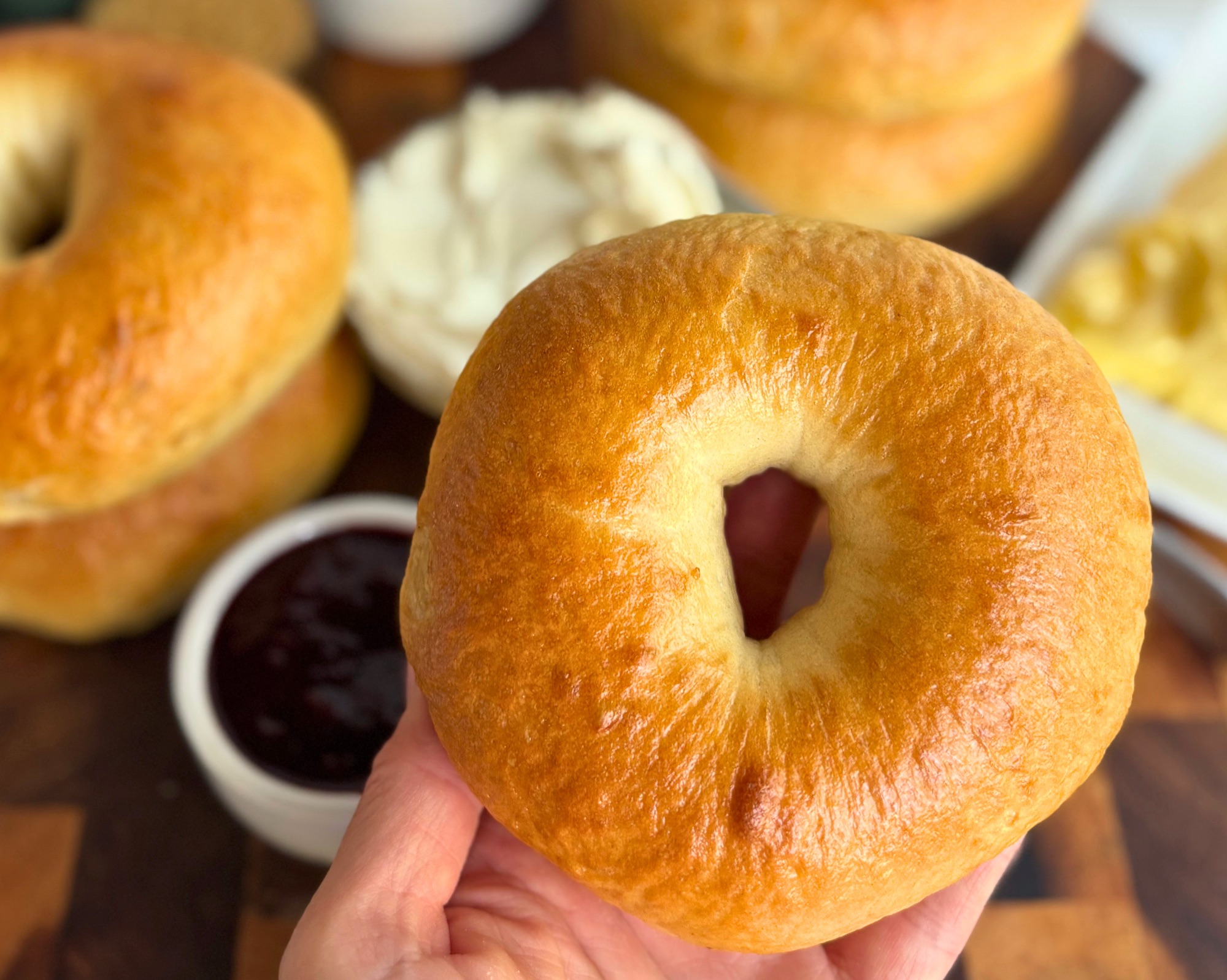
Boil gently, never at a hard rolling boil. A violent bath sets the skin rough and can leave you with wrinkling as the bagels cool, while a gentle one sets a smooth, glossy, chewy skin. Lay them in top side down first so the face people see sets against undisturbed water.


Bake to temperature, not to the clock. The dairy browns the outside quickly, so the color runs ahead of the inside, and the internal read on the card is the honest signal that they are done. Let them cool before you cut, because the crumb is still setting as it comes down in temperature, and a bagel sliced too hot can read gummy when it is actually just fine.

Why Bagels Get Boiled
The boil is what makes a bagel a bagel instead of a round roll with a hole. Dropping the shaped dough into an alkaline bath sets the outer skin before it ever hits the oven, which is what gives you that glossy chew and keeps the bagel from puffing up soft.
The baking soda is the part doing the real work, since it makes the water alkaline and drives the browning, the set skin, and the flavor you associate with a proper bagel. The honey rounds it out with color and a gentle sweetness. Barley malt syrup is the traditional bagel shop choice and you are welcome to use it in place of the honey, though honey is what I reach for and the difference in the finished bagel is small.
One thing worth knowing if you have made traditional bagels before. Plenty of recipes call for a full minute or more per side, and the boil on the card here is shorter than that on purpose. This is not a lean bagel dough. The gluten is more relaxed and there is very little free water in it, so a long hard boil sets the skin heavier than this dough wants and costs you rise in the oven. A shorter boil in gently moving water is what suits it.

Tips for the Best Bagels
Blend the cottage cheese until it is truly smooth. This is the single most common way to end up with a patchy crumb, and it takes an extra thirty seconds to get right.
Trust a stiff dough. The calculated hydration on these reads higher than the dough will feel in your hands, because the water in dairy is bound to its solids and releases slowly, so it never behaves like the same weight of plain water. You want stiff but not crumbly, with a surface that is smooth and a poke that springs back slowly.
Do not chase a wide open airy crumb. The dairy tenderizes the inside on purpose, so the goal here is a good shape, a clean ring, and a chewy set exterior rather than the big holes of a lean bakery bagel. A little surface wrinkling can show up no matter what you do, since these doughs carry almost no free water, and blended cottage cheese is the version that showed it the least in testing.
Bake to temperature, not to the clock. The dairy browns the outside quickly, so the color can run ahead of the inside. An internal read in the range on the card is the honest signal that they are done.

How to Store and Freeze
Bagels are best the day they are baked, but they keep well with a little planning. Store them at room temperature in a sealed bag for up to two days, and avoid the fridge, which stales bread faster than the counter does.
For longer storage, slice them before you freeze so you can pull one straight into the toaster. They freeze beautifully for up to three months, and toasting from frozen brings back most of the fresh baked chew.

No Starter Make the Yeast Version
No starter, or no time to babysit a bulk ferment today. There is a full high protein yeast bagel that skips the starter entirely and goes from mixing bowl to cooling rack in about three hours. Same cottage cheese base, same boil, same bake, just a much faster path to the same bagel.
High Protein Bagels (Cottage Cheese or Greek Yogurt)
Greek Yogurt Variation
No cottage cheese on hand, or you just prefer yogurt. This version was tested right alongside the main recipe and it works beautifully, it simply comes out a touch softer with a finer, more uniform crumb.
- Swap the cottage cheese and the blending milk together for 300g nonfat Greek yogurt (about 1¼ cups), warmed about 30 seconds to take the chill off. Yogurt does not need blending, so the milk comes out entirely.
- Bring the salt up to 12g (2 tsp), since cottage cheese carries more sodium and the main recipe already accounts for that.
- Expect to need a little more water at the mixer than the cottage cheese version calls for, up to about 15g (1 tbsp), added slowly and only if the dough will not come together.
The protein lands a hair lower, right around 18 grams per bagel.
More High Protein Sourdough Recipes
If these are your speed, here is where to go next.
- High Protein Sourdough Sandwich Bread
- High Protein Honey Whole Wheat Sourdough Bread
- High Protein Sourdough Hamburger Buns
Frequently Asked Questions
Do I need protein powder for these?
No, and that is the whole point. The protein comes from real ingredients you already recognize, cottage cheese and egg whites worked into a proper bread dough, so there is no chalk and no aftertaste.
Can I make these without a sourdough starter?
Yes. There is a full yeast version in its own post that skips the starter and comes together in about three hours, linked up above.
Can I make the sourdough version in one day?
Yes. Start early in the morning with a fed, active starter and let the bulk run through the day, and you can boil and bake the same evening. The overnight route is there for convenience, not because these demand it.
Why cottage cheese instead of yogurt?
Blended cottage cheese carries a little more protein for the same weight, so it nudges the final number up. It is also less acidic than Greek yogurt, and since acid weakens gluten, the cottage cheese dough holds a stronger structure and bakes up taller with a better crumb. Greek yogurt still works, and there is a full variation for it above.
Can I replace the egg?
Yes, you can remove the egg white and make these egg free. Its one of the first variations I tried. Just replace the egg white amount with equal cottage cheese or greek yogurt. If adding cottage cheese, make sure it gets blended with the other amount. You may need to add 15g or so of water after the initial mix. Egg whites are mostly free water, so removing them takes hydration out of the dough that the dairy does not fully replace. Expect a slightly softer bagel.
My dough will not windowpane. Did I do something wrong?
No. This dough will never windowpane and it is not supposed to. There is very little free water in it, since almost all of the liquid is locked into the cottage cheese, so you are looking for a dough that comes together with a little gluten development rather than a sheer translucent sheet. The thirty minute rest during mixing and the stretch and folds afterward do the rest of the work for you.
Why did my bagels wrinkle on top?
A few things can do it, but the usual culprits are a boil that was too vigorous or simply the soft skin these tender dairy doughs naturally have. A gentle bath is your best defense, and a little wrinkling is normal here rather than a sign something went wrong.
How much protein is in each bagel?
About 19.5 grams in the cottage cheese version and about 18 grams with Greek yogurt, based on six bagels per batch.
Recipe

High Protein Sourdough Bagels
Equipment
- – Stand mixer with dough hook
- kitchen scale highly recommended for accuracy
- Large mixing bowl
- bench scraper
- Large pot for boiling bath
- Slotted spoon
- Parchment paper
- Wire cooling rack
- Instant read thermometer
- Pastry Brush/Paper towel optional, for egg wash
Ingredients
DOUGH
- 300 g cottage cheese blended completely smooth with the milk (about 1⅓ cups) SEE NOTES FOR GREEK YOGURT SUB
- 23 g whole milk for blending (1½ tbsp)
- 500 g bread flour about 4¼ cups
- 150 g active peaked sourdough starter 100 percent hydration (about ⅔ cup)
- 66 g egg whites 2 large (about ¼ cup)
- 13 g light brown sugar packed (1 tbsp)
- 11 g Real Salt fine grain (about 2 tsp)
- 10 g water 2 tsp, plus up to 5g more (1 tsp) only if the dough seems stiff once mixed
BOILING BATH
- 2000 g water about 8½ cups
- 21 g honey 1 tbsp, or 14g barley malt syrup (2 tsp)
- 14 g baking soda 1 tbsp
OPTIONAL EGG WHITE WASH
- 1 large egg white
- 15 g water 1 tbsp
Instructions
- Feed your starter and wait until it is peaked, domed, and floats in water. A weak starter is the single most common reason a sourdough bagel comes out dense, so do not rush this step.
- Blend the cottage cheese with the milk until completely smooth, with no curd left at all. Warm the blend about 30 seconds, just enough to take the chill off. It should be barely warm, never hot, so it does not shock the starter.
- Whisk the flour and salt together in the mixer bowl. Add the blended cottage cheese, the starter, the egg whites, the brown sugar, and the water. Mix on low for 1 to 2 minutes, just until everything is brought together and no dry flour is visible.
- Cover and rest 30 minutes. Dairy hydrates flour much more slowly than plain water does, and this rest is what lets the flour drink properly. Skipping it is what makes people add water the dough never actually needed.
- Finish mixing on low for about 5 minutes. Do not chase a windowpane, because this dough will never give you one. You are looking for a dough that has come together evenly with a little gluten development, clearing the sides of the bowl even if it still sticks at the bottom. Use a bench scraper to pull anything off the sides back into the middle. It should stretch away without immediately breaking, and it will feel stickier than you expect. Only if it is still crumbly and will not come together, add the remaining water 5g at a time.
- Cover and rest 1 hour.
- Do a series of stretch and folds, reaching under one side of the dough, pulling it up, and folding it over the center, then turning the bowl and repeating until you have gone all the way around. This is where any of the gluten development that gets missed in the mixer gets built, and the stickiness largely disappears as you go.
- Bulk ferment at room temperature about 7 hours, until the dough is puffy and roughly 50 percent larger. With no commercial yeast this is the real ferment, so go by look and feel rather than the clock.
- Divide into 6 equal pieces, about 178g each. Ball each one tightly, pressing out any large trapped air as you go. Cover and rest 15 minutes.
- Poke through the center of each ball and stretch the hole to about 2 inches. Go wider than looks right, because the hole tightens while the bagels rest and closes further in the oven.
- Cover and rest the shaped bagels 45 minutes to 1 hour.
- Preheat the oven to 425°F. Bring the water to a boil in a wide pot, then stir in the honey and baking soda and bring it back to a gentle boil, never a hard rolling one.
- Boil 30-45 seconds per side, laying each bagel in top side down first. The side that goes in first sets against undisturbed water, and the top is the face people see. Lay them in gently by hand rather than dropping them, and flip with a slotted spoon or spider.
- Lift each one out, hold it over the pot a few seconds to drain, and rest 1 to 2 minutes on a cooling rack. Move to a parchment lined baking sheet.
- If you are using the egg white wash, whisk the egg white with the water and brush it on now, once the surface has gone from beading wet to matte and slightly tacky. Skip the wash entirely for the most even color, since the honey in the bath gives real shine on its own.
- Bake 20 to 25 minutes, rotating once, until deep golden. They are done at 195 to 205°F internal. Cool completely before slicing, because the crumb is still setting as it comes down in temperature.
Notes
Subscribe
Never miss a recipe. Subscribe and get high protein sourdough bakes sent straight to your inbox, the kind that skip the powder and still hit the number.



Leave a Reply