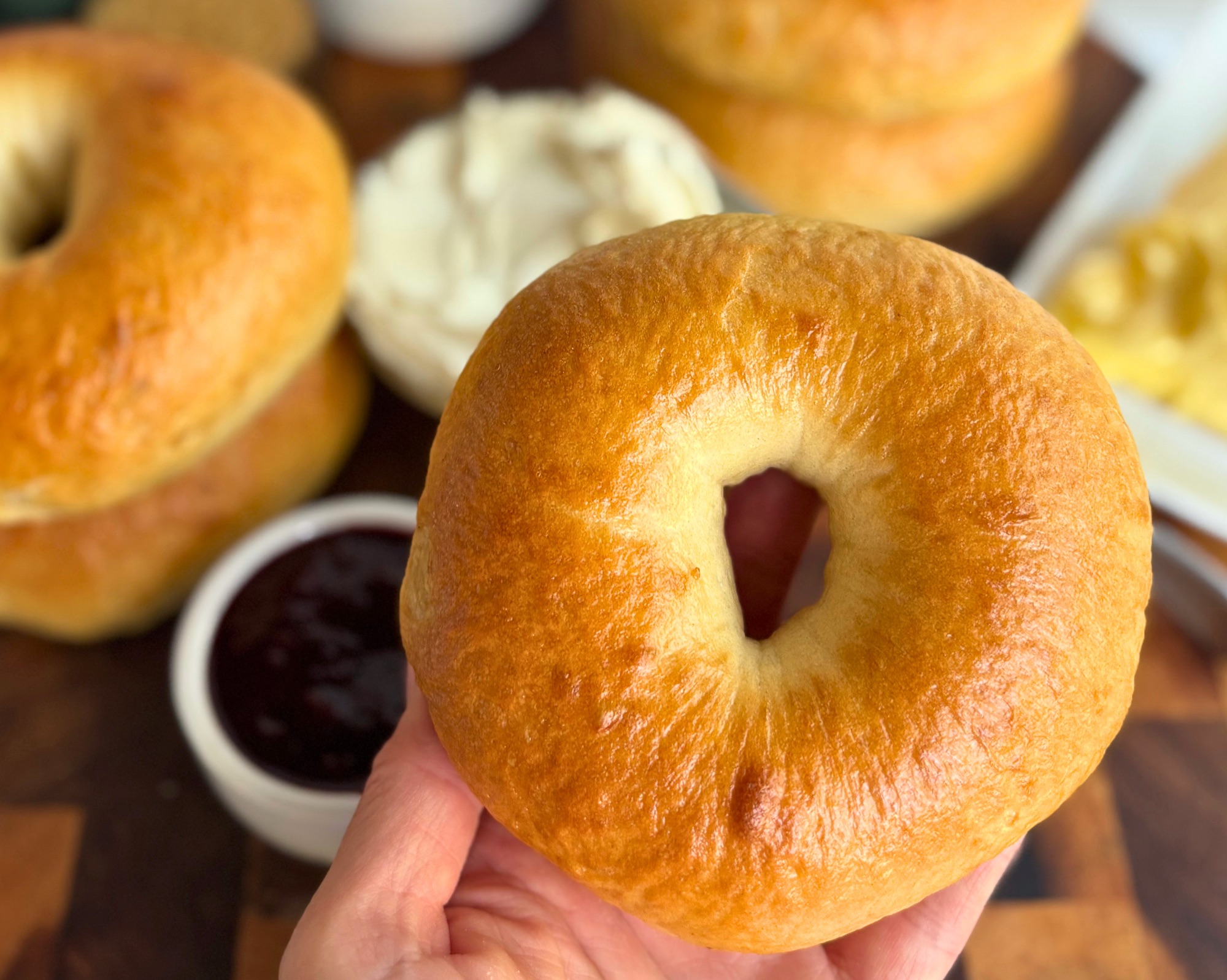
Most high protein bagels make you pick a side. Either you get the protein and a dense, chalky puck that eats like a supplement, or you get a real bagel and almost none of the protein. These give you both. They land at about 19 grams of protein each, they boil and bake into a proper chewy bagel, and they do it with bread flour and cottage cheese or greek yogurt, no protein powder anywhere in the ingredient list.
Best of all, there is no sourdough starter and no two day wait. These are made with yeast and come together in an afternoon, so you can decide you want bagels in the morning and be eating them by lunch. If you do keep a starter going, there is a sourdough version in its own post, linked below.

Table of Contents
Why You Will Love These
These came out of a long stretch of testing with one goal, a bagel with real protein that still eats like a bagel. The cottage cheese does the heavy lifting on protein while keeping the inside tender, the boil gives you that chewy set skin, and the whole thing holds a clean defined ring instead of slumping into a flat disc.
They are also about as low friction as a real bagel gets. No starter to feed, no overnight wait, just yeast and an afternoon. You are not reaching for a tub of protein powder, and you are not settling for a bagel that tastes like a diet product.

What Makes Them High Protein
Start with the number that matters. These land at about 19 grams of protein per bagel, and they get there with no protein powder anywhere in sight. That is the whole thing in one line, a real bagel that just happens to carry serious protein.
The ingredient carrying that is the cottage cheese. Blended smooth and worked right into the dough, it brings real whole food protein along with the tender bite that makes these eat like a bagel instead of a dense diet food. It is the ingredient that sets this recipe apart, doing the job a tub of powder does in lesser recipes, except it tastes like food and leaves no chalky aftertaste.
Just as important, this is a real bagel and not a shortcut. It is leavened with yeast, then boiled and baked the way a bagel is supposed to be. There is no baking powder or baking soda propping up a fake rise the way the two ingredient viral versions rely on. You get the protein and you get the real thing.
Ingredients You Will Need
Everything is measured in grams first with the cup and spoon amounts in parentheses, because weight is the only way these doughs come out the same twice.
- Bread flour, the backbone and the biggest structure builder, so this is not the place for all purpose. Its higher protein content is what gives a bagel its chew.
- Nonfat cottage cheese, blended completely smooth, since any curd that survives the blender turns into a wet spot in the crumb.
- A splash of milk, to help the cottage cheese blend silky and to add a little tenderness.
- Egg whites, for structure and a little moisture.
- Active dry yeast, bloomed first so you know it is alive before you commit the batch.
- Brown sugar, a small amount, which feeds the yeast and lays a soft malt note into the dough itself.
- Kosher salt.
- Barley malt syrup or honey and baking soda for the boiling bath, which together build the color, the chew, and the classic flavor of the skin.

Why These Steps Matter
The recipe card has the full method, the amounts, and the timing, so this section is not a walkthrough. It is the handful of things that actually make or break a batch, the parts worth understanding before you start.
Bloom the yeast first. Stir the active dry yeast into warm water with a pinch of the brown sugar and give it a few minutes, and it should turn foamy. That foam is the yeast proving it is alive, so you never waste a whole batch on dead yeast.

The rest before kneading does real work. Dairy hydrates flour much more slowly than plain water, so that pause is what lets the dough come together properly and keeps you from adding water it does not actually need. Skip it and you go chasing a hydration problem that was never really there.
Trust a stiff dough. These read wetter on paper than they feel in your hands, because the water in cottage cheese is bound to its solids and releases slowly. Stiff but smooth is exactly right, and a dough that handles like an ordinary bagel dough is usually too wet.
Do not over ferment. You want the dough grown by about half, not doubled and billowing, since a dough taken past its peak goes slack and loses its shape in the boil. Shape into tight balls, and open each hole wider than looks right because it closes as the bagels proof and again in the oven.


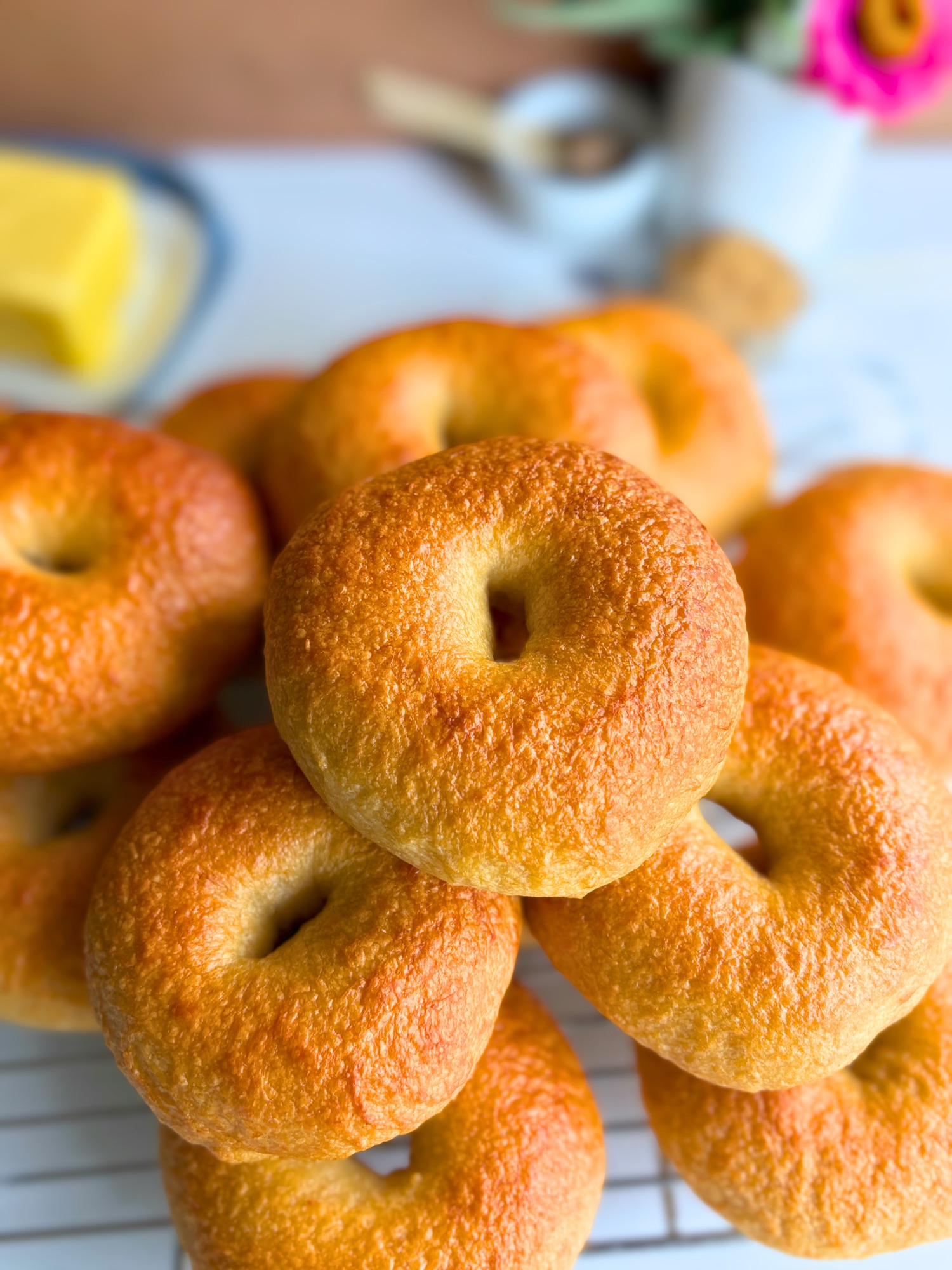
Boil gently, never at a hard rolling boil. A violent bath sets the skin rough and can leave you with wrinkling as the bagels cool, while a gentle one sets a smooth, glossy, chewy skin. Lay them in top side down first so the face people see sets against undisturbed water.
Bake to temperature, not to the clock. The dairy browns the outside quickly, so the color runs ahead of the inside, and the internal read on the card is the honest signal that they are done. Let them cool before you cut, because the crumb is still setting as it comes down in temperature.

Why Bagels Get Boiled
The boil is what makes a bagel a bagel instead of a round roll with a hole. Dropping the shaped dough into an alkaline bath sets the outer skin before it ever hits the oven, which is what gives you that glossy chew and keeps the bagel from puffing up soft and losing its hole.
The baking soda is the part doing the real work, since it makes the water alkaline and drives the browning, the set skin, and the flavor you associate with a proper bagel. The barley malt syrup or honey rounds it out with color and a gentle sweetness. Keep the bath at a gentle boil rather than a hard rolling one, and boil a little longer, closer to the full time on the card, if you want a thicker and chewier crust.

Tips for the Best Bagels
Blend the cottage cheese until it is truly smooth. This is the single most common way to end up with a patchy crumb, and it takes an extra thirty seconds to get right.
Trust a stiff dough. The calculated hydration on these reads higher than the dough will feel in your hands, because the water in dairy is bound to its solids and releases slowly. You want stiff but not crumbly, with a surface that is smooth and a poke that springs back slowly.
Do not chase a wide open airy crumb. The dairy tenderizes the inside on purpose, so the goal here is a good shape, a clean ring, and a chewy set exterior rather than the big holes of a lean bakery bagel. A little surface wrinkling can show up no matter what you do, since these doughs carry almost no free water.
Bake to temperature, not to the clock. The dairy browns the outside quickly, so the color can run ahead of the inside. An internal read in the range on the card is the honest signal that they are done.

Toppings
If you are adding toppings, brush the boiled bagels with a thin egg wash first so everything sticks and the tops bake up glossy, then press the topping on while the wash is still wet.
- Everything seasoning, the classic, a mix of sesame, poppy, dried garlic, dried onion, and flaky salt.
- Sesame or poppy seeds on their own, simple and nutty.
- Flaky sea salt for a salted pretzel feel.
- Shredded cheese pressed on for the last few minutes of baking.

How to Store and Freeze
Bagels are best the day they are baked, but they keep well with a little planning. Store them at room temperature in a sealed bag for up to two days, and avoid the fridge, which stales bread faster than the counter does.
For longer storage, slice them before you freeze so you can pull one straight into the toaster. They freeze beautifully for up to three months, and toasting from frozen brings back most of the fresh baked chew.

Prefer Sourdough?
Keep a starter going and want the naturally fermented version. There is a full high protein sourdough bagel that uses an active starter in place of the yeast, with the same cottage cheese base with yogurt option, the same boil, and the same bake. It takes a longer day, but it is a true same day sourdough if you start early. Click the link below!
Greek Yogurt Variation
No cottage cheese on hand, or you just prefer yogurt. Swap the cottage cheese and milk for 300g nonfat Greek yogurt, warmed about 30 seconds. Two small adjustments come with it. Bump the salt slightly up to 12 grams, since cottage cheese carries more sodium than yogurt does, and pull the added water down a touch, because Greek yogurt runs wetter than blended cottage cheese and will slacken the dough faster. Leave the water for the bloom, but drop the added water down to 10g instead of 20g. The protein lands a hair lower, right around 18 grams per bagel.
You don’t want to use regular yogurt. It will make your dough much wetter. Stick with a thick yogurt. Kirkland Organic Non-Fat Greek, Fage 0%, Stonyfield Organic NonFat Greek Yogurt or Siggi’s Skyr are great options.
More High Protein Recipes
If these are your speed, here is where to go next.
- High Protein Sourdough Sandwich Bread
- High Protein Honey Whole Wheat Sourdough Bread
- High Protein Sourdough Hamburger Buns
Frequently Asked Questions
Do I need protein powder for these?
No, and that is the whole point. The protein comes from bread flour, cottage cheese, and a little egg white, so there is no chalk and no aftertaste.
Do I need a sourdough starter?
No. That is exactly why this version exists. It uses yeast and comes together in an afternoon, no starter required.
Can I use instant yeast instead of active dry?
Yes, they swap one for one. If you use instant you can skip the blooming step and add it straight to the flour, though blooming never hurts and confirms your yeast is alive.
Why cottage cheese instead of yogurt?
Blended cottage cheese carries a little more protein for the same weight, so it nudges the final number up, and it hydrates a touch drier which suits a stiff bagel dough. Greek yogurt works too with the small tweaks in the variation section.
Why did my bagels wrinkle on top?
A few things can do it, but the usual culprits are a boil that was too vigorous, a proof that went past its peak, or simply the soft skin these tender dairy doughs naturally have. A gentle bath and pulling the proof a touch early are your best defenses.
How much protein is in each bagel?
About 19 grams in the cottage cheese version and about 18 grams with Greek yogurt, based on six bagels per batch. Portioning into six rather than seven is what protects that number.
Can I make them ahead?
Yes. You can refrigerate the shaped bagels overnight and boil and bake them in the morning, and baked bagels also freeze well when sliced.
Can I replace the egg?
Yes, you can remove the egg white and make these egg free. Its one of the first variations I tried. Just replace the egg white amount with equal cottage cheese or greek yogurt. If adding cottage cheese, make sure it gets blended with the other amount. You may need to add 15g or so of water after the initial mix. Egg whites are mostly free water, so removing them takes hydration out of the dough, that the dairy does not fully replace. Expect a slightly softer bagel.
Recipe

High Protein Bagels (Greek Yogurt or Cottage Cheese)
Equipment
- Blender (for the cottage cheese version)
- – Stand mixer with dough hook
- kitchen scale
- Large pot
- Slotted spoon or spider
- Parchment-lined baking sheet
- Instant read thermometer
- Wire cooling rack
Ingredients
For the Dough
- 550 grams bread flour 4 2/3 cups
- 300 grams nonfat cottage cheese 1 1/3 cups (see notes section for greek yogurt adjustment)
- 23 grams milk 1 1/2 tablespoons
- 70 grams egg whites about 2 large
- 50 grams warm water 3 tablespoons plus 1 teaspoon (divided, 30g for the yeast bloom/20g for the dough)
- 21 grams light brown sugar packed (1 1/2 tablespoons)
- 11 grams kosher salt 2 teaspoons
- 8 grams active dry yeast 2 1/2 teaspoons
For the Boiling Bath
- 2000 grams water 8 cups
- 21 grams honey 1 tablespoon
- 14 grams baking soda 1 tablespoon
For the Egg Wash, optional
- 1 egg white
- 15 grams water 1 tablespoon
Instructions
- Bloom the yeast first so you know it is alive before you commit the whole batch. Warm 30 grams of the water to about 110°F, stir in a pinch of the brown sugar and the active dry yeast, and let it stand 5 to 10 minutes until foamy. If it does not foam, the yeast is dead and you should start over.
- Blend the cottage cheese with the milk until completely smooth, since any curd that survives the blender turns into a wet spot in the crumb. Warm the blend about 30 seconds, just enough to take the chill off.
- Whisk the flour and salt together in the mixer bowl. Add the blended cottage cheese, egg whites, the rest of the brown sugar, the bloomed yeast, and the remaining 20 grams of water, then mix to a shaggy mass.
- Cover and rest 15 minutes. Dairy hydrates flour slowly, so this rest lets the dough come together properly and keeps you from adding water it does not actually need.
- Knead 6 to 8 minutes in the mixer on speed 2, or about 8 minutes by hand, until the dough is firm, smooth, and clears the bowl. It should feel stiff rather than soft. If it will not come together, add water a little at a time, and if it clings to the bowl, add a little flour.
- Cover and bulk ferment 60 to 90 minutes at room temperature, until puffy and about half again as large. Do not let it double, because a dough taken past its peak goes slack and loses its shape in the boil.
- Divide the dough into 6 equal pieces at about 172 grams each. Shape each into a tight ball, pressing out any large trapped air, then cover and rest 10 minutes.
- Poke through the center of each ball and stretch the hole to about 1 3/4 inches. Open it wider than looks right, because it closes as the bagels proof and again in the oven.
- Proof the shaped bagels 20 to 30 minutes. Float test one in cool water and boil the batch as soon as it floats. A poke should spring back slowly and leave only a slight indent.
- Preheat the oven to 425°F and bring the water to a boil in a large pot, then stir in the honey and baking soda and bring it back to a gentle boil. A gentle boil sets a smooth, glossy skin, while a hard rolling boil sets it rough and can wrinkle the tops.
- Boil the bagels 30 to 45 seconds per side, top side down first, laying them in gently and flipping with a slotted spoon. The longer end of that range gives a chewier, firmer skin.
- Lift each bagel out to drain for a few seconds, rest 1 to 2 minutes on a rack, then move to the parchment lined baking sheet. If you are washing them, brush on a thin egg wash now while the surface is tacky, then add any toppings.
- Bake 20 to 25 minutes, rotating once, until deep golden. They are done at 195 to 205°F in the center. The dairy browns the outside quickly, so trust the thermometer over the color, and let them cool before cutting so the crumb can finish setting.
Notes
Subscribe
Never miss a recipe. Subscribe and get high protein bakes sent straight to your inbox, the kind that skip the powder and still hit the number.



Leave a Reply