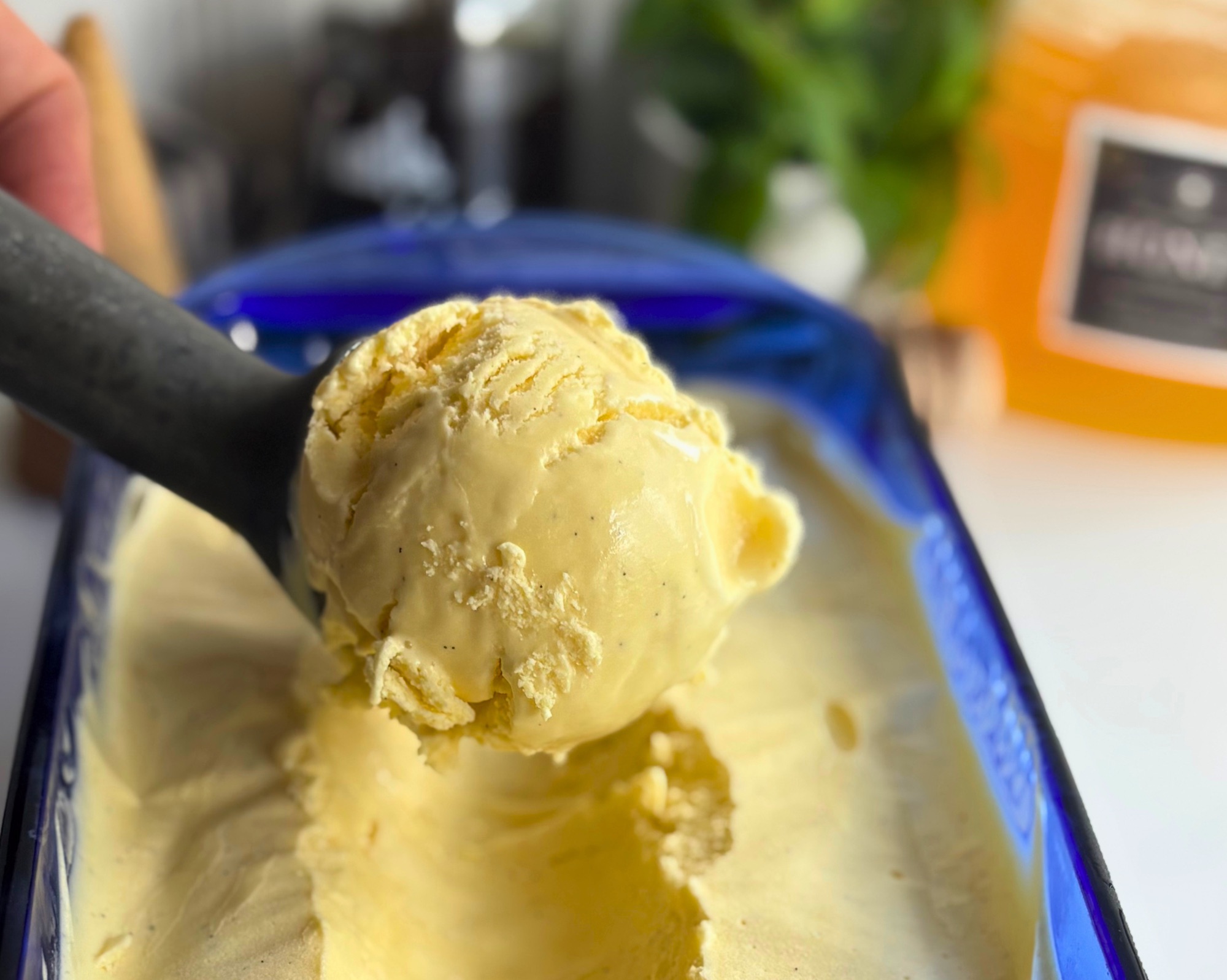
We have all bought the pint with the big protein number on the front. You get it home, you let it sit on the counter for ten minutes because it comes out of the freezer like a paving stone, and then you take the first bite and it is chalky and slightly gummy with a strange cooling aftertaste that no amount of vanilla on the label can cover. So you eat the whole thing anyway, because you already paid for it, and you decide that protein ice cream is just something you tolerate rather than something you enjoy.
There are real reasons it turns out that way. Pulling the fat and sugar out of a base removes almost everything that keeps ice cream soft, so the water left behind freezes into a solid block, and the protein powder standing in for real dairy never fully hydrates, which is where the chalk and that odd finish come from. It is not that those pints were made carelessly. It is that they were built to hit a number on the front of the carton, and texture was the thing that got traded away to get there.
What I wanted was the opposite trade. Actual ice cream first, with yolks and cream and a texture that scoops in a proper curl, and then as much protein as I could work in without touching any of that. No powder, less sugar than a normal scoop, and nothing in it my grandmother would not recognize.
This is where it landed, and the flavor turned out to be the happiest accident of the whole thing. The cottage cheese that carries the protein also brings a cultured tang that makes the entire batch taste like frozen cheesecake, and when I swapped the sugar out for honey the flavor got rounder and the scoop got softer at the same time. It is sweetened entirely with honey, there is no protein powder in it anywhere, and it carries about 7g of protein per scoop against the 3g or 4g in a premium store pint.
Table of Contents
- Why You Will Love This Ice Cream
- What Makes It High Protein
- Ingredient Notes
- How to Make It
- Expert Tips
- Make It Your Own: Mix Ins and Ice Cream Sandwiches
- No Milk Powder Version
- No Ice Cream Maker? Make It No Churn
- Storage
- Frequently Asked Questions
- Shop This Recipe
- Recipe
- More Recipes You Will Love
- Subscribe
Why You Will Love This Ice Cream

- It carries roughly 7g of protein per half cup scoop, close to double what a premium store bought pint gives you
- There is no protein powder in it, so there is no chalk, no aftertaste, and no grit
- Cottage cheese does all the heavy lifting and turns the flavor into something that genuinely tastes like frozen cheesecake
- Honey is the only sweetener, which brings the sugar down to about 8g of added sugar per scoop
- It scoops soft straight out of the freezer after about five minutes on the counter, no microwave and no chiseling
- It is a real cooked custard, not a blended shortcut, so the texture holds up for weeks
What Makes It High Protein
The hero ingredient here is cottage cheese, and it is doing something that no scoop of powder can do, which is adding protein while also adding flavor that belongs in the recipe. Blended completely smooth and whisked into a cooled custard, it disappears into the base entirely, and what it leaves behind is the soft tang that makes people guess cheesecake before they guess anything else.

A little nonfat dry milk pushes the number higher and does a second job at the same time, because the extra milk solids bind up free water and keep the texture smooth instead of icy. A small amount of cream cheese rounds out the cheesecake flavor and adds richness where the cottage cheese took some fat out. Between the three of them plus the yolks, the batch lands right around 7g of protein per scoop.
What matters more than the number is that none of it comes at the cost of the ice cream being ice cream. This is a French style custard cooked to temperature on the stove with five egg yolks in it, and it behaves the way custard ice cream is supposed to behave.
Ingredient Notes

- Cottage cheese. Use a cultured brand and use the 2% rather than the fat free, since the cultured tang is the entire flavor story here and a bland tub gives you a flatter result. Blend it until it is completely smooth before it goes anywhere near the custard.
- Cream cheese. Just enough to deepen the cheesecake note and put back some of the richness. Let it soften on the counter so it blends in cleanly with the cottage cheese.
- Honey. Use a mild honey, either clover or a gentle wildflower. A dark buckwheat or a strong single varietal will run straight over the tang you are building the recipe around.
- Nonfat dry milk. This is a baking aisle ingredient rather than a protein product, and it adds body along with the protein. Do not go above the amount in the card, because milk powder is mostly lactose and lactose is the sugar that turns sandy in a freezer when there is too much of it.
- Heavy cream and whole milk. Full fat both. This is the part of the recipe that makes it taste like ice cream rather than frozen yogurt, and it is also the part that keeps a scoop satisfying enough that one bowl is genuinely enough.
- Egg yolks. Five, and they are not optional. They are what give this the custard texture and the deep yellow color you can see in every one of these photos.
How to Make It
The method is a standard cooked custard with two additions, and the order of operations matters more than anything else in this recipe. Full amounts and timing are in the recipe card below, so what follows is the reasoning behind each move.
The milk powder goes into the cold milk first, whisked into a smooth slurry before anything gets warm. This is the step people skip and then regret, because milk powder dropped into hot liquid sets a skin around a dry center and those lumps will not break up no matter how long you stand there working at them. Cold liquid lets the particles disperse before anything starts to thicken.
The honey all goes into the dairy at the start rather than being split, and it dissolves so readily that it needs nothing else from you. Then the custard gets tempered into the yolks and cooked to temperature, which is the only genuinely fussy part of the whole thing, and an instant read thermometer removes all the guesswork.

Here is the piece that makes or breaks the texture. Strain the hot custard through a fine mesh strainer into a bowl set in an ice water bath and let it come down to room temperature, stirring now and then. Only then do you whisk in the blended cottage cheese and cream cheese along with the vanilla. Room temperature is the sweet spot, because the base is still fluid enough that the dairy folds in without resistance, and it is far enough off the heat that nothing is going to tighten or curdle.

Then it gets strained a second time on its way into the storage container, which catches anything the blender did not fully break down. After a night in the fridge and a churn, it goes into the freezer to firm up properly. That overnight fridge rest is not a suggestion, since a base that goes into the machine warm will never reach the same texture. Although you are okay sampling it when you think its ready!
Expert Tips

- Blend the cottage cheese longer than feels necessary. A full minute in a countertop blender, or an immersion blender in a tall cup with a splash of the milk, is the difference between silky and grainy.
- Weigh everything. The gram amounts in the card are what this was tested at, and milk powder in particular varies enough between brands that a scoop measurement will not get you to the same place.
- Do not add vodka. If you have made custard ice cream before you may be used to a spoonful of alcohol for softness, and it is genuinely not needed here, because honey is an invert sugar and depresses the freezing point about twice as much as regular sugar does at the same weight. It is already doing that job.
- Press plastic wrap directly onto the surface before it goes in the freezer so no ice crystals form on top.
- Give it five minutes on the counter before you scoop. That is normal for a real custard ice cream and it is what gets you the soft curl in these photos.
- Do not be tempted to add more honey. At 105g this batch lands around 8g of added sugar per scoop, against the 20g or more in a premium store pint and the 130g of granulated sugar a standard custard base of this size would call for. That gap is a big part of why a bowl of this does not leave you feeling wrecked, and the sweetness is already balanced against the tang, so pushing it higher costs you more than it gains.
Make It Your Own: Mix Ins and Ice Cream Sandwiches

Treat this the way I treat it, which is as a starting point rather than a finished flavor. It is a vanilla base at heart, the same way my homemade vanilla bean ice cream is the base every other flavor on this site gets built on, and the cheesecake tang running underneath makes almost everything you fold into it taste better than it would in a plain vanilla. Cheesecake goes with fruit, it goes with chocolate, it goes with cookies, it goes with caramel. There is very little it does not go with.
Fold your mix ins in during the last minute of churning rather than stirring them in afterward, and freeze anything chunky on a sheet pan first so it does not soften and go pasty in the base. A cup of mix ins is about right for this batch size.
- Crushed sandwich cookies. Oreos in a cheesecake base is not a subtle idea and it is not supposed to be. It is the single easiest upgrade here.
- Chopped cookie dough or baked cookie pieces. Anything with brown sugar in it plays beautifully against the tang.
- Fruit swirls. Cook down berries or peaches into a thick jam, cool it completely, and ribbon it in by hand as you layer the ice cream into the container.
- Graham cracker and butter crumbs. Toasted in a pan with a little butter and brown sugar, this turns the whole thing into an actual cheesecake slice.
- Chocolate shards. Melted chocolate drizzled into the machine in the last thirty seconds shatters into thin flakes rather than freezing into hard chips.
The one I keep coming back to is an ice cream sandwich. Scoop this between two of my Double Chocolate High Protein Cookies, press gently, and freeze them for an hour on a sheet pan. The cookies stay soft enough to bite through straight out of the freezer, and between the cookie and the ice cream you are looking at a dessert carrying real protein that nobody would ever guess was doing anything healthy. High Protein Chocolate Chip Cookies work just as well if you want the plain version.
No Milk Powder Version
Nonfat dry milk is worth keeping in the pantry, but nobody should have to place an order to make an ice cream recipe, so here is how to make this without it.
Leave the milk powder out entirely and raise the whole milk from 120g to 160g to make up the volume. Everything else in the recipe stays exactly the same, including the honey, the cottage cheese, the cream cheese, and the five yolks, and the method does not change at all.
You will land closer to 6g of protein per scoop instead of 7g, and the texture will be a small step less smooth after a week in the freezer, since the milk solids were helping to bind free water. Straight out of the machine and for the first few days, you will not be able to tell the difference. It is still a better scoop than anything you are buying in a pint.
No Ice Cream Maker? Make It No Churn
No machine, no problem. You will not get the same airy churned texture, but you can make a genuinely good version of this by hand, and the honey actually works in your favor here.
Pour the finished cold base into a shallow metal pan that you have already chilled in the freezer, since metal pulls heat out far faster than glass and a wide shallow layer freezes evenly instead of trapping a soft icy middle. Alternatively put it in a metal mixing bowl that goes with your stand mixer. Freeze it, and stir hard with a fork or beat it with an electric hand mixer every thirty minutes for the first three hours. Those early stirs are the whole game, because that is when crystals form fastest, and beating the half frozen base breaks them finer while dragging in a little air.
The honey difference is worth knowing about. A no churn base normally freezes denser and harder than a churned one, which is the main complaint people have with the method, and honey lowering the freezing point offsets exactly that. Expect it to take a little longer to firm up than a no churn vanilla would, and expect the finished texture to sit closer to a semifreddo, which in this case is a pleasant place to land.
A note on the Ninja Creami. This base will spin in a Creami, with one adjustment. Freeze the pints for a full 12-24 hours rather than the usual overnight, because the honey can keeps the base softer than the machine expects and a pint that is not frozen solid will not spin properly. Plan on running the lite ice cream setting and then using the respin function once, and add a splash of milk before the respin if it looks crumbly. This batch fills between two and three Creami pints, so scale it down if you only want one.
Storage
Keep it in an airtight container in the freezer with plastic wrap pressed directly against the surface. It holds its texture beautifully for about two weeks and is still very good out to a month, though like any homemade ice cream without commercial stabilizers it slowly gets firmer as it sits.
The uncooked base keeps in the fridge for up to three days before churning, so you can cook it one evening and churn it whenever it suits you. It actually improves with a full 24 hours in the fridge rather than the minimum eight.
Frequently Asked Questions

Does it taste like cottage cheese?
No. It tastes like cheesecake, which is a different thing entirely and a much better one. Once it is blended smooth and folded into a sweet custard, the curd texture is gone and all that is left is the cultured tang, which is exactly what makes cheesecake taste like cheesecake in the first place.
Can I use protein powder instead?
You could, and I would not. Whey isolate binds water in a way that makes ice cream freeze harder and gives it a chalky finish, which is the reason most protein ice cream is unpleasant. The whole point of this recipe is getting there with real dairy.
Why honey instead of sugar?
Two reasons. Honey is sweeter than sugar by weight, so you use less of it and land with less sugar overall, and because it is an invert sugar it keeps the ice cream softer in the freezer. The flavor is a bonus that happens to sit beautifully next to the tang.
Do I need an ice cream maker?
Check the above section for how to make it without one!
Can I use Greek yogurt instead of cottage cheese?
Cottage cheese is what this recipe was developed and tested on, so that is the version I can vouch for. Greek yogurt should work on the same principle, since it brings the same cultured tang and blends smooth in exactly the same way, but I have not run a batch with it yet so I am not going to promise you an identical result. If you try it, use full fat rather than nonfat and swap it at the same weight. Two things will shift. Whole milk Greek yogurt carries a bit less protein than cottage cheese does, so you would land closer to 6g per scoop instead of 7g, and the flavor comes out sharper and more distinctly yogurt like rather than the rounder cheesecake note the cottage cheese gives you. Come tell me how it goes if you get there before I do.
Why does mine taste less tangy than yours?
Almost always the cottage cheese. Cultured brands carry real tang and the generic tubs often do not, so check the label for live cultures. My favorite are Goods and Nancy’s
What are the macros?
NUTRITION PER SERVING
Calories 225
Fat 16g
Saturated Fat 9g
Carbohydrates 13g
Total Sugars 12g
Added Sugars 8g
Protein 7g
Sodium 105mg
Calcium 175mg
Shop This Recipe
These are affiliate links, which means I earn a small commission at no cost to you, and it helps support the blog so I can keep putting recipes like this one out for free.
- Compressor ice cream maker. No pre freezing a bowl and no waiting between batches, which matters a lot once you start making ice cream. It is a little more expensive, but you make the money back quick by saving on all the ice cream you would have bought. This Cuisinart is less expensive and you have to prefreeze a bowl, however it still has the same large capacity.
- Instant read thermometer. The custard needs to hit temperature and stop there, and guessing is how you end up with scrambled yolks.
- Fine mesh sieve. Used twice in this recipe, once after cooking and once on the way into the container.
- Food Processor or Immersion blender. I prefer the food processor, it is what I use to get the cottage cheese completely smooth in a tall cup with no extra dishes.
- Ice Cream Storage. You can use these stainless steel containers. Or a loaf pan (metal or glass)
- Ice cream scoop. A heavy one that will cut through a properly firm custard.
- Dry Milk Powder. There is a section with how to replace it if you dont have it, but highly recommend this purchase. Plus is stays in your pantry, i love a shelf stable option.
Recipe

Honey Cheesecake High Protein Ice Cream
Equipment
- Ice cream maker see note section for no machine method
- Medium saucepan
- Instant read thermometer
- Fine mesh sieve
- Blender or immersion blender
- Two mixing bowls
- Whisk
- Freezer safe storage container
Ingredients
- 300 g cottage cheese 2%, blended completely smooth (1 1/3 cups)
- 60 g cream cheese softened (1/4 cup)
- 350 g heavy cream 1 1/2 cups
- 120 g whole milk cold (1/2 cup)
- 40 g nonfat dry milk 5 tablespoons
- 105 g honey mild clover or wildflower (1/3 cup)
- 5 egg yolks
- 1.5 g fine sea salt 1/4 teaspoon
- 8 g vanilla extract 2 teaspoons
- 1 vanilla bean split and scraped, optional
Instructions
- Blend the cottage cheese and softened cream cheese together until completely smooth, about a full minute in a blender or with an immersion blender in a tall cup. Set aside.
- Whisk the nonfat dry milk into the cold whole milk until no lumps remain. The milk must be cold at this stage or the powder will clump.
- Combine the heavy cream, the milk mixture, the honey, the salt in a medium saucepan over medium low heat. Whisk until the honey dissolves and the mixture steams, about 5 minutes.
- If using the vanilla bean, add both the scraped seeds and the pod to the pan at this stage.
- Whisk the egg yolks in a separate bowl. Slowly ladle about half of the hot dairy into the yolks while whisking constantly, then pour the yolk mixture back into the saucepan. whisking while slowly adding.
- Cook over low heat, stirring constantly with a spatula and scraping the bottom, until the custard reaches 175F, about 6 to 8 minutes.
- Remove from the heat immediately and strain the custard into a bowl set in an ice water bath. add the vanilla bean pod to the mixture. Stir occasionally until it comes down to room temperature, about 15-30 minutes.
- Whisk the blended cottage cheese mixture and the vanilla extract into the room temperature base until fully incorporated.
- Strain a second time as you pour the base into a storage container. Keep the vanilla bean pod in the mixture. Cover and refrigerate at least 4-8 hours or overnight. The colder the better.
- Churn the cold base according to your ice cream maker, about 35-45 minutes, until it holds soft serve texture.
- Transfer to a freezer safe container, press plastic wrap directly onto the surface, and freeze at least 4-6 hours or overnight before serving.
- Let the ice cream sit at room temperature for 5 minutes before scooping.
Notes
More Recipes You Will Love

- Homemade Vanilla Bean Ice Cream (Custard Base Recipe)
- Homemade Chocolate Ice Cream (Rich Custard Base, No Junk Ingredients)
- Double Chocolate High Protein Cookies (No Protein Powder)
- High Protein Greek Yogurt Chocolate Chip Muffins
- High Protein Sourdough Chocolate Chip Muffins
Subscribe
If you want recipes like this one as soon as they go up, come join the email list. It is completely free, there is nothing to pay for at any point, and it is the easiest way to make sure you actually see a new recipe instead of hoping an algorithm decides to show it to you.




Leave a Reply